
SpaceX’s Starship is extraordinary even beside the giant rockets that defined the Apollo era. SpaceX currently lists the complete Starship and Super Heavy system at about 124 meters, or 407 feet, tall, with a diameter of 9 meters. The company calls it the world’s most powerful launch vehicle ever developed and says its fully reusable configuration is intended to carry more than 100 metric tons to orbit. Yet the most ambitious part of Starship is not its size. It is the plan to reuse almost everything.
By August 2026, Starship remained an active flight-test program rather than a routine transportation system. Its 13th flight test launched on July 24, successfully deploying 20 Starlink V3 satellites and bringing the upper stage through reentry to an intact soft splashdown in the Indian Ocean. NASA is also closely involved because an adapted Starship is being developed for its Artemis lunar program. Every test therefore matters not only to SpaceX but to future plans for astronauts around the Moon.
The Full Starship Stack

The complete launch vehicle consists of two enormous sections. SpaceX lists the Starship upper stage at about 52 meters, or 171 feet, tall, while the Super Heavy booster measures about 72 meters, or 236 feet. Together they form the roughly 124-meter stack seen towering above SpaceX’s Starbase facilities in Texas. The dimensions are remarkable, but they serve a practical purpose: SpaceX wants one architecture capable of lifting satellites, fuel, large cargo and eventually people while preserving enough performance for ambitious destinations beyond low Earth orbit.
Super Heavy Rocket Booster
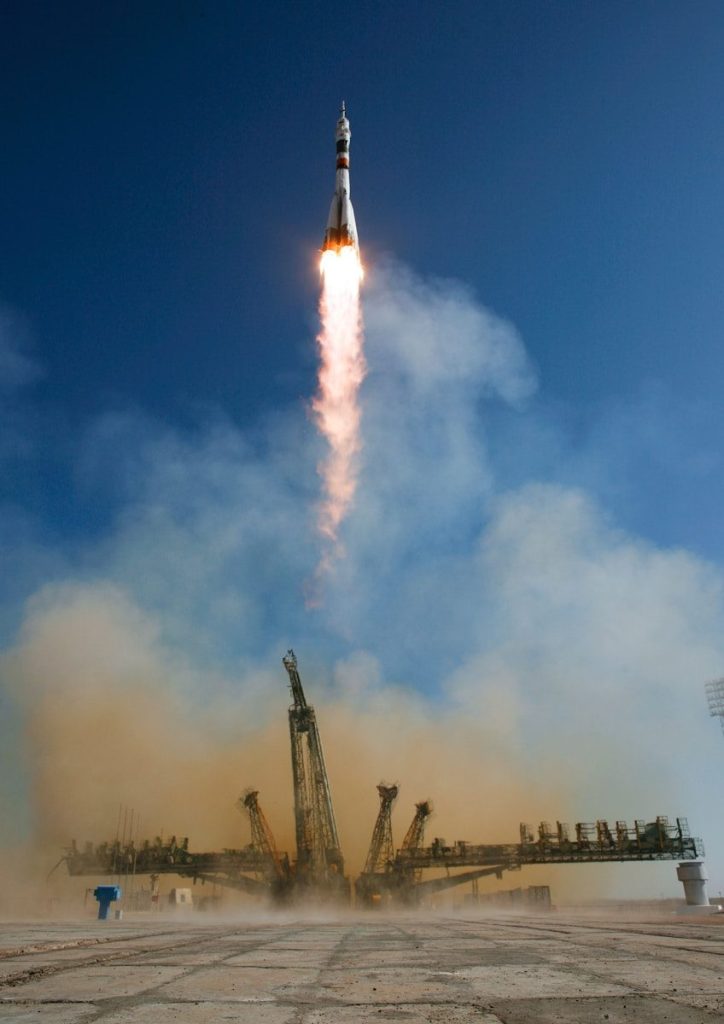
Super Heavy provides the enormous initial push required to get Starship away from Earth. Current Version 3 development retains a 33-engine first stage while incorporating upgraded propulsion and aerodynamic systems. NASA reported in July 2026 that engineers were conducting new wind-tunnel testing on a scale model of the Version 3 booster, studying the difficult forces it will face while returning through the atmosphere. Unlike traditional expendable boosters, Super Heavy is being designed to return toward its launch site so that it can eventually be recovered, refurbished and flown again.
The 33 Raptor Engines
At the base of Super Heavy sits one of the most visually striking engine arrangements ever flown. The booster uses 33 Raptor engines, while Starship’s upper stage uses six Raptors during integrated test flights. These engines burn liquid methane with liquid oxygen instead of the kerosene used by SpaceX’s Falcon 9. NASA has repeatedly emphasized how important the propulsion system is to Starship’s development because future missions will require not only powerful launches but reliable engine restarts and careful management of super-cold propellants during operations in space.
Hot Staging During Flight

Stage separation on Starship looks very different from the quiet pause people might imagine between rocket stages. SpaceX uses hot staging, meaning Starship begins firing its upper-stage engines while separation from Super Heavy is taking place. NASA documented the technique during earlier integrated tests, and it remained part of Flight 13 in 2026. Keeping thrust during separation can improve performance, but it also exposes surrounding structures to intense exhaust. That makes the hardware between Starship and Super Heavy one of the most unusual and demanding parts of the entire vehicle.
The Tower Catch System

SpaceX demonstrated one of its strangest recovery concepts during Starship Flight 5 in October 2024. Instead of landing Super Heavy on conventional legs, the returning booster flew back toward the launch tower, where giant mechanical arms captured it. The maneuver was designed around SpaceX’s broader goal of rapid reuse: a booster recovered directly beside its launch infrastructure could theoretically be prepared for another mission without transporting it far from the pad. The successful demonstration turned an idea that once looked almost impossible into something SpaceX had actually performed in flight.
Starship Heat Shield Tiles

The Starship upper stage must survive a very different challenge when returning from space. Atmospheric reentry converts enormous amounts of motion into heat, so much of the spacecraft’s surface is covered with thermal-protection tiles. Flight testing has repeatedly examined whether that protection can survive the stresses of ascent and reentry while remaining practical for a reusable vehicle. Flight 13 provided another important result: SpaceX reported that Starship completed its landing flip and burn before making an intact soft splashdown in the Indian Ocean, giving engineers valuable data from another full reentry.
Flight 13 Reaches Milestones

Starship’s 13th flight test on July 24, 2026 moved the program beyond demonstrations that carried only simulated payloads. SpaceX reported that the upper stage successfully deployed all 20 Starlink V3 satellites carried on the mission and maintained communication with them afterward. Starship also completed its planned return sequence and soft splashdown. That did not mean development was finished, but it represented a meaningful step toward the vehicle performing operational work while engineers continue testing its reusability, propulsion, reentry behavior and increasingly demanding mission architecture.
NASA’s Updated Moon Plan

Starship’s future is closely tied to NASA, but the Artemis schedule has changed significantly. NASA now plans Artemis III as a 2027 low-Earth-orbit demonstration involving Orion and commercial lander test vehicles, including a Version 3 Starship test article. NASA currently targets Artemis IV in 2028 for the next crewed lunar-surface mission. Recent wind-tunnel testing of Super Heavy Version 3 is part of preparing the Starship-based lunar system. The giant rocket therefore still has major demonstrations ahead before astronauts depend on it for lunar transportation.
Leave a Reply