Category: Science & Nature

  • Why some “animal fossils” turned out to be ancient microbes

    Why some “animal fossils” turned out to be ancient microbes

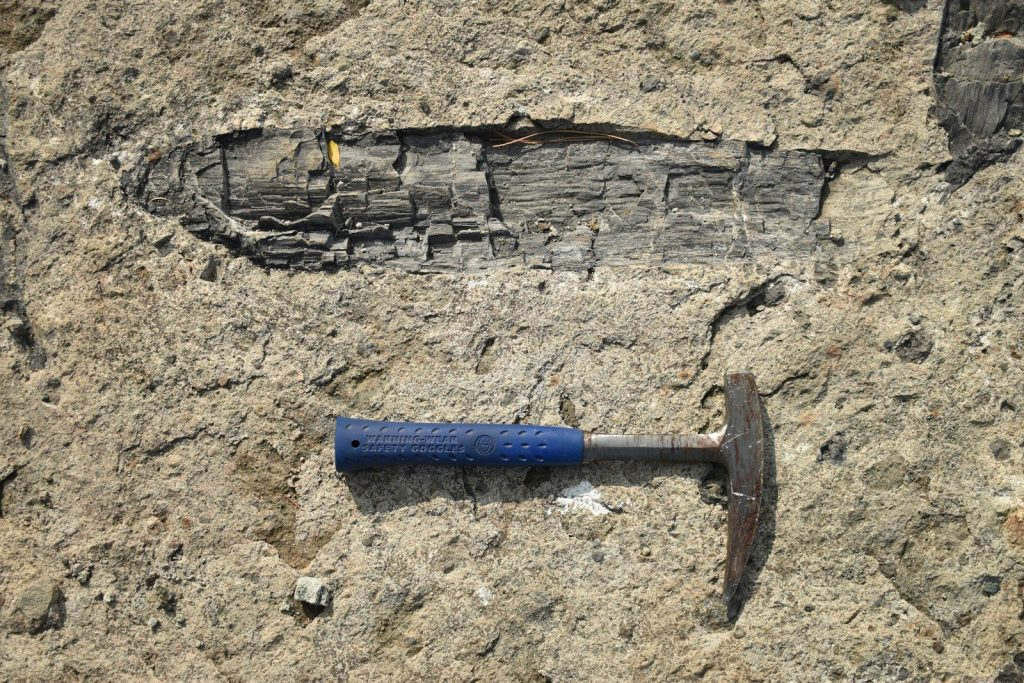
    A fossil can look simple at first, then become a surprise under better tools. That is what happened with some 540-million-year-old fossils from Brazil. Scientists once thought the tiny shapes were tracks or burrows made by very small seafloor animals. A newer study found something different: they were likely ancient communities of bacteria and algae, preserved in unusual detail.

    The fossils were recovered from rocks in Mato Grosso do Sul and studied using high-resolution imaging and chemical analyses. The change matters because it affects how scientists read the early timeline of animal life, especially just before the Cambrian Period, when many complex animals became easier to spot in the fossil record.

    Tiny marks fooled experts
    A large animal skull on a rock wall
    Photo by James Lee on Unsplash

    At first, the fossils looked like signs of movement. That made some researchers think tiny wormlike animals had crawled through soft seafloor mud long ago.

    That idea was exciting because it could have pushed certain small animals deeper into Earth’s past. But fossils can be tricky. A shape that looks like a track may sometimes be something that grew in place.

    A closer look changed things
    Fossilized eel and fish preserved in stone
    Photo by Kilian Murphy on Unsplash

    The newer study used powerful imaging to see inside the fossils without breaking them apart. That gave researchers a much better look at their hidden structure.

    Instead of simple marks left behind by moving animals, the team found cell-like details. Some samples also showed organic material inside fossil walls, which fit better with ancient microbes than with empty trails.

    They came from Brazil

    a flag flying in the air
    Photo by Samuel Costa Melo on Unsplash

    The fossils were studied from sites in Mato Grosso do Sul, Brazil. These rocks belong to the Tamengo Formation, which formed in a shallow marine setting.

    That ancient seafloor was part of a very different world. The study connects these fossils to the late Ediacaran Period, shortly before the Cambrian Period began around 541 million years ago.

    Microbes can leave fossils
    a close up of a cell phone with a cell phone on it
    Photo by National Institute of Allergy and Infectious Diseases on Unsplash

    It may sound strange, but microbes can fossilize. Some bacteria and algae form mats, filaments, or layered structures that can become preserved in rock.

    The University of California Museum of Paleontology notes that cyanobacteria have a fossil record going far back into the Precambrian. Microbial mats can also trap sediment, helping create structures that last.

    Better tools found cells
    blue and black handle hammer on brown wooden log
    Photo by Bruna Fiscuk on Unsplash

    Older studies did not have the same level of imaging used in the new research. The team used microtomography, nanotomography, and Raman spectroscopy to study the fossils.

    Those tools helped reveal tiny features, including preserved cell walls and chemical clues. That made the fossils look less like animal-made marks and more like preserved bodies of bacteria or algae.

    Some were surprisingly large
    woman holding laboratory appratus
    Photo by CDC on Unsplash

    Not all bacteria are too small to notice easily. Some modern sulfur-using bacteria can grow larger than people might expect, and the study considered that kind of possibility.

    The fossils included forms that may represent algae, cyanobacteria, or sulfur-oxidizing bacteria. The exact species remain uncertain, but the overall evidence points strongly toward microbial communities.

    Oxygen levels mattered
    a view of a forest with tall buildings in the background
    Photo by ün LIU on Unsplash

    Animals need oxygen, but Earth’s early oceans did not always have enough for active, complex life. That is one reason the timing of early animal fossils matters so much.

    The Smithsonian explains that Earth was not friendly to animals for much of its history, and oxygen levels changed over a very long time. The new fossil reading fits a world where some animal groups may not have been ready yet.

    The Cambrian still stands out
    a large rock formation on top of a mountain
    Photo by Vitor Paladini on Unsplash

    The Cambrian Period is famous because many animal groups became easier to find in the fossil record. Hard parts, active movement, and burrowing all left clearer clues.

    The new study does not erase early animal life. It simply suggests that these particular Brazilian fossils were not the tiny animal traces some scientists once thought they were. That keeps the Cambrian shift important.

    Science corrects itself
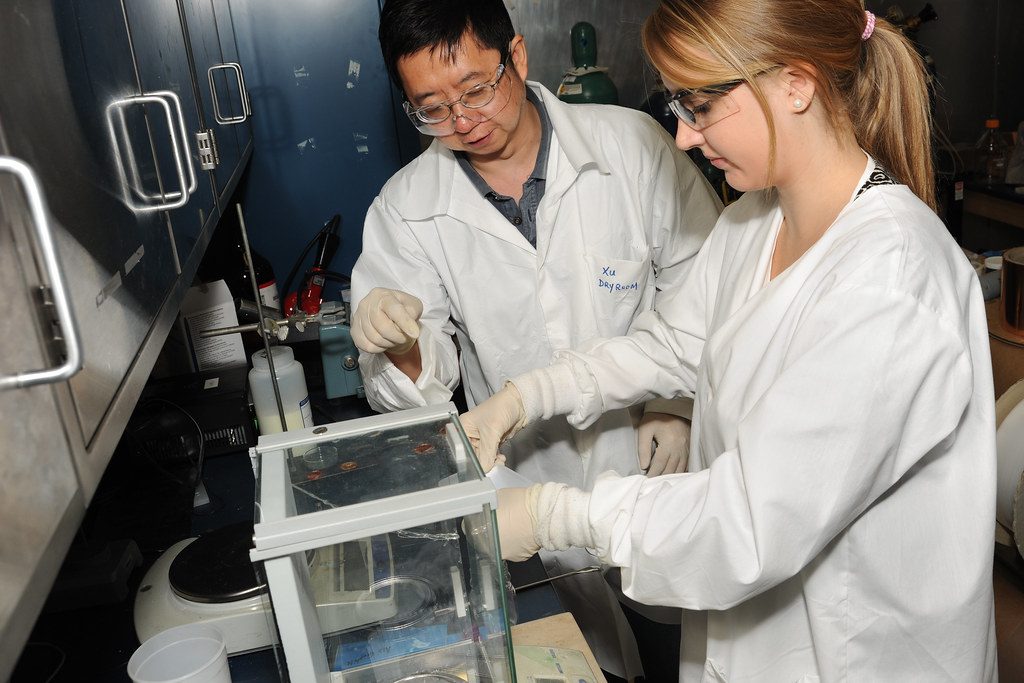
    Army scientists energize battery research” by U.S. Army Combat Capabilities Development Command is licensed under CC BY-SA 2.0

    This story is a good reminder that science is not about never being wrong. It is about testing ideas again when better evidence appears.

    Fossils are often incomplete, flattened, or changed by minerals. When new tools reveal fresh details, scientists may update old labels. That is not a failure. It is how the picture gets sharper.

    The past got clearer
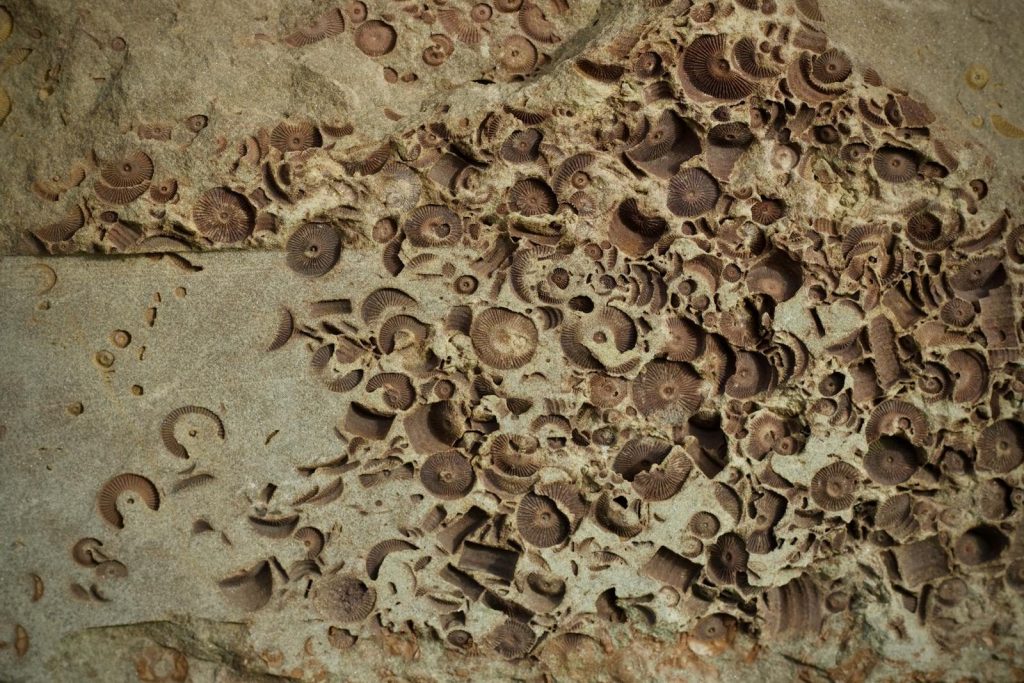
    Detailed view of fossilized marine life embedded in rock, showcasing ancient history.
    Photo by Peter Dyllong on Pexels

    The big takeaway is simple: some fossils that looked like animal activity were likely ancient microbial life. That changes one piece of the early animal timeline.

    It also makes microbes look even more important. Long before familiar animals filled the seas, bacteria and algae were already shaping Earth’s environments and leaving clues for scientists to find millions of years later.
  • Are we actually living in a simulation? The new physics experiment that says yes.

    Are we actually living in a simulation? The new physics experiment that says yes.

    Have you ever had a glitch in your day that felt like a computer error? For years, philosophers have argued that our entire universe might be a massive computer simulation. It sounds like the plot of The Matrix, but some of the world’s top physicists are now taking it seriously. A new experiment has just provided data that suggests our reality is made of “bits” of information rather than solid matter.

    If the universe is a program, it would have to follow certain rules to save memory. Just like a video game, the world wouldn’t “render” unless someone was looking at it. Scientists are now testing the very fabric of space to see if they can find the “pixels” of our reality. The results are shaking our understanding of what it means to be real. But how can a physical experiment prove a digital lie?

    The information mass conjecture

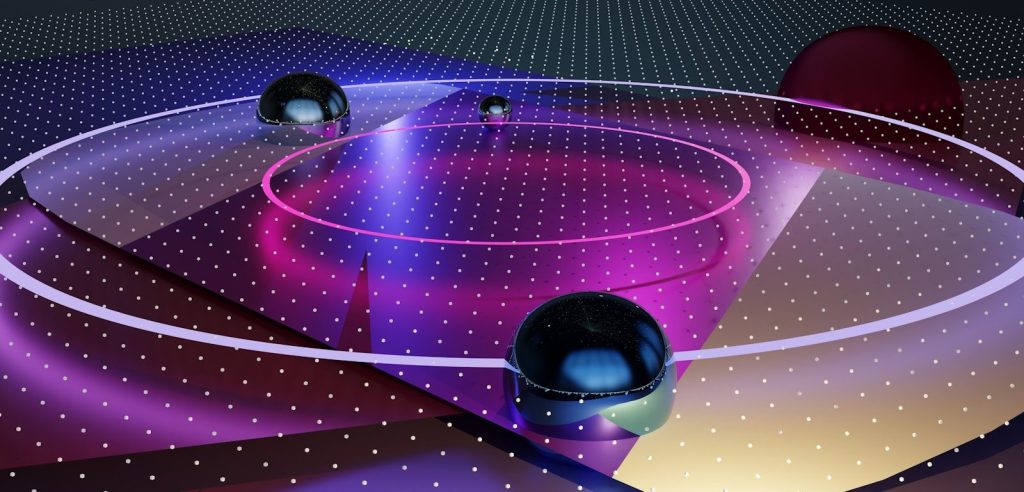
    an abstract image of a circle with balls
    Photo by Brecht Corbeel on Unsplash

    A physicist from the University of Portsmouth has proposed that information actually has mass. He believes that every “bit” of data in the universe weighs a tiny, tiny amount. If this is true, it would explain what “Dark Matter” actually is. It might just be the massive amount of information needed to run the simulation. By measuring the weight of digital data, we might find the physical proof that our world is a calculation. But what happens if we find the “resolution” limit of the world?

    The search for the cosmic pixel

    measurement, ruler, unit, measure up, length, construction, folding rule, dimensions, to build, measure, expand, measurement, measurement, measurement, ruler, ruler, measure, measure, measure, measure, measure, expand, expand
    Photo by Kranich17 on Pixabay

    Every digital image has a limit. If you zoom in far enough, you see the dots. Physicists are doing the same thing to space. They are looking for the smallest possible unit of distance, known as the “Planck Length.” If space is smooth, we should be able to zoom in forever. But if space is digital, we should eventually hit a “grid.” Some experiments with high-energy lasers suggest that the grid is actually there. But why would a simulation have a limit?

    Why the universe saves memory

    quantum physics, quantum computing, superposition, entanglement, quantum gate, alorithm, wave-particle duality, input, output, interference, decoherence, measurement, quantum state, wave, arrows, particle
    Photo by geralt on Pixabay

    In a video game, the computer only calculates what is happening near the player. This is called “rendering.” Quantum physics shows that particles don’t have a definite state until they are measured. This looks exactly like a computer saving energy. The universe might only be “calculating” the parts that we are currently observing. This “observer effect” is one of the biggest mysteries in science, and simulation theory offers a perfect explanation. But is there a “coder” behind the curtain?

    The mystery of the universal constants

    galaxy, universe, cosmos, milky way, space, energy, radiation, gas mist, astronomy, astrophysics, stars, alie, natural energy, radio astronomy, infra red, starry sky, intergalactic, exoplanet, eruption, cosmic, background image, quasar
    Photo by Terranaut on Pixabay

    The laws of physics are perfectly tuned for life. If the strength of gravity were just a tiny bit different, stars would never form. This “fine-tuning” is very suspicious to many scientists. It looks like someone adjusted the “settings” of the universe to make sure we could exist. In a simulation, these would be the “variables” in the code. We are living in a perfectly balanced system that seems designed for a specific outcome. But could we ever talk to the programmer?

    Looking for messages in the background noise

    quantum computer, entanglement, lines, abstract, superposition, algorithm, quantum error correction, quantum supremacy, simulator, quantum field theory, chromodynamics, gravity
    Photo by geralt on Pixabay

    Some researchers are looking for “signatures” in the cosmic background radiation. This is the leftover energy from the start of the universe. They believe that a sufficiently advanced programmer might have left a “watermark” or a message in the static. It would be the ultimate Easter egg. We are scanning the stars not just for aliens, but for the code itself. But what if the simulation is starting to break down?

    Glitches in the quantum world

    In-depth view of advanced laser equipment used for precise engraving and cutting.
    Photo by Opt Lasers from Poland on Pexels

    Quantum entanglement allows two particles to talk to each other instantly, no matter how far apart they are. This seems to break the speed of light. However, in a computer, two pixels can be connected instantly because the “distance” between them is just a line of code. Entanglement might be a sign that our sense of distance is an illusion. We are seeing the shortcuts the programmer used to build the world. But what does this mean for our own free will?

    Are we just characters in a game?

    coding, computer, hacker, hacking, html, programmer, programming, script, scripting, source code, coding, coding, coding, coding, computer, computer, hacker, hacker, hacker, hacker, hacker, hacking, hacking, programming, programming
    Photo by Pexels on Pixabay

    If we are simulations, do we really have choices? Or is every thought that we have just a part of the program? This raises massive questions about the nature of soul and consciousness. Some believe that even if we are digital, our experiences are still “real” to us. Being a character in a game doesn’t mean that your feelings don’t matter. It just signifies that the world is much bigger than we thought. Are you ready for the 6G nightmare that is about to hit your home?

    The experiment that will change everything

    Light rays bending through a glass lens
    Photo by 5010 on Unsplash

    A massive new experiment involving super-cooled sensors is about to go live. It is designed to detect the “jitter” of the cosmic grid. If it finds the vibration, the simulation theory will move from a guess to a fact. We are on the edge of the most important discovery in human history. It will redefine religion, science, and life itself. Keep your eyes on the results because the “patch update” for reality might be coming sooner than you think.

    Featured Image: Photo by BoliviaInteligente on Unsplash

  • Is the Coastline Shrinking Faster? Why Our Old Sea-Level Math Was Wrong

    Is the Coastline Shrinking Faster? Why Our Old Sea-Level Math Was Wrong

    For years, we have been told that sea level is rising at a steady, predictable pace. We built our sea walls and our future maps every year based on a few millimeters of change. But a massive update to our global data has revealed a frightening reality in 2026: the coastline is shrinking much faster than we ever predicted. The old Sea-Level Math was missing a vital element that is now coming to light.

    It turns out that we weren’t just measuring the water rising; we were forgetting that the land is also sinking. This Double Squeeze makes our beaches disappear at double the speed. New satellite scans have identified hot spots where ocean waters are moving inland by feet, not inches, every year. This isn’t just about the far future, it is about the houses and roads we have right now. But what exactly did the old maths get wrong?

    The Hidden Sinking of the Cities

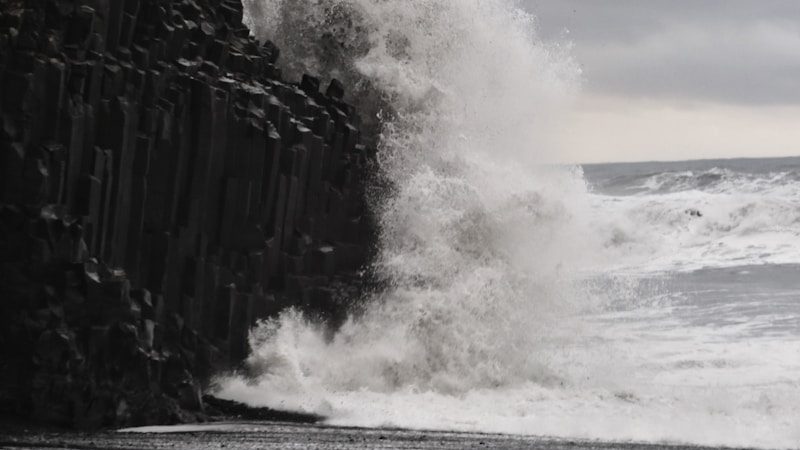
    a large wave crashing into a rocky beach
    Photo by Chengyu Wang on Unsplash

    The old models assumed the ground was a solid, unmoving platform. But our giant cities are incredibly heavy. The weight of millions of tons of concrete is actually pushing the land down into the soft earth. This process, called Subsidence, is happening in almost every major coastal city from New York to Shanghai. When the land sinks and the water rises, the impact is multiplied. We are essentially walking down an elevator while it is moving up. But there is a second, even weirder factor involving the Earth’s gravity.

    The Gravitational Pull of the Ice

    Icy arctic landscape with a clear blue sky
    Photo by Dave Meckler on Unsplash

    This sounds like science fiction, but it is pure physics. Giant ice sheets in the Arctic are so heavy that they actually have their own gravitational pull. They pull the ocean water toward them. As the ice melts and becomes lighter, that gravitational pull weakens. The water that was being held at the poles is now rushing back toward the equator. This is causing sea levels to rise much faster in tropical areas than in the north. The Math was wrong because we didn’t realize how much the ice was holding the water back. But wait until you see what is happening to the ocean floor.

    The Bending of the Ocean Floor

    Aerial view of a sandy coastline with shallow turquoise water
    Photo by Rod Long on Unsplash

    As the glaciers melt, a massive amount of water weight is being added to the ocean. This weight is so heavy that it is actually bending the ocean floor downward. This Ocean Deformation means the bowl that holds the water is changing shape. It makes it almost impossible to get an accurate reading using old-fashioned tide gauges. We had to wait for 2026 satellite technology to see the Big Picture. We are looking at a planet that is literally reshaping itself under the weight of the water. But can we build our way out of this?

    The Failure of the Old Sea Walls

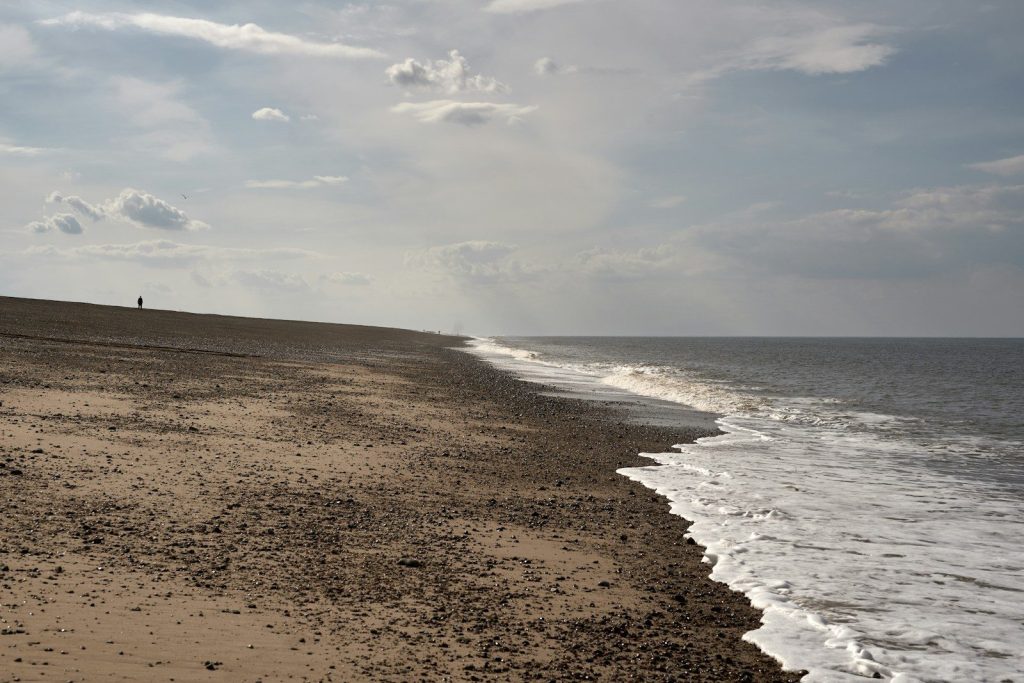
    brown sand beach under white clouds during daytime
    Photo by Rasa Kasparaviciene on Unsplash

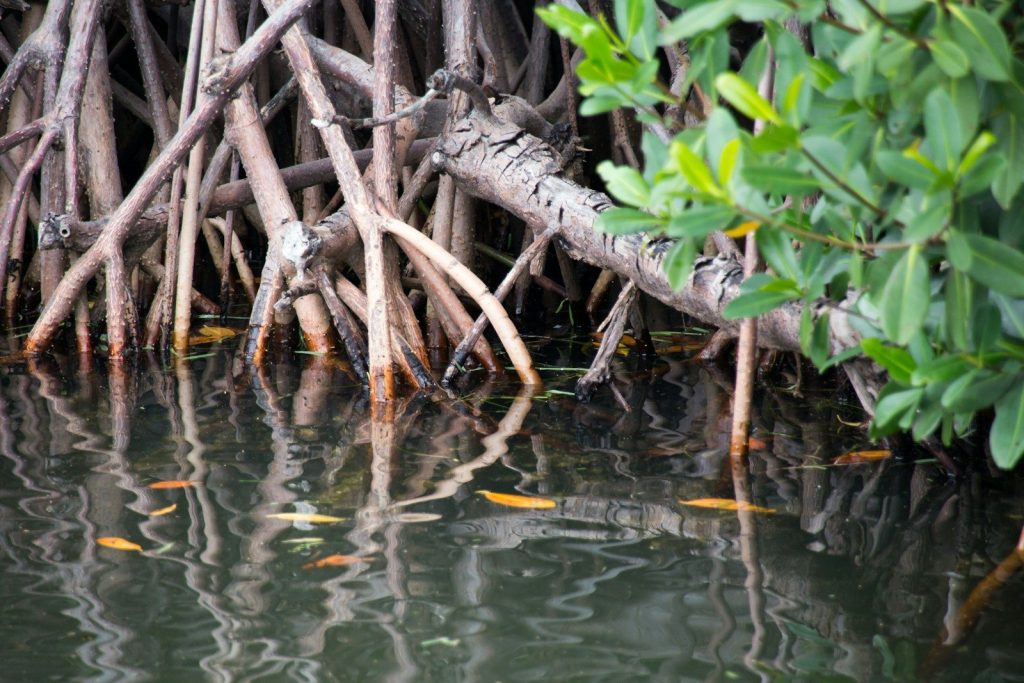
    Because our math was wrong, our sea walls are too short. Many of the multi-billion-dollar projects built in the last decade are already being overwhelmed by high tides. The 100-Year Storms are now happening every five years. We are realizing that fighting the water with concrete is a losing battle. The new strategy is Living Shorelines, using mangroves and oyster reefs to absorb the energy of the water. We have to learn to soften the blow instead of blocking it. But is it too late for some of our favorite vacation spots?
    The Disappearing Beach Paradox

    mangroves b
    Photo by Florida-Guidebook.com on Unsplash

    Have you noticed your favorite beach getting smaller every year? It isn’t just your imagination. The new math shows that we are losing sand volume at a record pace. The combination of rising water and sinking land is creating a Current Vortex that pulls sand away from the coast and into the deep ocean. We are spending millions to pump sand back onto the beaches, but it only lasts for a few months. We are in a race against a tide that never sleeps. But what does this mean for the value of your home?

    The Great Real Estate Reset

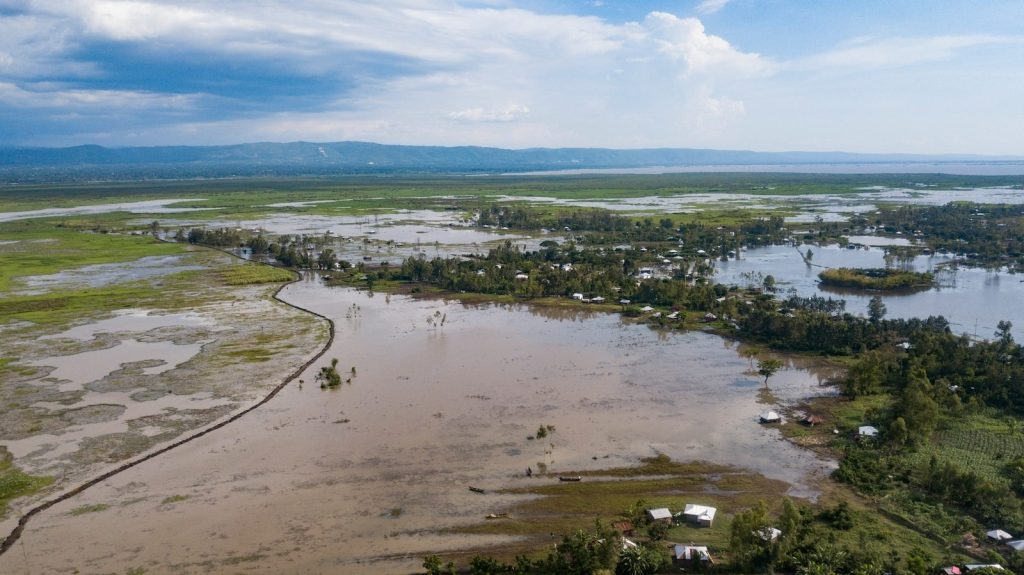
    a large body of water surrounded by land
    Photo by Evans Dims on Unsplash

    As the new Sea-Level Math becomes public, the real estate market is going through a massive reset. Insurance companies are using the 2026 data to change their rates, making some coastal homes uninsurable. We are seeing a Migration Inland as people move away from the high-risk zones. It is the beginning of a new map of the world. The Blue Zone on the map is moving, and we have to move with it. But there is a hopeful side to this discovery.

    Turning Data into a New Future

    bangkok, nature, river, market, boats, floating market, water, floating, transport, travel, marketplace, scene, thailand, asia
    Photo by jprohaszka on Pixabay

    Now that we have the correct math, we can plan for the real future. We are designing Seaborne Cities and Amphibious Buildings that can rise and fall with the water. We are moving from a world of fixed boundaries to a world of fluid solutions. The 2026 reveal served as a wake-up call, but it also served as a blueprint for survival. We finally look at the planet with clear eyes. But are you ready for the next discovery that is already hitting the headlines?
    The Countdown to a Resilient Planet:

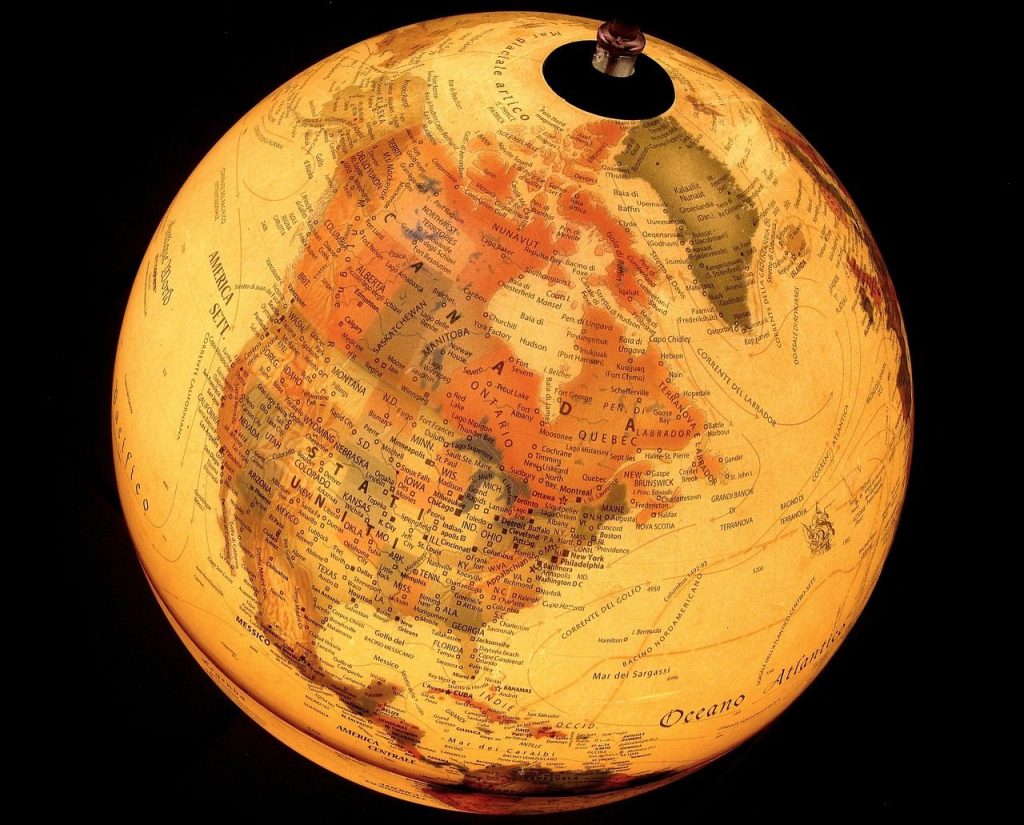
    globe, world, geography, continents, planet, earth
    Photo by Archimar on Pixabay

    We are counting down to a future that looks a lot different from the past. This new math isn’t just about bad news, it’s about having the truth so we can build a better world. We are moving toward a stronger resilient planet, and it starts with understanding the ground on which we are. The next chapter is up to us!

    Featured Image:Photo by Bobby Youstra on Unsplash

  • The Strange Case of the Yam That Tricks Birds into Survival

    The Strange Case of the Yam That Tricks Birds into Survival

    In the deep jungles of Southeast Asia, a bizarre survival story is unfolding. It involves a specific type of wild yam that has learned how to think like a bird. For a long time, botanists were confused about why this yam would produce small, bright red bulbs that looked exactly like bird eggs. It seemed like a waste of energy for a plant. But a new study has revealed the Strange Case of the Yam That Tricks Birds into Survival.

    This yam is a master manipulator. It doesn’t just want to be eaten; it wants to be moved. By mimicking the look and even the heat of a bird’s egg, the yams trick mother birds into rescuing the bulbs and placing them in their nests. It is a level of plant intelligence that is making scientists rewrite the rulebook on evolution. But what happens when the bird realizes it has been fooled?
    The Perfect Visual Deception

    easter eggs, easter nest, easter, decoration, easter festival, spring, easter theme, cute, nature, easter decoration, deco, easter greetings, coloured, bird nest, nest, multicoloured, colored, colorful eggs
    Photo by Alexas_Fotos on Pixabay

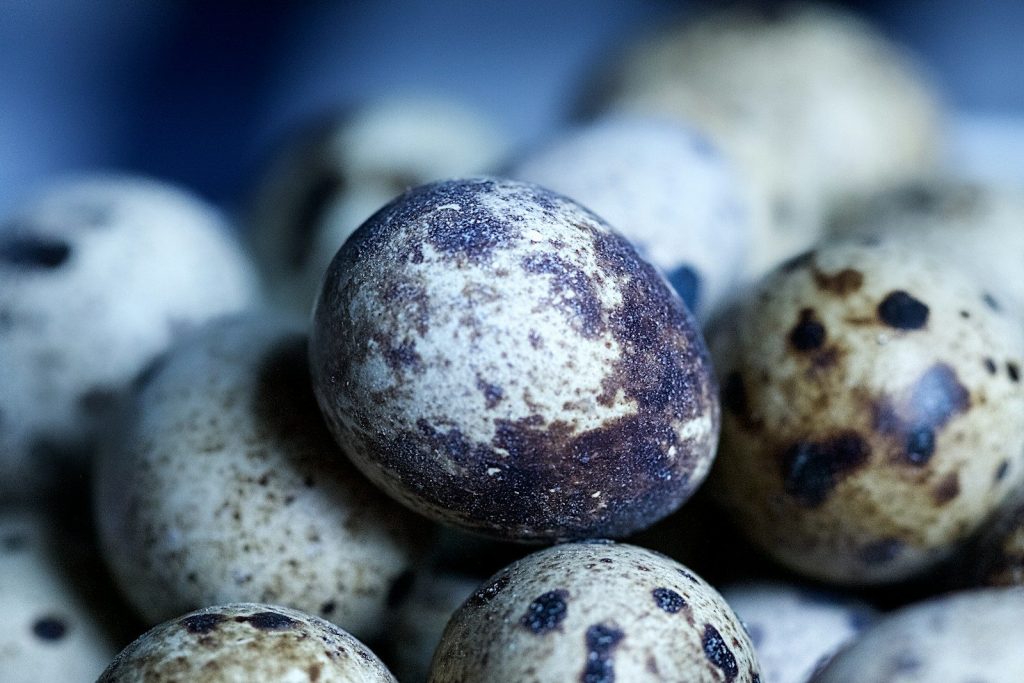
    The yams’ eggs are almost impossible to distinguish from the real thing. They have the same shape, the same speckled pattern, and even a similar weight. The plant has evolved to match the specific eggs of the Jungle Myna bird. This visual trickery ensures that the bird will pick up the bulb and carry it to its nest high in the canopy. It is a free ride to a safe place. But the trick doesn’t stop with the eyes. The yam has a chemical secret, too.

    Chemical Lures and Fake Pheromones

    white and black stone fragment
    Photo by Paolo Chiabrando on Unsplash

    If the bird was only looking with its eyes, it might eventually become suspicious. To complete the trick, the yam emits a specific pheromone that smells like a baby bird. This triggers a caring instinct in the mother bird, which is almost impossible to resist. She will sit on the yam bulb, keeping it warm and protected against predators. The yam essentially hires the bird to act as its personal security guard and incubator. Wait until you see how the plant pays the bird back.

    A Secret Benefit for Both Species:

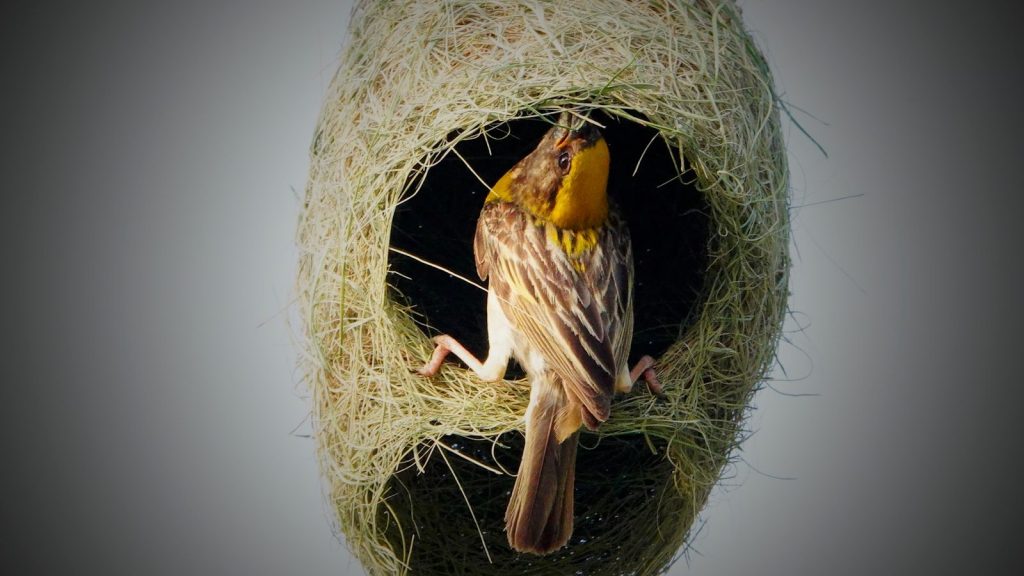
    a bird sitting inside of a birdhouse filled with hay
    Photo by Tapish on Unsplash

    While it looks like a trick, scientists have found that the bird actually benefits too. The yam bulb is covered in a specialized ant-repellent sap. By having the bulb in its nest, the bird is protected from stinging jungle ants that would normally eat its real eggs. It is a Mutualistic Trick. The plant gets a safe place to grow, and the bird gets a safe house for its babies. It is one of the most complex relationships ever found in nature. But how did a plant learn how to mimic an animal?

    The Mystery of Plant Intelligence

    a close up of a leaf with a bug on it
    Photo by Cesar Nunez on Unsplash

    This discovery is part of a new field called Plant Neurobiology. We are finding that plants are much more aware of their surroundings than we ever suspected. The Trickster Yam has to sense the presence of the birds and time its bulb production to match their nesting season. It is a high-speed calculation performed by a species that doesn’t even have a brain. It makes us wonder what other plants are watching us. But could this yam eventually trick humans, too?

    Using the Yam for Modern Medicine

    green leafed plant
    Photo by Shahadat Rahman on Unsplash

    The specialized ant-repellent pheromone produced by the yam is now being studied by medical researchers. They believe it could be used to create non-toxic insect repellents for humans that last for weeks. We are borrowing the yams’ trick to protect ourselves. It is proof that the deep jungle still holds thousands of secrets that could change our lives. The Trickster might end up being a lifesaver. But as we look at the ground, the very edge of the world is starting to move.

    Why the Coastlines Are Acting Strange

    man in blue tank top standing beside green leafed plant
    Photo by Drew Farwell on Unsplash

    The case of the Trickster Yam reminds us that the world is full of hidden movements. Just as the yam moves into the nest, our coastlines are moving in a way that is leaving scientists speechless. The old rules of geography are being rewritten as we speak. We are realizing that the Earth is much more dynamic than our maps suggested. We have to learn to think like the planet to survive. But how fast is the water actually rising?

    The End of the Trickster Mystery

    man in black long sleeve shirt standing beside green plant
    Photo by Nathan Jennings on Unsplash

    Nature is the ultimate trickster, and we are just learning to see the game. This yam proves that survival isn’t just about being strong, it’s about being clever. We are moving towards a sphere where the secrets of the jungle will help us build a better future. Keep your eyes open, because there is a lot more to discover in the world around you.

    Featured Image: Photo by Bernd 📷 Dittrich on Unsplash

  • Why We Should Stop Blaming Cows for Methane

    Why We Should Stop Blaming Cows for Methane

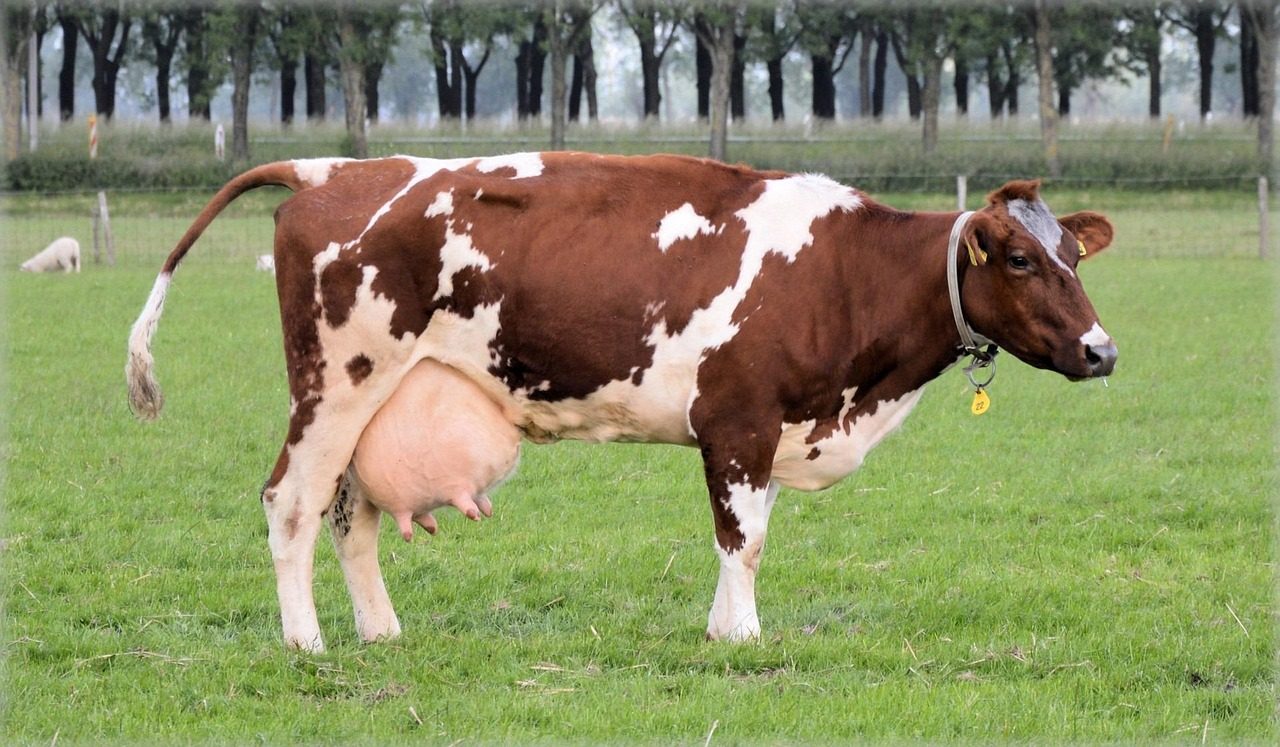
    For decades, the humble cow has been cast as the villain of climate change. Every environmental report has pointed to cow burps as a major source of methane gas, which traps heat in our atmosphere. We were told that the only way to save the planet was to stop raising cattle. But a shocking 2026 discovery has just flipped that story upside down. Scientists have identified a previously unknown Organelle inside the microbes that live in a cow’s stomach.

    This tiny structure acts as a natural methane filter. It turns out that cows were never the problem, it was a specific imbalance in their gut that we didn’t understand. By activating this organelle, we can potentially reduce a cow’s methane output to almost zero. This means that we can have our steak and save the planet too. It is a complete reset for the agricultural world and a massive relief for farmers. How did we miss such an important piece of biology for so long?

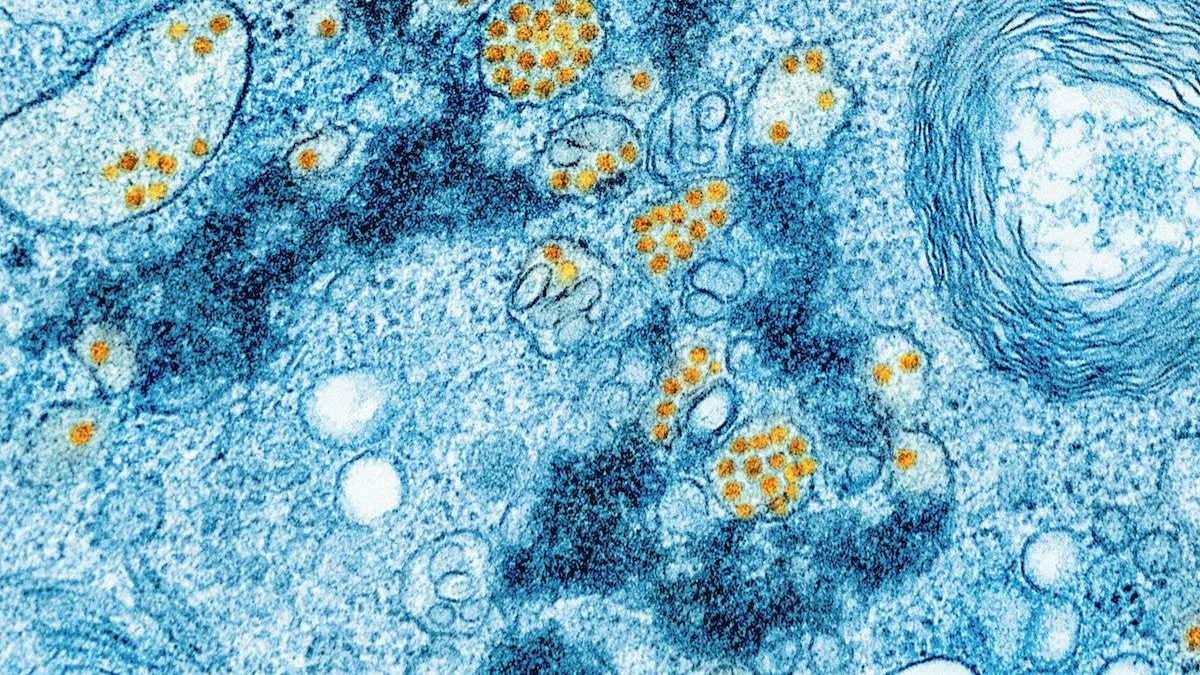
    The Microscopic Filter in the Gut

    a blue and yellow substance with yellow dots
    Photo by National Institute of Allergy and Infectious Diseases on Unsplash

    The secret is a structure that scientists are calling the Methano-Stop. In most cows, this organelle is dormant or inactive because of the way we feed them. When cows eat highly processed grain, the organelle shuts down, and methane production spikes. But when they eat specific types of natural grasses or seaweed, the organelle wakes up and starts to break down the methane before it ever leaves the cow. It is a biological miracle hiding in plain sight. But can we really change the global climate just by changing what cows eat?

    Seaweed and the Science of the Switch

    cow, cattle, farmer, feeding, man, animal, agriculture, animal husbandry, livestock, nature, farmer, farmer, farmer, farmer, farmer, animal husbandry, animal husbandry, livestock
    Photo by vivaasocial on Pixabay

    The 2026 discovery was triggered by a study on cows living near the coast who ate washed-up seaweed. These cows had almost zero methane emissions. Scientists found that a specific chemical in the seaweed triggered the Methano-Stop organelle to stay active. Now, researchers are creating a seaweed-based supplement that can be added to any cow’s diet. It is a low-cost, natural solution to a billion-dollar problem. We are moving from fighting nature to partnering with it. But what does this mean for the future of the beef industry?

    The End of the Anti-Cow Movement

    white cattle on green grass at daytime
    Photo by Donald Giannatti on Unsplash

    The blame-the-cow movement is quickly losing steam as this news spreads. If cattle can be methane-neutral, then they are actually a vital part of a healthy ecosystem. Their grazing helps capture carbon in the soil and promotes biodiversity. This discovery is a huge win for rural communities and food security. We are realizing that the villain was actually a misunderstood hero. It is a massive shift in our cultural conversation about food. But wait until you see how this affects the price of your groceries.

    Making Sustainable Meat Affordable

    agriculture, nature, wheat, field, green, farming, summer, farm, food, rice, vietnam, farmer
    Photo by TruongDinhAnh on Pixabay

    In the past, eco-friendly meat was expensive and hard to find. But because the organelle discovery uses a natural trigger, it doesn’t require expensive technology or lab-grown alternatives. Farmers can implement this change quickly and cheaply. This means the price of sustainable beef will soon match that of regular beef. We are taking the guilt out of the checkout line. It is a total transformation of the global food market. But can this same organelle logic be applied to other animals?

    Searching for Filters in Other Species

    goat, animals, flock of sheep, nature, goat, goat, goat, goat, goat
    Photo by marliese on Pixabay

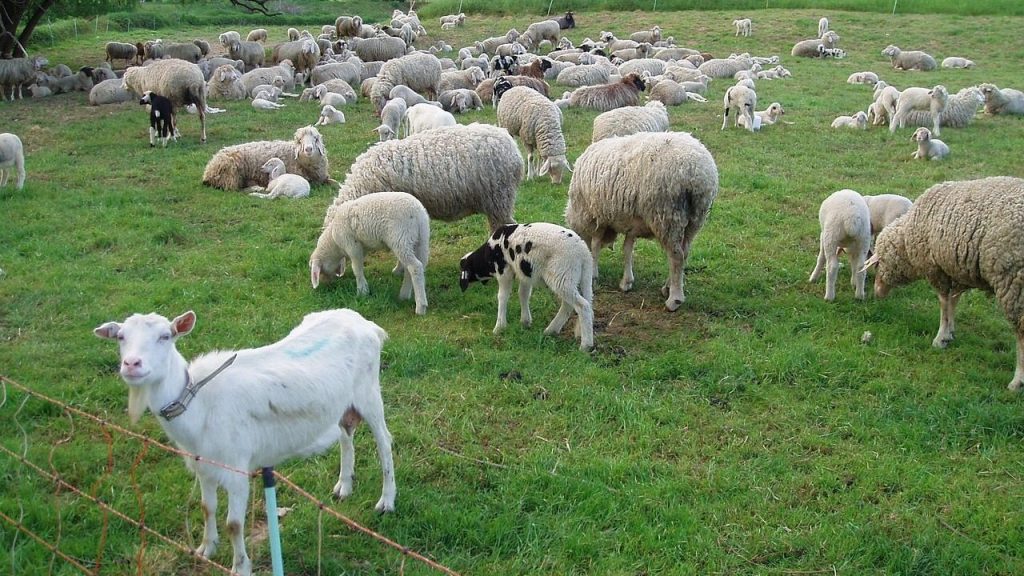
    Scientists are now looking at sheep, goats, and even wild deer to see if they have similar Methano-Stop organelles. The 2026 discovery has opened a new door in biology. We are finding that nature has built-in filtration systems for many of the things we consider pollutants. We just have to learn how to turn them on. It is a hopeful time for anyone worried about the environment. We are finding solutions in the most unexpected places. But what happens to the land when we have more cattle grazing safely?

    The Green Benefit of Grazing

    herd of cattles eating grass
    Photo by Annie Spratt on Unsplash

    When cows graze on natural pastures, they actually help the soil stay healthy. Their manure acts as a natural fertilizer, and their movement packs carbon deep into the ground. By making cows methane-neutral, we are unlocking their power to act as Climate Workers. They are helping to build a more resilient planet every time they take a bite of grass. It is a beautiful cycle that we are finally starting to respect. But is there another trickster in nature that is using birds for its own gain?

    The Mystery of the Organelle Solved

    woman in white medical scrub
    Photo by DIANA HAUAN on Unsplash

    The organelle discovery is the final piece of the puzzle for sustainable farming. We have the data, we have the seaweed, and we have the biological switch. The future of farming is bright and green. We are finally moving past the blame game and into a world of real solutions. It is a great time to be a lover of nature and a lover of science. But keep your eyes on the ground, because a strange yam is about to play a trick on the birds.

    The Countdown to a Methane-Free Future

    an hourglass sitting on top of a wooden table
    Photo by Towfiqu barbhuiya on Unsplash

    We are counting down to an eco-friendly world, and it starts in the cow pasture. This discovery proves that science can solve our biggest problems without taking away our favorite traditions. We are looking at a time when nature and technology work together. The zero-methane era is closer than you think, and cows are ready to lead the way.

    Featured Image: Photo by PublicDomainPictures on Pixabay

  • Why carnivorous plants turned leaves into traps

    Why carnivorous plants turned leaves into traps

    Most plants quietly pull nutrients from the soil, but carnivorous plants had to get creative. Many of them live in sunny, wet places where the ground is poor in key nutrients like nitrogen and phosphorus. Instead of giving up, they slowly turned ordinary leaves into clever traps. Some became sticky pads. Some became slippery pitchers.

    Others became snap traps that close when touched. These plants still use sunlight to make food, but insects and other tiny creatures help fill the nutrient gap. The Royal Botanic Gardens, Kew explains that carnivorous plants evolved trapping and digesting skills because their habitats often lack the nutrients plants need for strong growth.

    Poor soil changed everything

    a close up of a plant in a pot
    Photo by THitima on Unsplash

    Carnivorous plants did not become hunters because they stopped being plants. They still use sunlight, air, and water to make their own food through photosynthesis.

    The problem was the soil. In bogs, wetlands, and other nutrient-poor places, roots may not get enough nitrogen or phosphorus. Trapping insects became a clever backup plan for survival.

    Leaves became useful tools

    a close up of a plant with drops of water on it
    Photo by Théotim THORON on Unsplash

    The traps on carnivorous plants are usually modified leaves. Over time, these leaves changed shape and purpose, becoming pitchers, sticky pads, snap traps, or tiny suction chambers.

    That change gave the plants a better way to collect nutrients. Instead of only depending on roots, they could use leaves to attract, trap, and digest small prey.

    They still need sunlight

    brown flower in close-up photo
    Photo by THLT LCX on Unsplash

    Carnivorous plants may catch insects, but they are not like animals. They do not hunt for energy in the same way a bird or frog does.

    They still depend on sunlight to make sugar. The trapped prey mainly supplies extra nutrients, helping the plant grow in places where the soil cannot provide enough.

    Pitchers work like jars

    shallow focus photo of green plants
    Photo by THLT LCX on Unsplash

    Pitcher plants use leaves shaped like deep cups or tubes. Many have slippery sides, sweet scents, or bright colors that help draw insects closer.

    Once an insect falls inside, getting out can be hard. The plant can then break down the prey and absorb helpful nutrients from it.

    Sticky leaves hold tight

    a red and green bug on a plant
    Photo by Tyler Mower on Unsplash

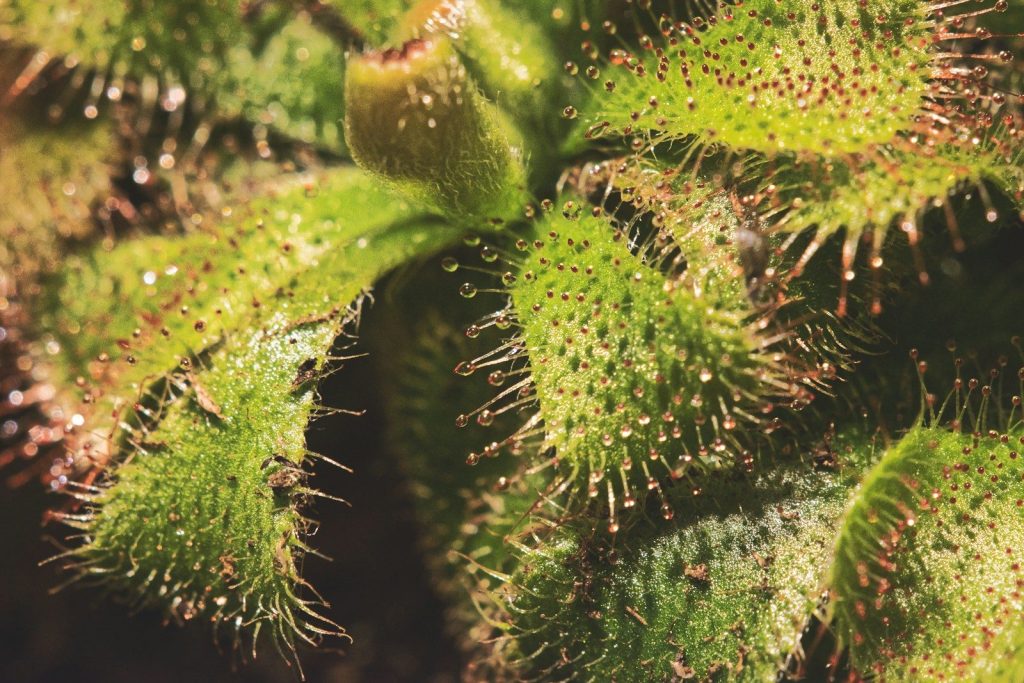
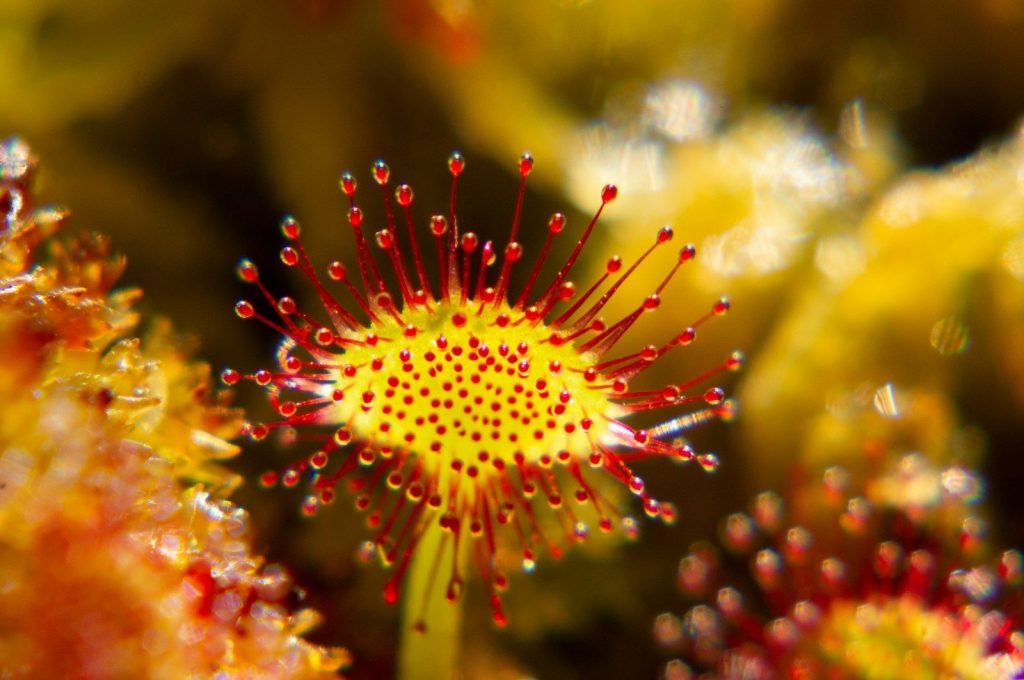
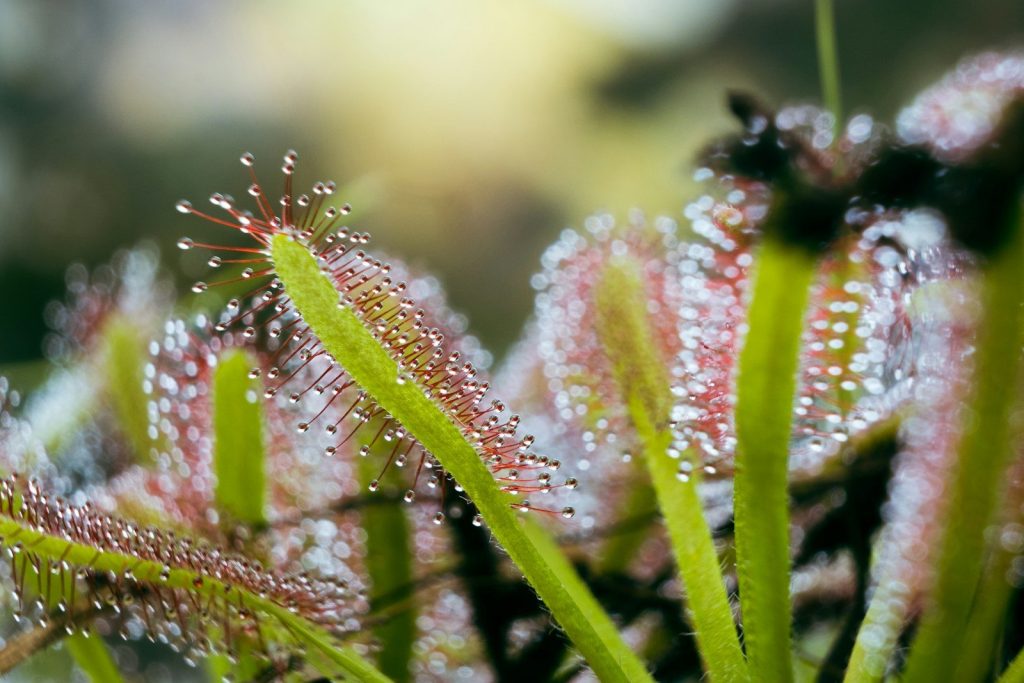
    Sundews and butterworts use a different trick. Their leaves have sticky surfaces that can trap small insects when they land.

    On sundews, the shiny drops can look like harmless dew. But once an insect gets stuck, the plant slowly works around it and begins the digestion process.

    Snap traps save effort

    red and yellow flower in macro lens
    Photo by Théotim THORON on Unsplash

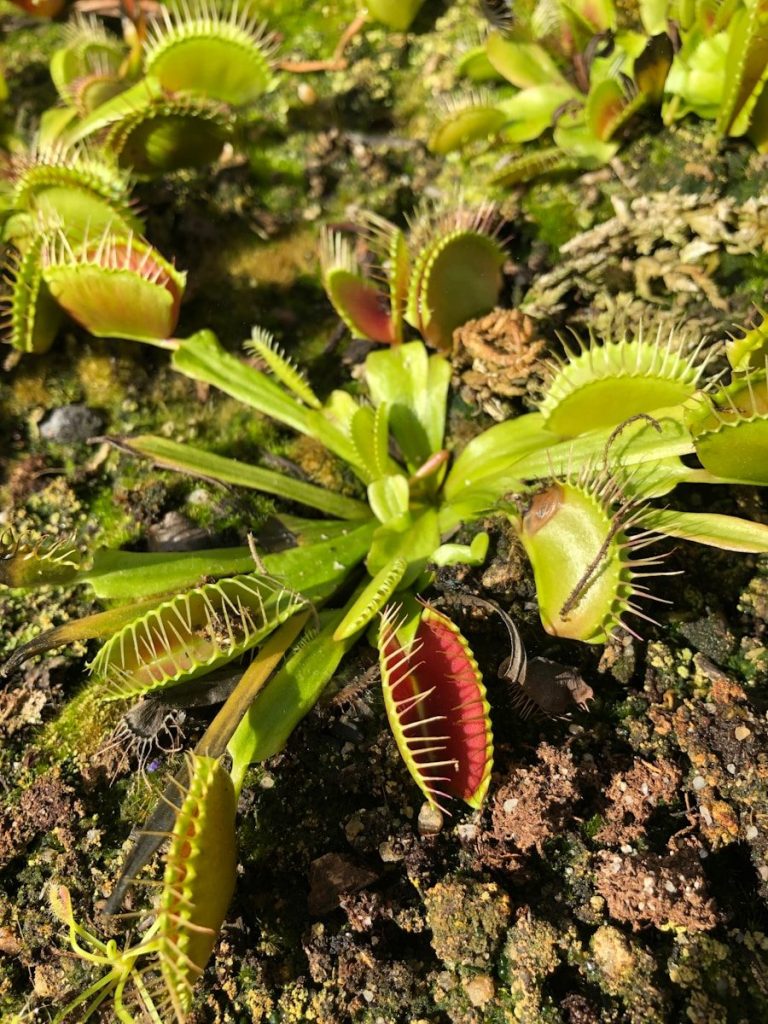
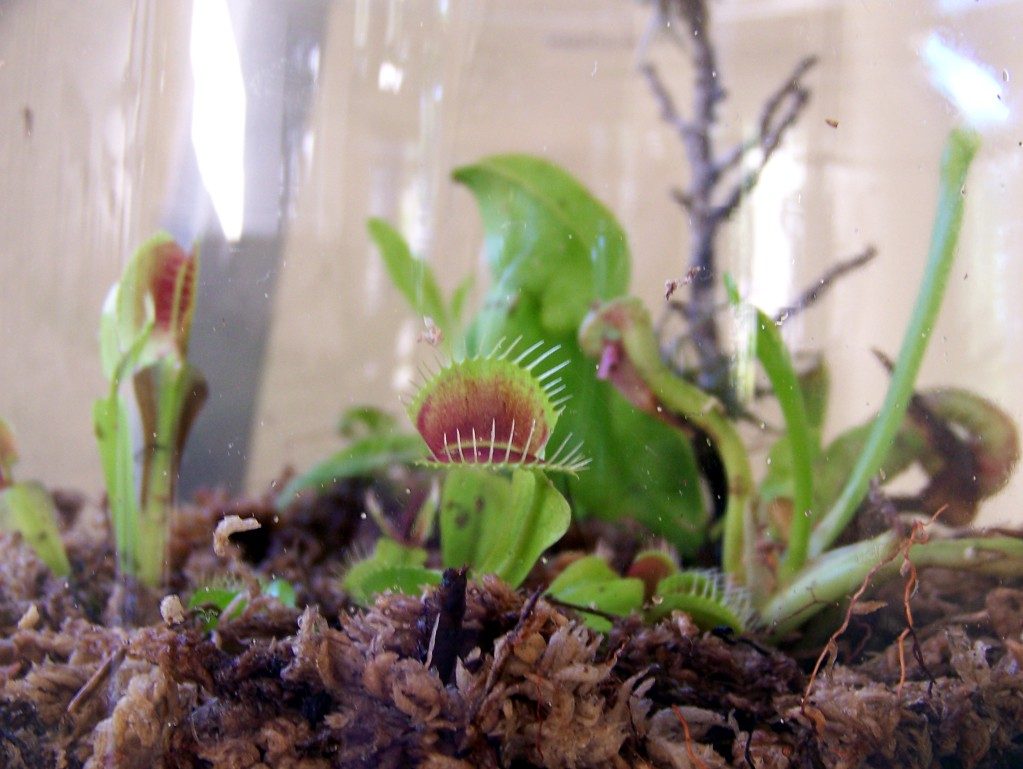
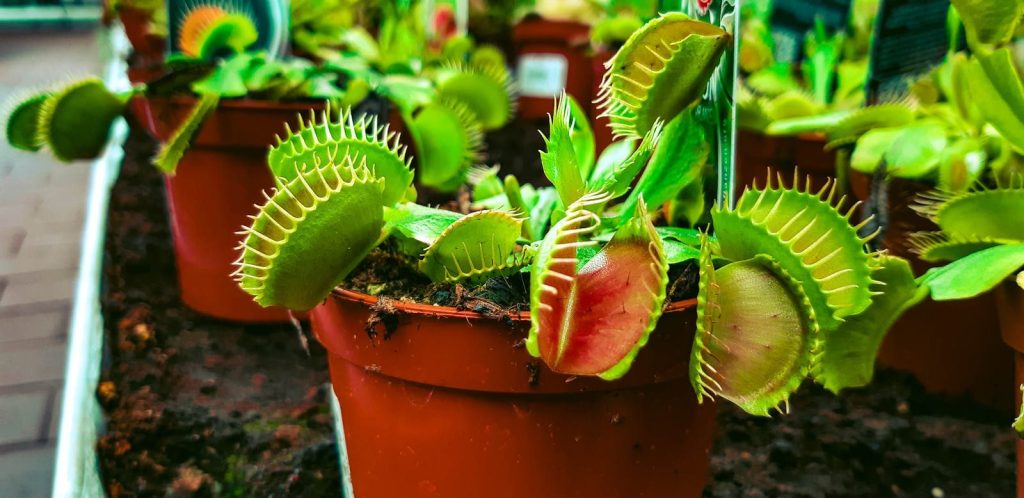
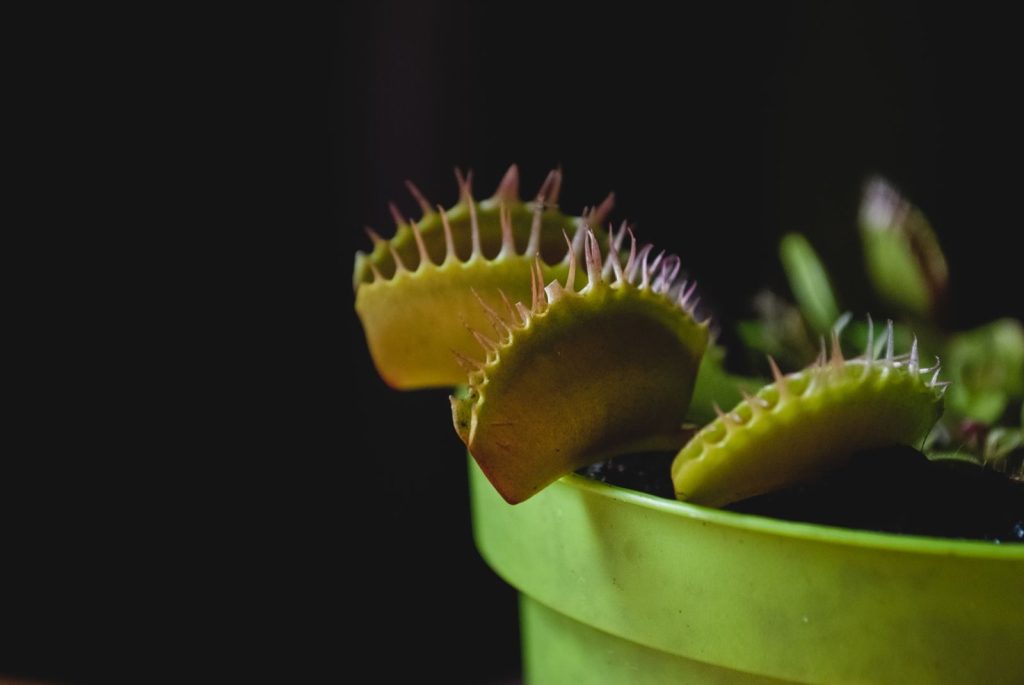
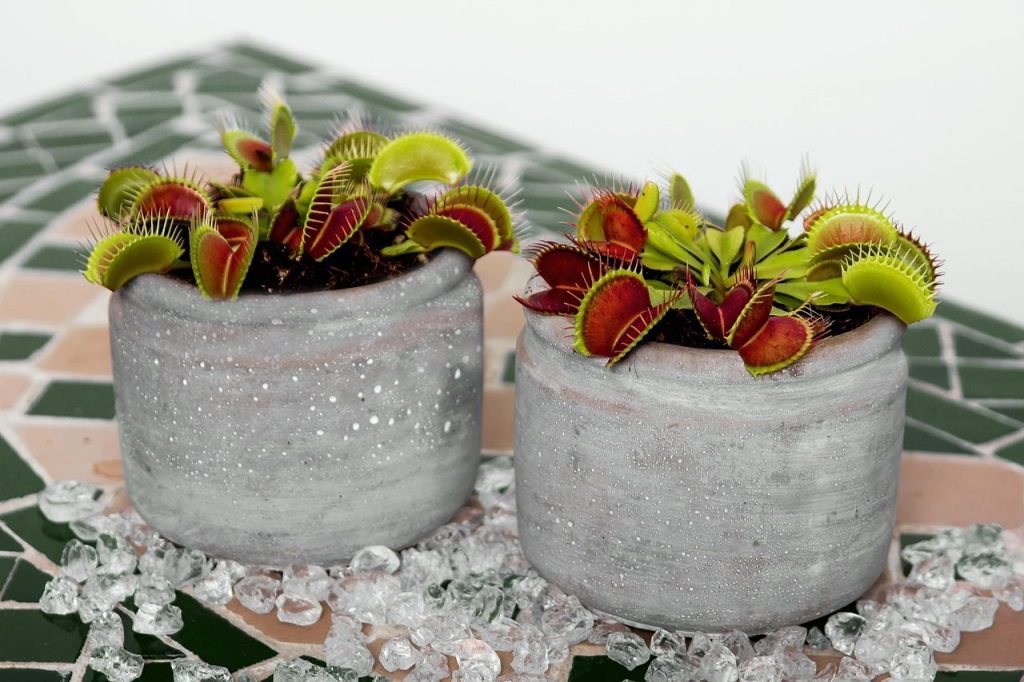
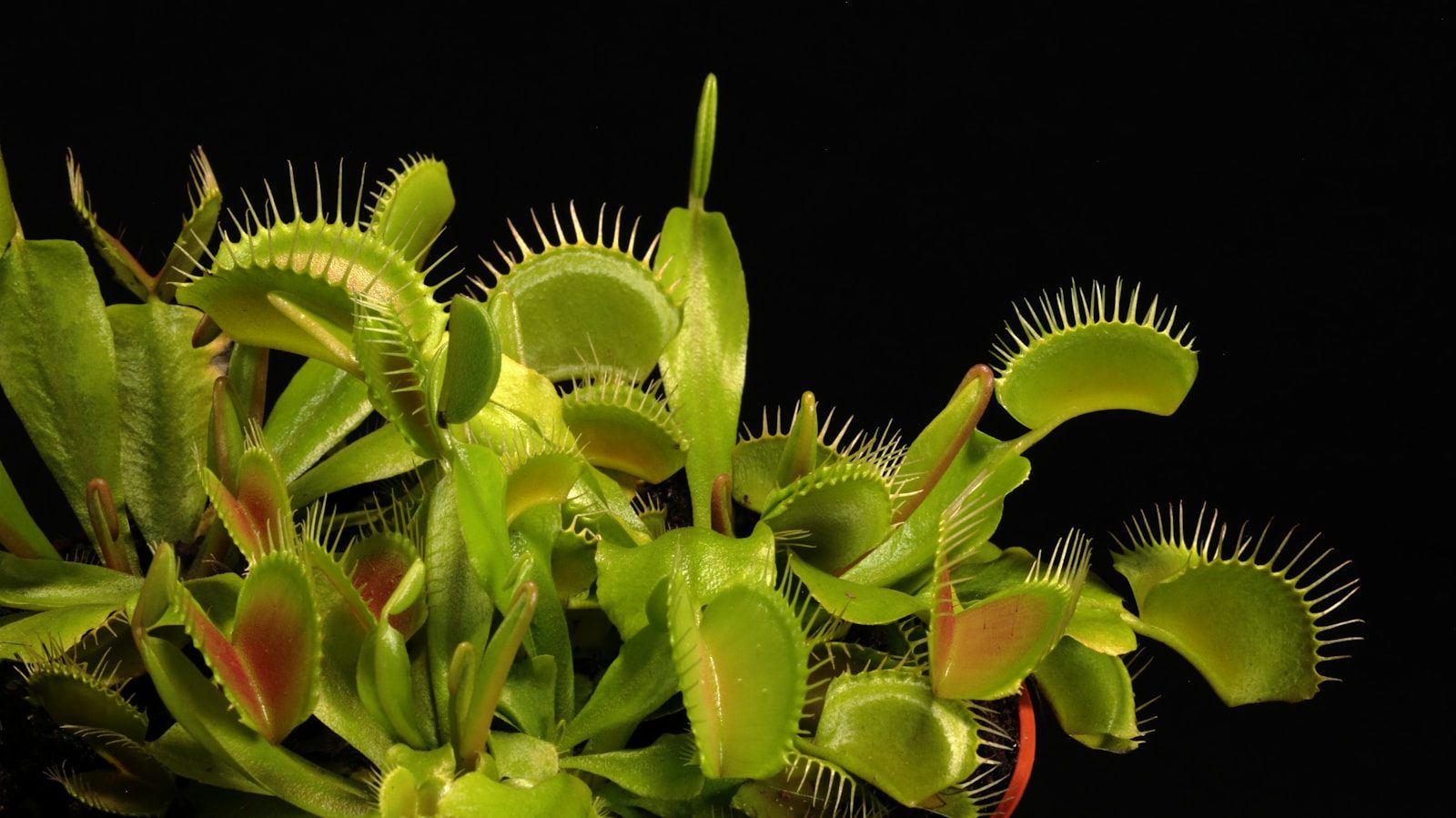
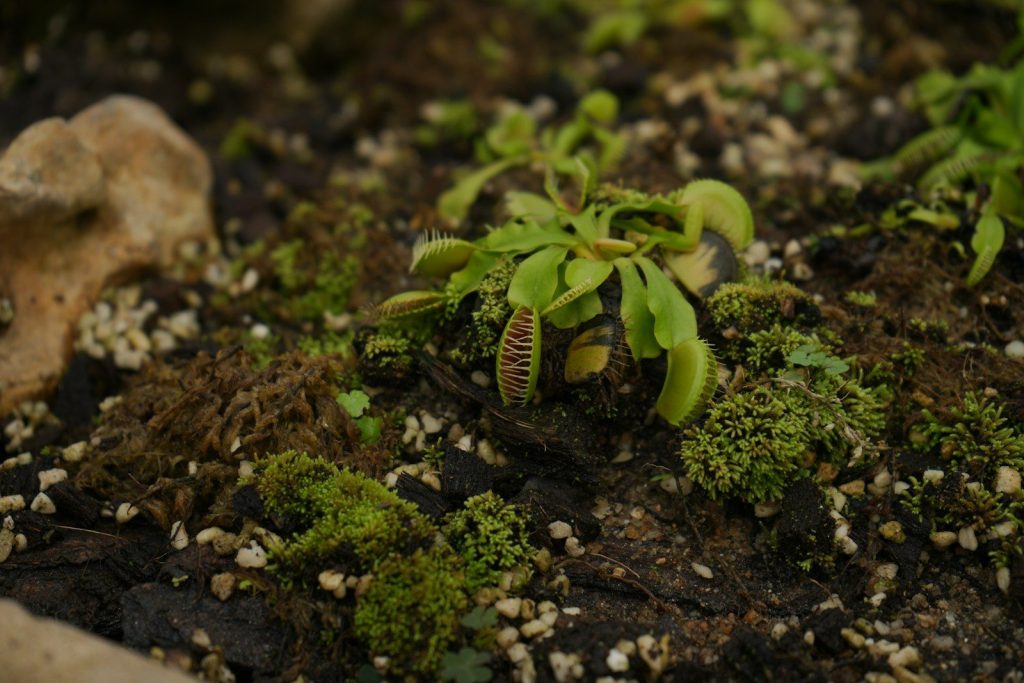
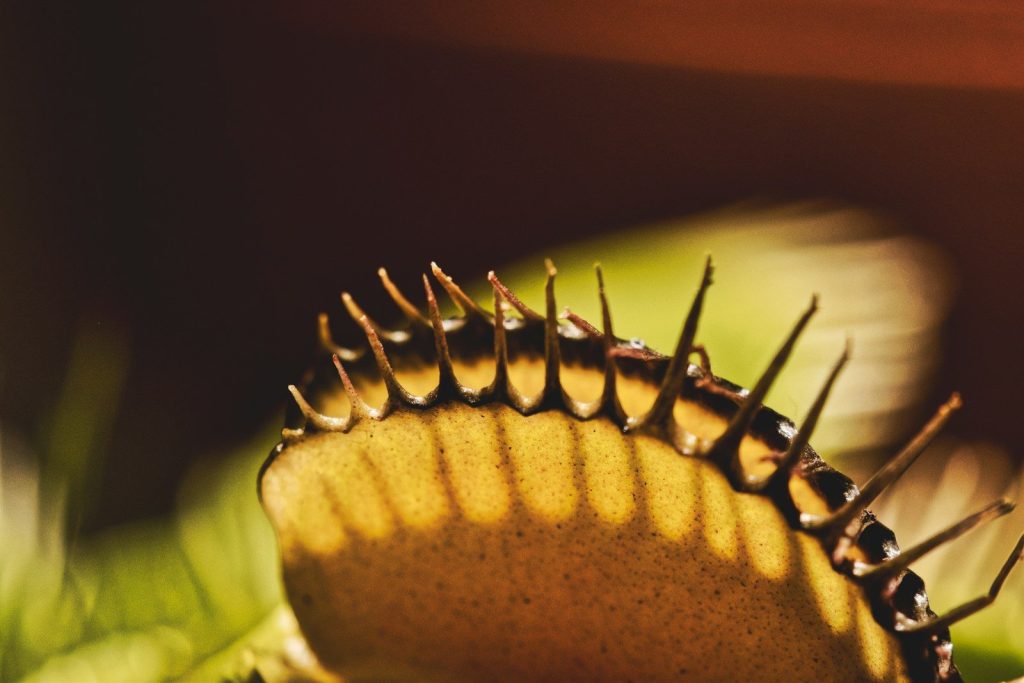
    The Venus flytrap is famous because its leaves can close quickly. Tiny trigger hairs help the plant sense when something is inside the trap.

    This fast movement helps the plant avoid wasting energy. A trap usually needs the right touch pattern before it closes fully, which helps it respond to real prey.

    Water plants got clever

    carnivorous plants” by ljmacphee is licensed under CC BY 2.0

    Some carnivorous plants live in water, where soil nutrients may also be limited. Bladderworts use tiny bladder-like traps that pull in small aquatic creatures.

    These traps are very different from pitchers or sticky leaves. They show how plants in different habitats found different ways to solve the same nutrient problem.

    Traps come with costs

    Detailed close-up of Venus Flytrap plants in a pot, showcasing vibrant green leaves.
    Photo by András Dénes on Pexels

    Turning a leaf into a trap is not free. A trap may not collect sunlight as well as a flat green leaf, and building it takes energy.

    That is why carnivory makes the most sense in special places. When sunlight and water are available, but soil nutrients are low, traps can be worth the cost.

    Many traps evolved separately

    Detailed view of a Venus Flytrap (Dionaea muscipula) in a vivid green pot, showcasing its sharp leaves.
    Photo by Izabella Bedő on Pexels

    Carnivorous plants are not all close relatives. Different plant groups developed trapping methods in separate places and at different times.

    That makes them a great example of nature finding similar answers to the same challenge. Poor soil pushed many plants toward the same basic idea: catch nutrients another way.

    Nature rewards smart design

    venus flytrap, flower background, carnivorous plant, carnivorous, beautiful flowers, flower wallpaper, flower, nature, plant
    Photo by RainerBerns on Pixabay

    Carnivorous plants turned leaves into traps because survival demanded it. Their strange shapes are not just for looks; they are practical tools shaped by tough habitats.

    From sticky sundews to deep pitcher plants, each trap tells a simple story. When the ground did not give enough, these plants found another way to grow.

  • How mushrooms quietly recycle the natural world

    How mushrooms quietly recycle the natural world

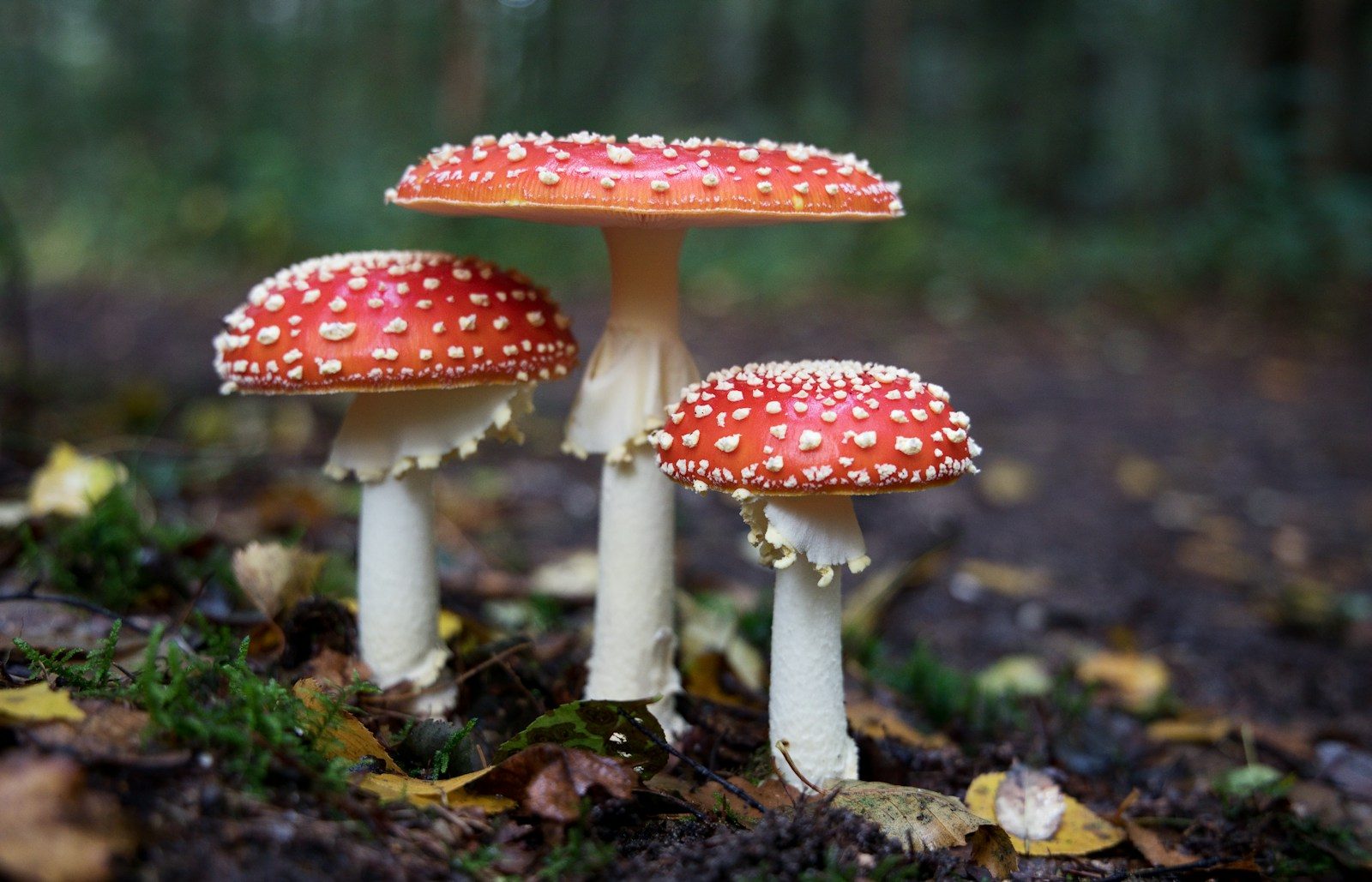
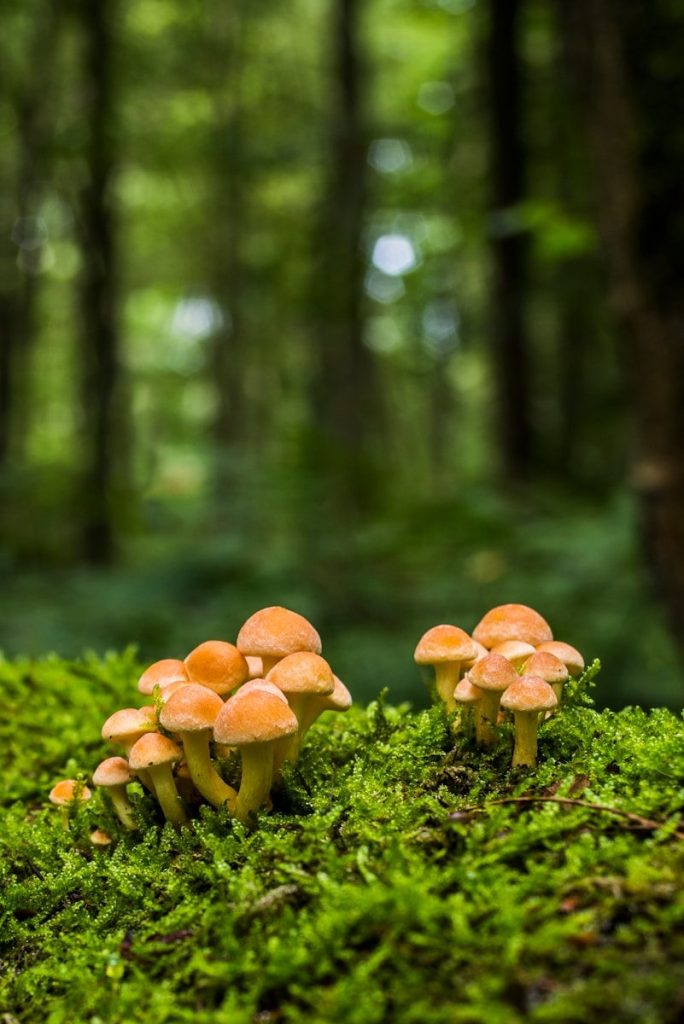
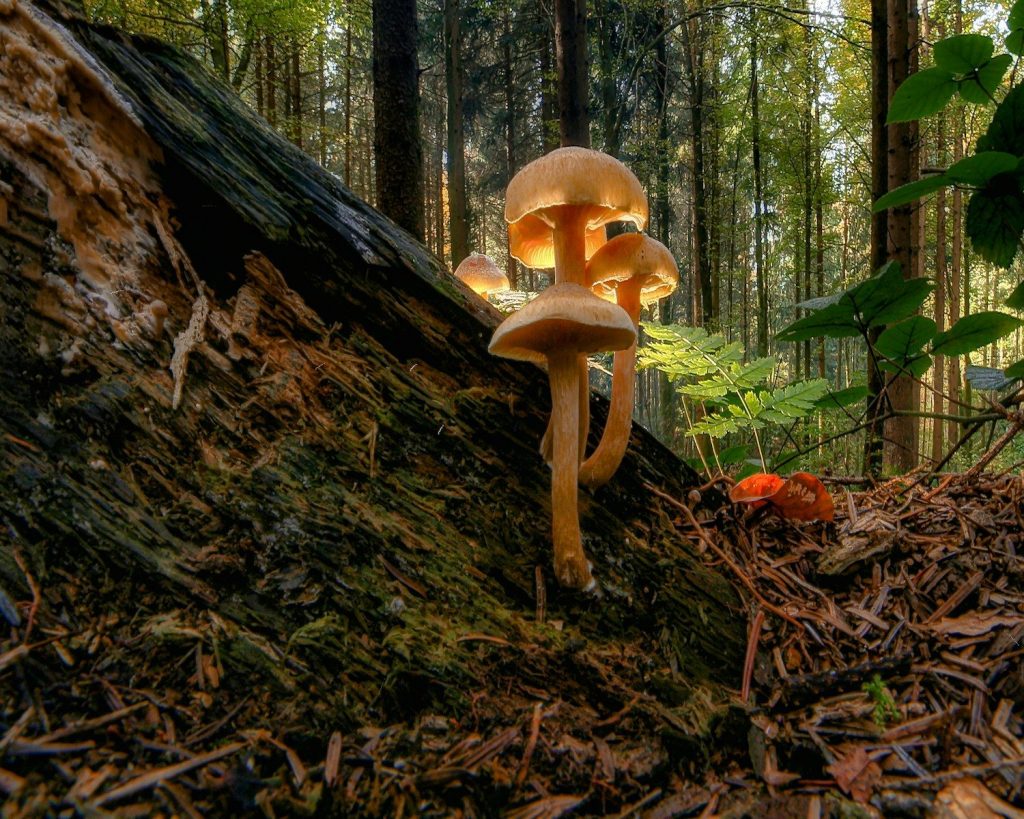
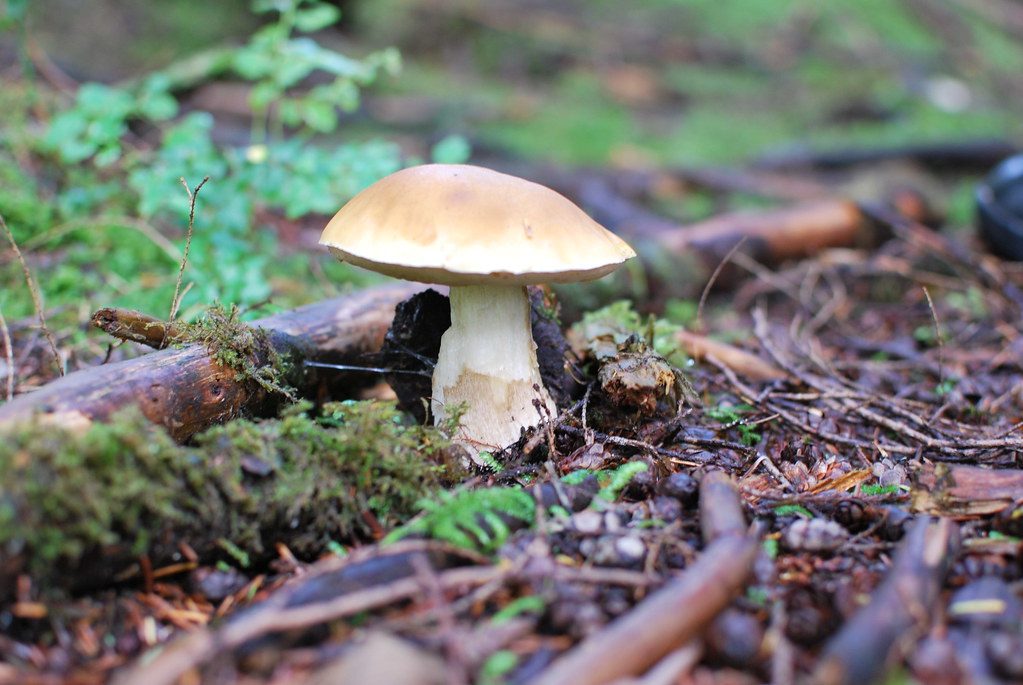
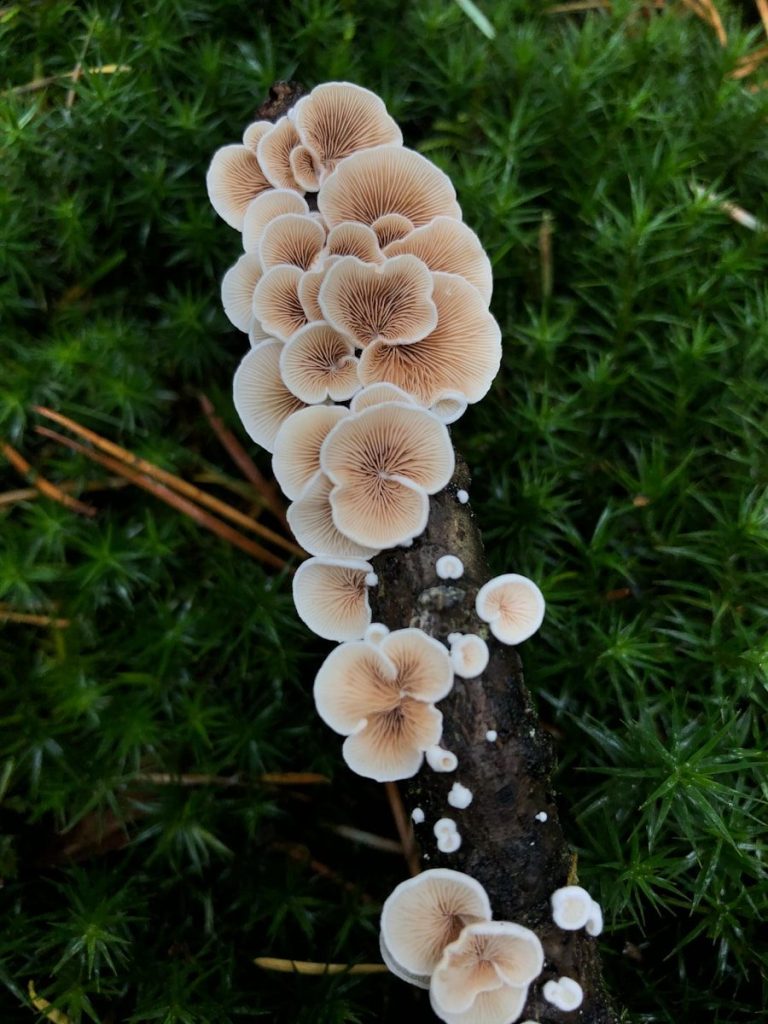
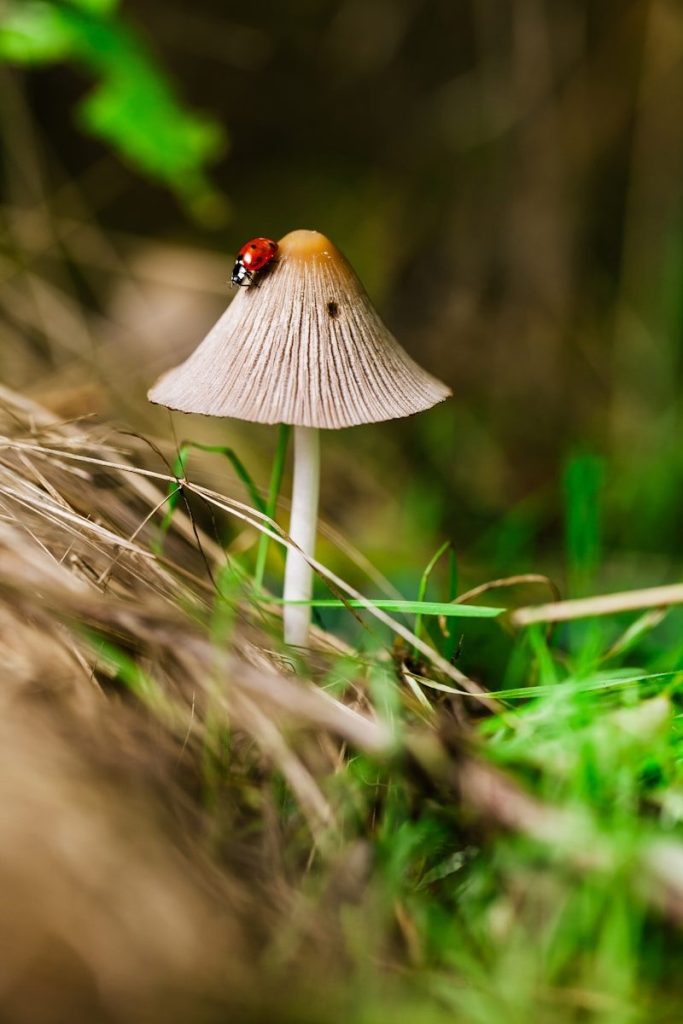
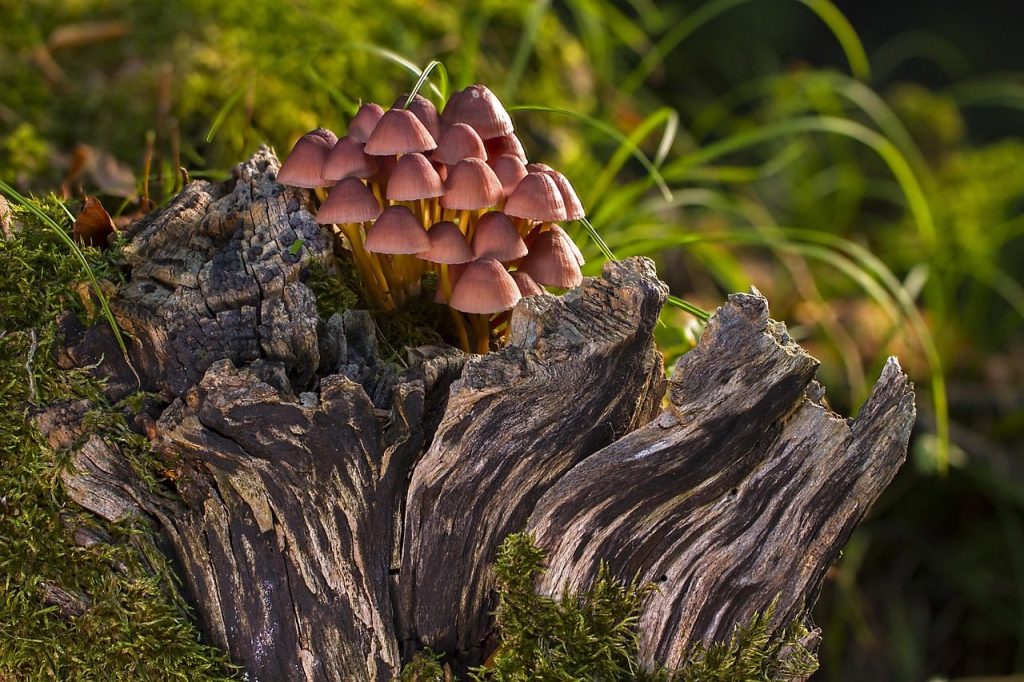
    A mushroom on a log may look small, but it is part of a huge cleanup crew. Mushrooms are the visible fruiting parts of fungi, and much of the real work happens underground or inside wood, leaves, and soil. Fungi release enzymes that break down tough natural materials, helping return nutrients to the soil instead of letting fallen branches and leaves pile up forever.

    National Geographic notes that fungi are important decomposers, especially in forests, while Kew describes them as vital for nutrient recycling in ecosystems. That quiet work helps plants grow, feeds soil life, supports forests, and keeps nature’s cycles moving in ways most people never notice.

    Mushrooms clean up forests

    brown mushrooms on green grass during daytime
    Photo by Lucas van Oort on Unsplash

    Walk through a forest and you will see fallen leaves, branches, and old logs everywhere. Mushrooms and other fungi help break that natural clutter into smaller pieces.

    Without fungi, forests would have a much harder time recycling plant material. Their work helps turn yesterday’s leaves and wood into nutrients that can support new roots, seedlings, and soil life.

    They break down tough wood

    brown mushrooms on tree trunk
    Photo by Jesse Bauer on Unsplash

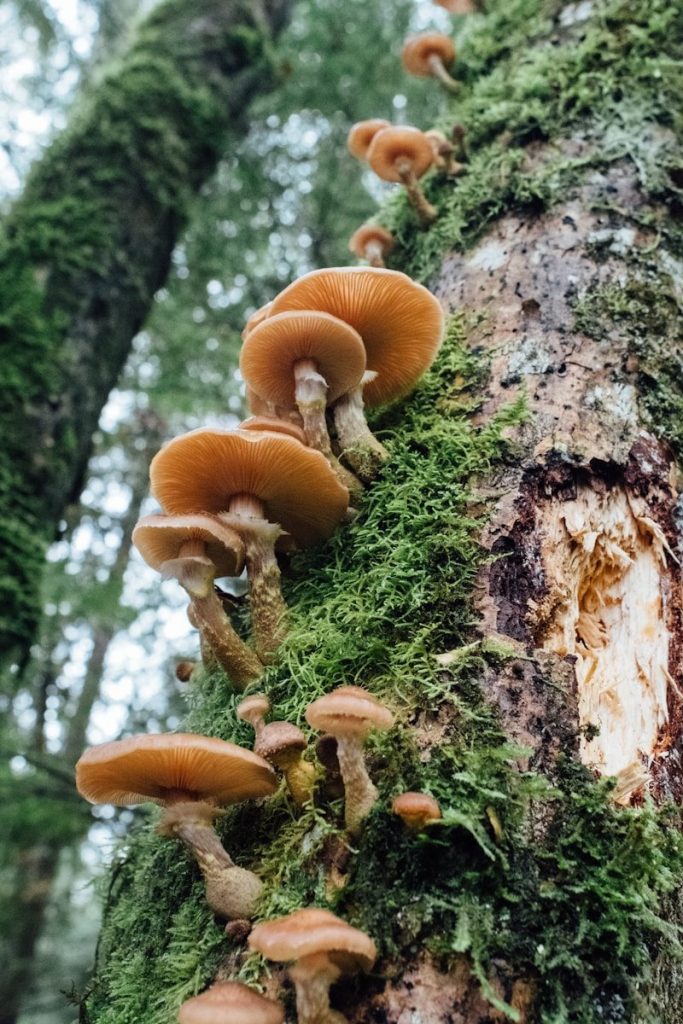
    Wood is not easy to take apart. It contains strong materials that many living things cannot digest, but fungi are especially good at breaking them down.

    Ohio State University notes that many fungi decompose lignin and other hard-to-digest organic matter. That ability makes fungi key players in turning fallen trees and branches back into usable parts of the ecosystem.

    Soil gets a natural boost

    red and white mushroom
    Photo by Florian van Duyn on Unsplash

    When fungi break down plant matter, nutrients move back into the soil. That process helps feed plants, tiny soil organisms, and the wider food web.

    This is one reason mushrooms matter even when people barely notice them. They help keep soil from becoming just packed dirt. Healthy soil is full of life, and fungi help keep that life supplied.

    They help plants grow

    brown mushroom on brown tree trunk
    Photo by iggii on Unsplash

    Some fungi do more than recycle old material. Mycorrhizal fungi form partnerships with plant roots, helping plants reach nutrients and water in the soil.

    In return, plants share sugars made through sunlight. Researchers describe this as a common exchange, where fungi gather soil nutrients and plants provide carbon-rich food. It is a quiet trade that supports many ecosystems.

    Hidden threads do the work

    Mushroom” by karen_neoh is licensed under CC BY-SA 2.0

    The mushroom above ground is only part of the story. Much of a fungus lives as thin, branching threads called mycelium, spreading through soil, wood, or leaf litter.

    These hidden threads act like a search system. They move through tiny spaces, find food sources, and release enzymes. While the mushroom may appear for a short time, the underground network may keep working much longer.

    Forests rely on decay

    woodears
    Photo by Guido Blokker on Unsplash

    Decay may sound unpleasant, but it is one of nature’s most useful processes. It clears old material and makes room for fresh growth.

    Michigan State University Extension explains that fungi help break down stressed and dead trees as part of a nutrient cycle that supports forest regeneration. In simple terms, fungi help forests renew themselves.

    They support tiny life

    macro photography of bug on the mushroom
    Photo by Benjamin Balázs on Unsplash

    As fungi break down leaves and wood, they create food and habitat for many small organisms. Insects, microbes, worms, and other soil life can all benefit from the process.

    That activity makes the forest floor more active than it looks. A soft layer of leaf litter is not just waste. It is a busy recycling zone where fungi help keep energy moving.

    Some store carbon too

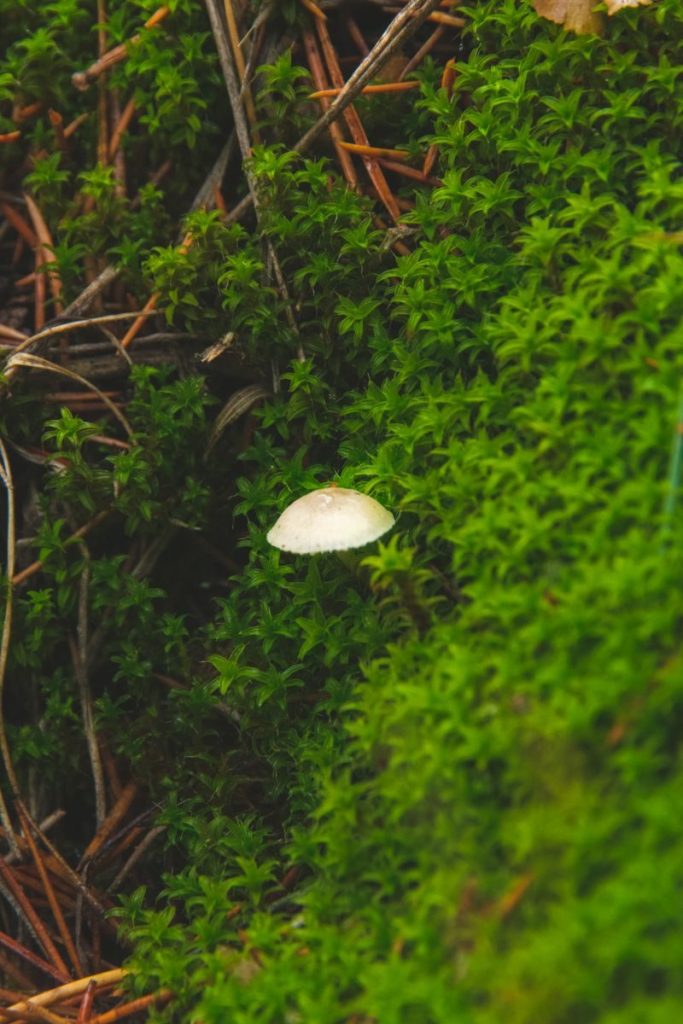
    Detailed macro shot of a mushroom growing amidst lush green moss and pine needles.
    Photo by Emre Ayata on Pexels

    Fungi are also part of the carbon cycle. As they break down plant matter, some carbon returns to the air, while some can remain in soil depending on the ecosystem.

    A review of macrofungi found that mushrooms and related fungi provide ecosystem services such as nutrient cycling, carbon stocking, and soil formation. That makes fungi important to forests in more than one way.

    They work with many species

    mushroom, mushrooms, sponge, moss, mini mushroom, agaric, screen fungus, forest mushrooms, mushroom, mushroom, mushrooms, mushrooms, mushrooms, mushrooms, mushrooms
    Photo by adege on Pixabay

    Fungi connect with plants, animals, insects, and microbes in many different ways. Some recycle materials, some form partnerships with roots, and some become food for wildlife.

    This wide role makes mushrooms more than forest decorations. They are part of a larger living system. When fungi are healthy and diverse, the natural world has more ways to recover, grow, and stay balanced.

    Small signs, big impact

    a forest with fallen leaves
    Photo by Toa Heftiba on Unsplash

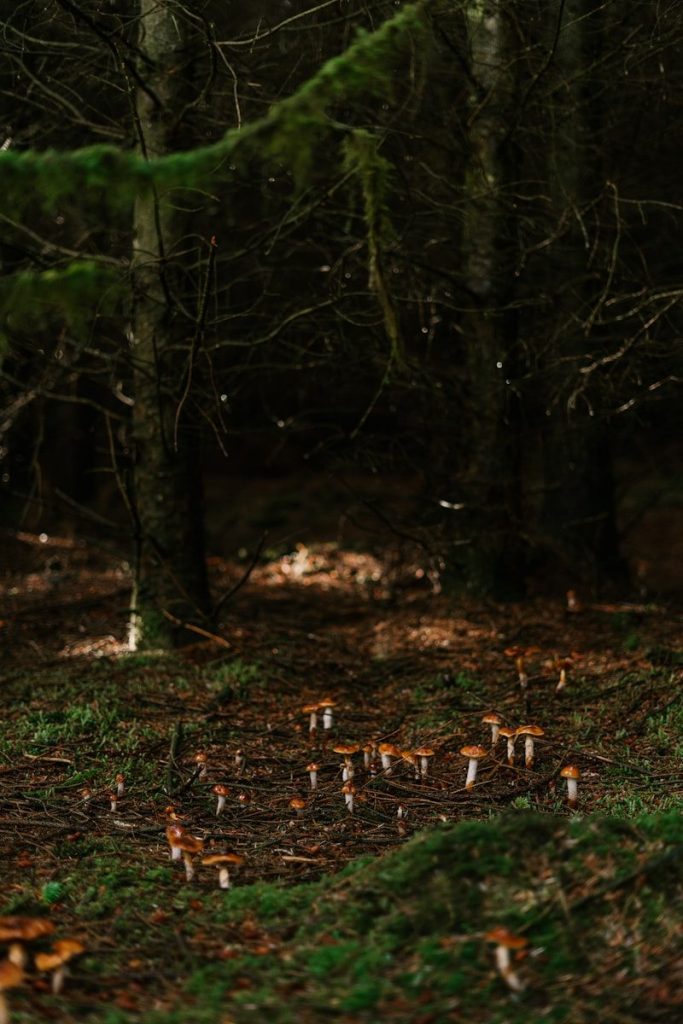
    A mushroom on a trail may seem easy to miss, but it points to a much bigger process. It shows that recycling is happening underfoot, inside logs, and across the forest floor.

    That is why mushrooms quietly matter so much. They help clean up, feed soil, support plants, and keep natural cycles going. Nature does not waste much, and fungi are one big reason why.

  • Why fireflies glow like tiny lanterns

    Why fireflies glow like tiny lanterns

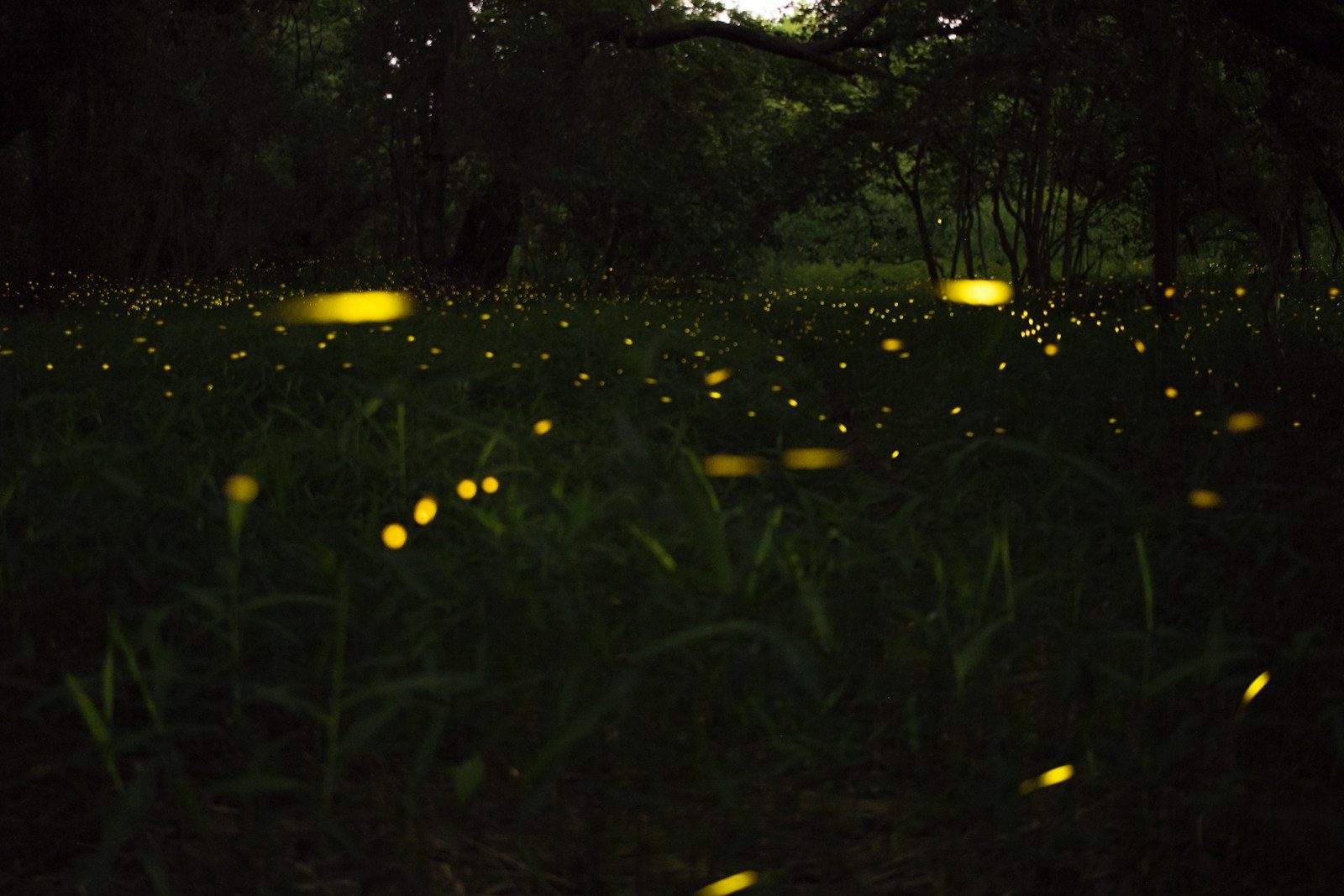
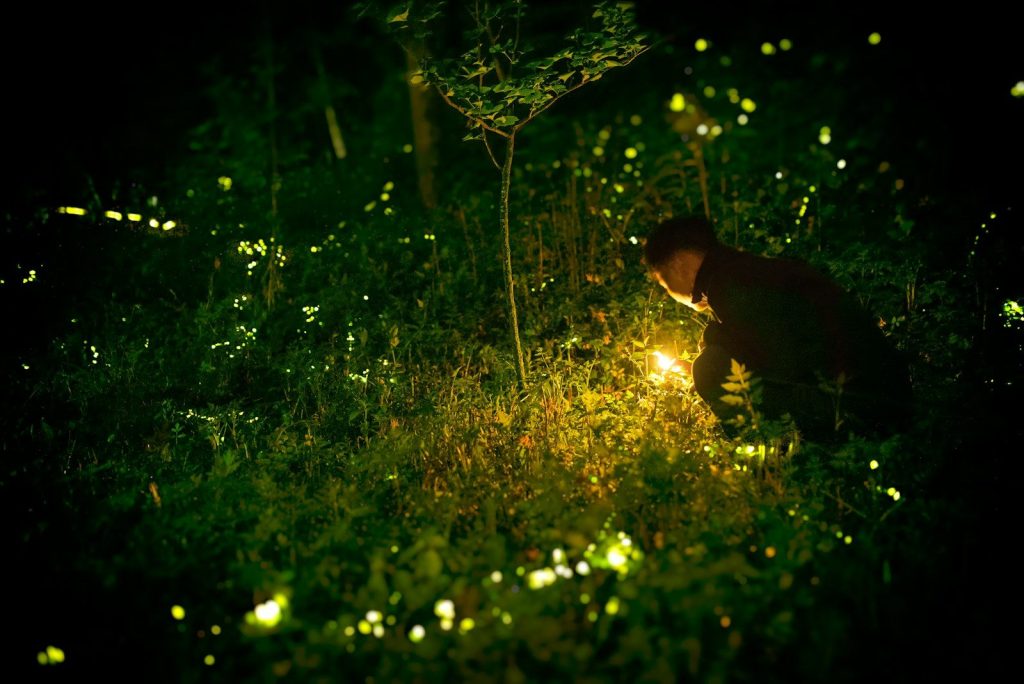
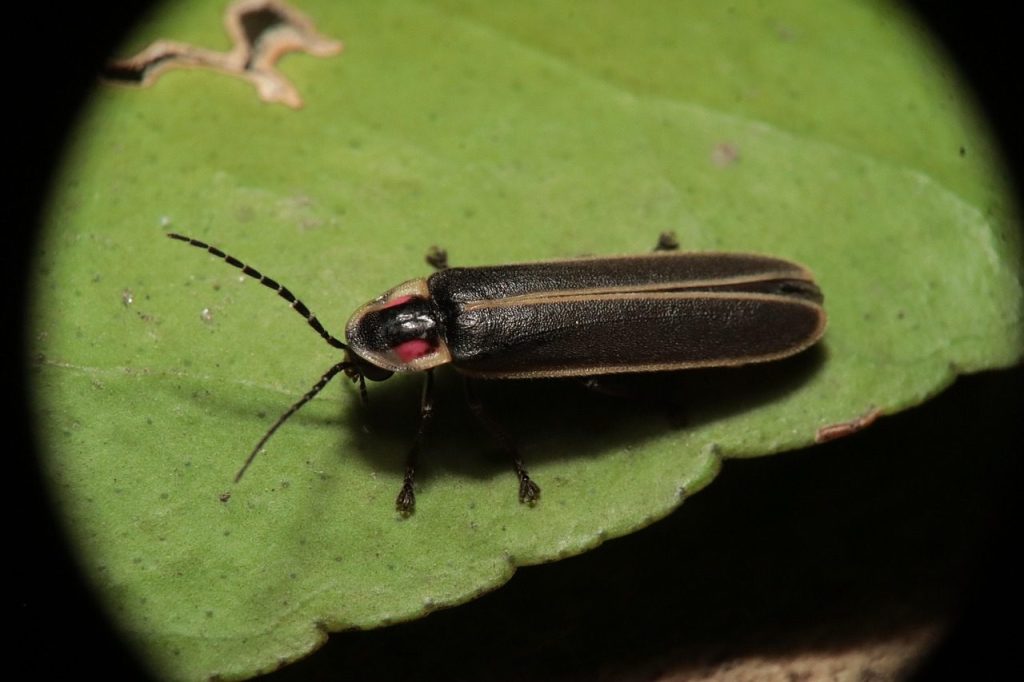
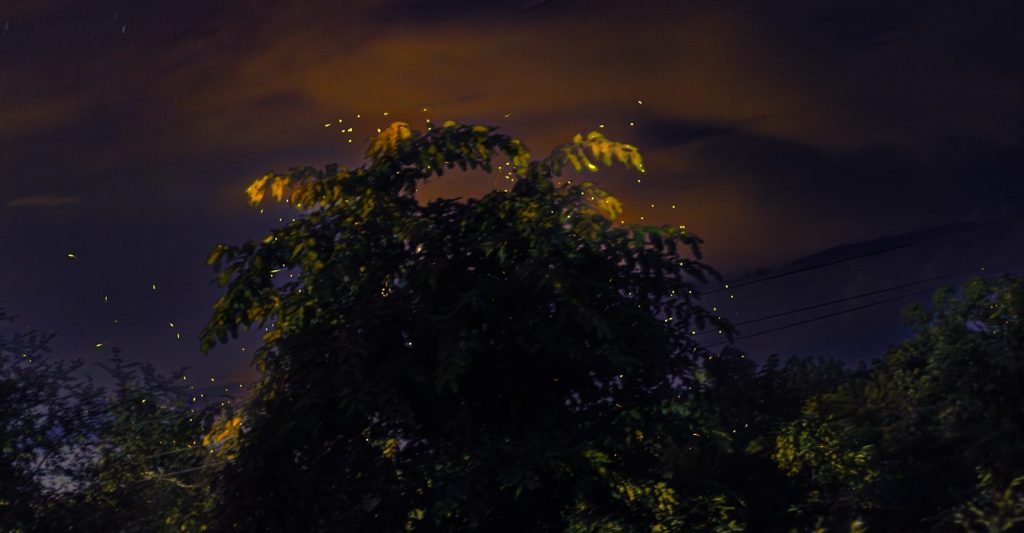
    Fireflies can make an ordinary summer night feel magical. One moment the yard is dark, and the next, tiny flashes blink over the grass like floating lanterns. But that glow is not random, and it is not just for show. Fireflies create light through a natural chemical reaction inside special organs in their abdomens.

    Scientists call this bioluminescence. It involves luciferin, luciferase, oxygen, and ATP, the same energy-carrying molecule cells use for work. Fireflies also use their flashes to send signals, attract mates, and sometimes warn predators. Their glow is beautiful, but it also plays a real role in survival. Researchers and conservation groups also warn that habitat loss, pesticides, and artificial light can make life harder for these glowing insects.

    Their glow is chemistry

    man in black shirt standing on green grass field during daytime
    Photo by Jerry Zhang on Unsplash

    A firefly’s light starts with a chemical called luciferin. Inside the firefly’s light organ, luciferin reacts with oxygen, ATP, and an enzyme called luciferase.

    That reaction releases energy as visible light instead of strong heat. This is why fireflies can glow without burning themselves. It is one of nature’s most famous examples of bioluminescence.

    It happens in the abdomen

    insect, nature, yard, firefly, coleoptera, elateriformia, firefly, firefly, firefly, firefly, firefly
    Photo by FranciscoJavierCoradoR on Pixabay

    The glow usually comes from special light organs near the firefly’s abdomen. These organs are built to control the light-producing reaction in a careful way.

    Fireflies are not glowing from their whole bodies. They are using a small, specialized area that works like a built-in signal lamp. That tiny body part creates the bright flashes people notice at night.

    Oxygen helps control flashes

    green grass field during sunset
    Photo by Rajesh Rajput on Unsplash

    Fireflies can switch their lights on and off by controlling oxygen flow to their light organs. More oxygen helps the reaction glow. Less oxygen slows or stops it.

    That control is what makes flashing possible. Instead of shining nonstop like a bulb, many fireflies blink in short patterns. Those patterns can carry useful messages in the dark.

    The light stays cool

    Abstract background with bright glowing garland on coniferous tree in dark night room
    Photo by Tomáš Malík on Pexels

    A regular light bulb can waste energy as heat. Firefly light is different because most of the energy becomes light, not warmth.

    That is why people often call it “cold light.” The glow looks bright, but it does not feel hot like a tiny flame. It is a smart natural system that works safely inside a small insect.

    Flashes help them communicate

    selective focus photography of plants
    Photo by Sabine Berzina on Unsplash

    Fireflies use light to find and recognize each other. In many species, males flash while flying, and females answer from grass, leaves, or low plants.

    Each species can have its own timing and pattern. That helps the right fireflies connect in the same area without every flash meaning the same thing.

    Larvae can glow too

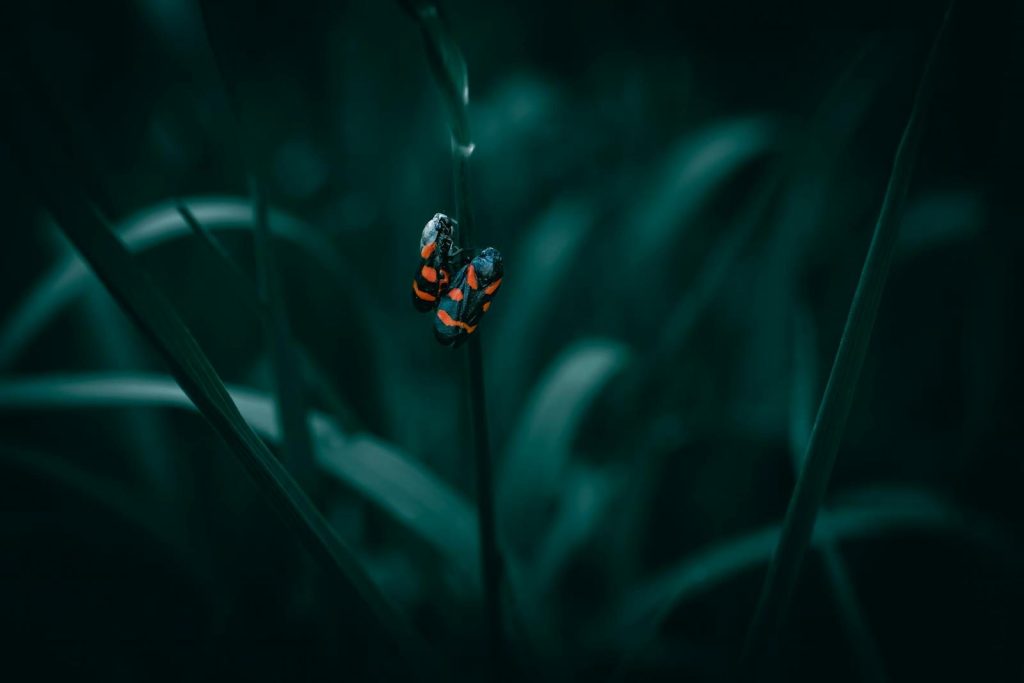
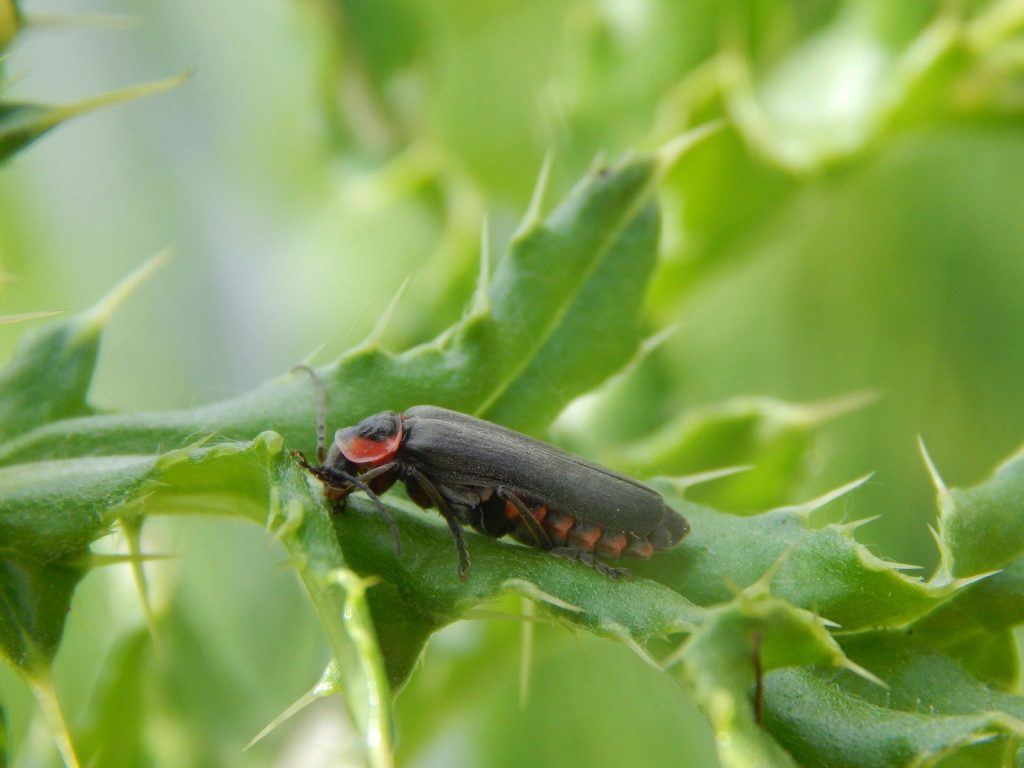
    Close-up of a red and black beetle on grass in a moody summer garden setting.
    Photo by Wyxina Tresse on Pexels

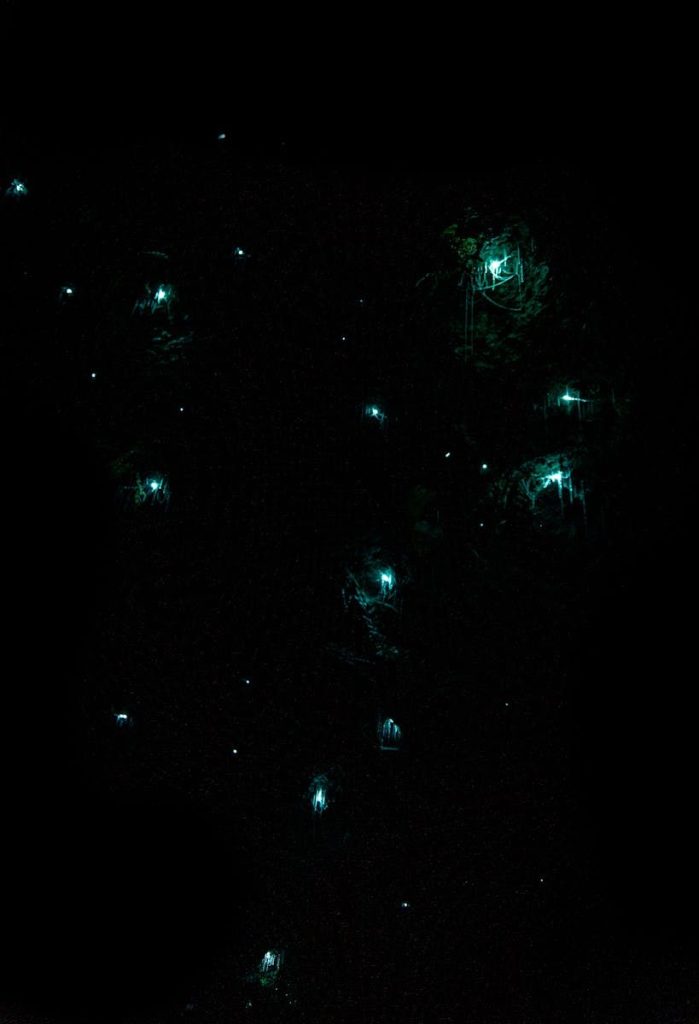
    Adult fireflies get most of the attention, but young fireflies can glow as well. Firefly larvae are often called glowworms, and their light can serve a different purpose.

    Scientists believe larval glow may warn predators that they are not a good snack. In other words, the light can act like a tiny “leave me alone” sign.

    Colors can vary

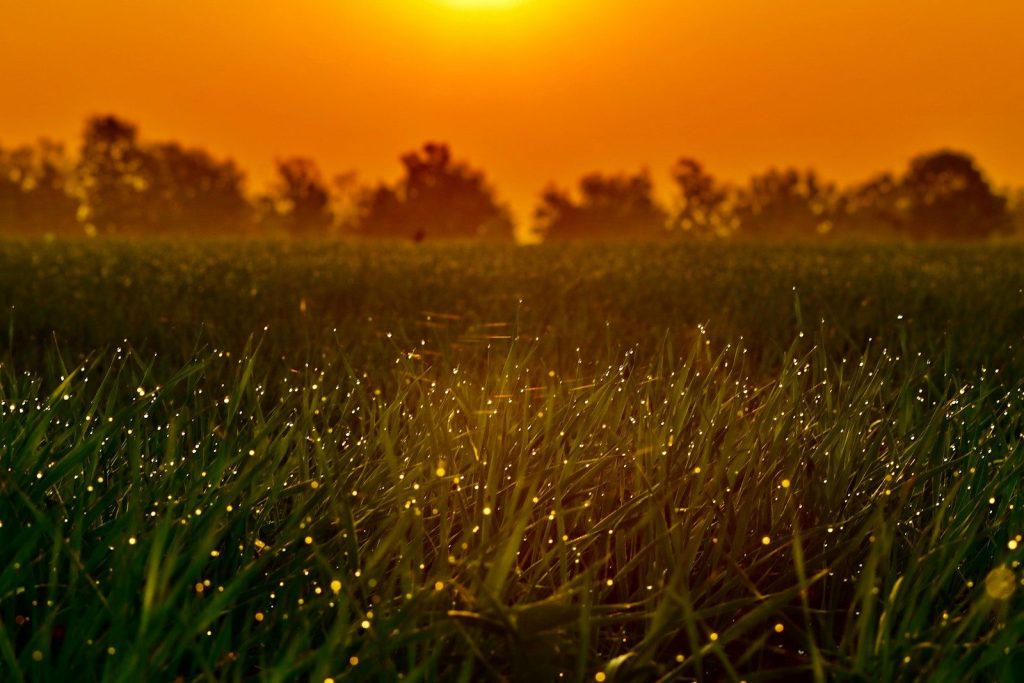
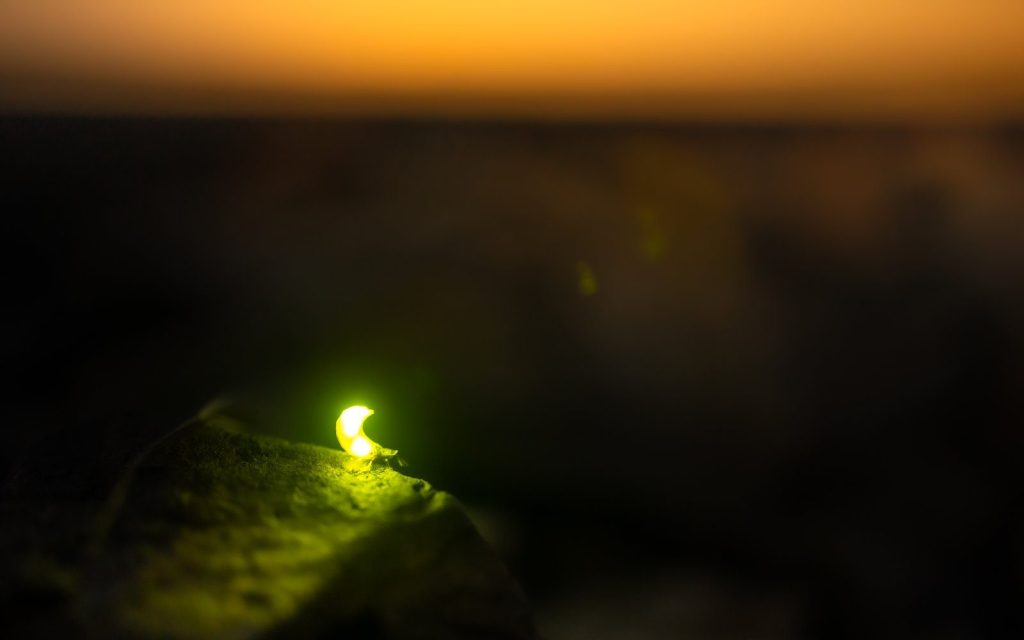
    A mesmerizing close-up of a glowing firefly against a vibrant sunset background.
    Photo by Marek Piwnicki on Pexels

    Not every firefly glow looks exactly the same. Depending on the species and chemical details, firefly light can appear yellow, green, or orange.

    Those color differences are part of what makes fireflies so interesting. To us, the flashes may all look like summer sparkle. To fireflies, the exact color and timing can help carry important signals.

    Darkness makes signals clearer

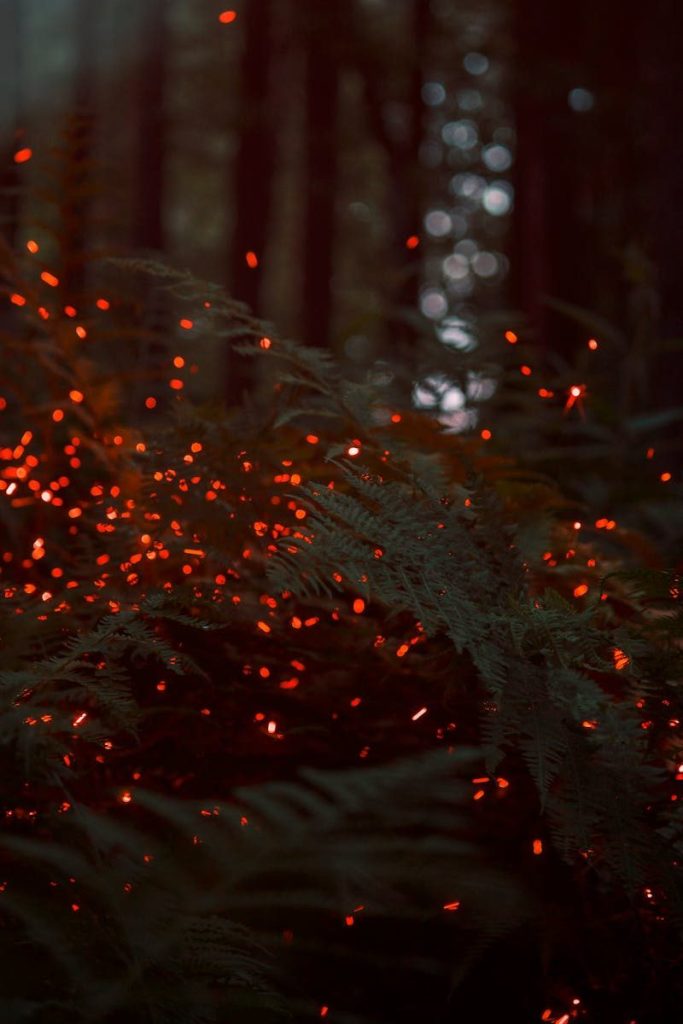
    A mystical forest scene with ferns illuminated by glowing fireflies at dusk. Captivating and serene.
    Photo by Danila Popov on Pexels

    Fireflies depend on dark spaces to make their flashes easy to see. Streetlights, porch lights, and bright outdoor lighting can make those signals harder to notice.

    That does not mean people must live in total darkness. Simple steps like turning off extra lights, closing blinds, or using softer outdoor lighting can help fireflies communicate more easily.

    Habitats matter a lot

    a close up of a bug on a leaf
    Photo by Josie Weiss on Unsplash

    Fireflies often do best in damp, leafy, grassy places where they can find food, shelter, and safe spots to rest. Yards that are too tidy may offer fewer hiding places.

    Leaving some leaf litter, reducing pesticide use, and protecting moist areas can make outdoor spaces friendlier for them. Small choices can help these insects keep lighting up summer nights.

    Their glow is survival

    A night time view of the city lights and trees
    Photo by Amit Pritam on Unsplash

    Fireflies may look like tiny decorations, but their glow is practical. It helps them signal, survive, and continue their life cycle in the right habitat.

    That is what makes the glow so special. It is not just pretty light in the dark. It is chemistry, communication, protection, and nature’s design all blinking together in one small lantern.

  • How geckos climb walls without glue

    How geckos climb walls without glue

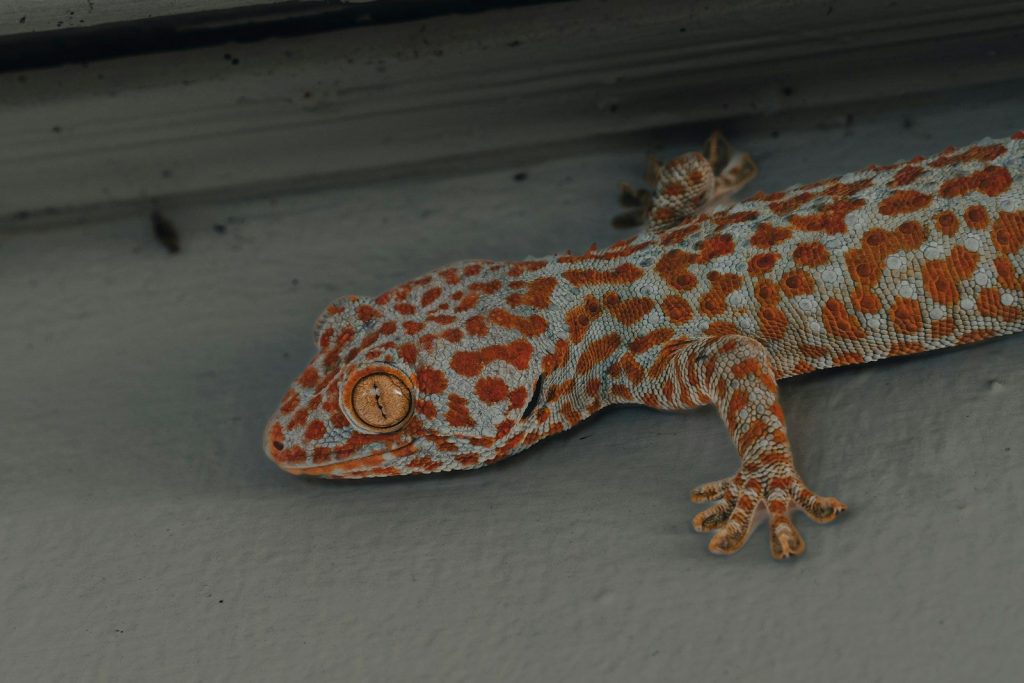
    Geckos make wall climbing look effortless, but they are not using glue, suction cups, or sticky slime. Their secret is built into the bottoms of their toes. Each toe has many tiny hair-like structures called setae, and those split into even smaller tips called spatulae.

    These tips get extremely close to the surface, close enough for weak molecular attractions called van der Waals forces to help the gecko hold on. Scientists have studied this system for years because it is strong, reusable, and surprisingly clean. It also helps explain why geckos can climb smooth glass, hang from ceilings, and let go again without getting stuck.

    Their feet are not sticky

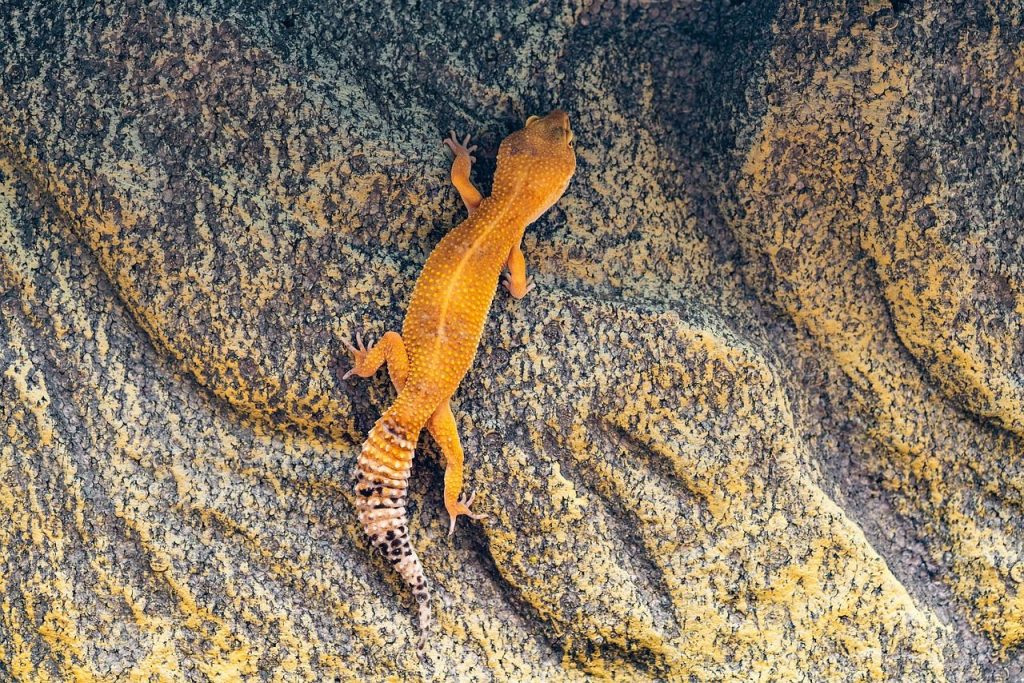
    an orange and white gecko sitting on a wall
    Photo by Dennis Schmidt on Unsplash

    A gecko’s feet may look sticky, but they do not work like tape or glue. The animal does not leave behind a wet trail or a sticky coating as it climbs.

    Instead, its toes are covered with dry structures that grip through close contact. That is why geckos can climb many smooth surfaces without making a mess or needing fresh adhesive.

    Tiny hairs do the work

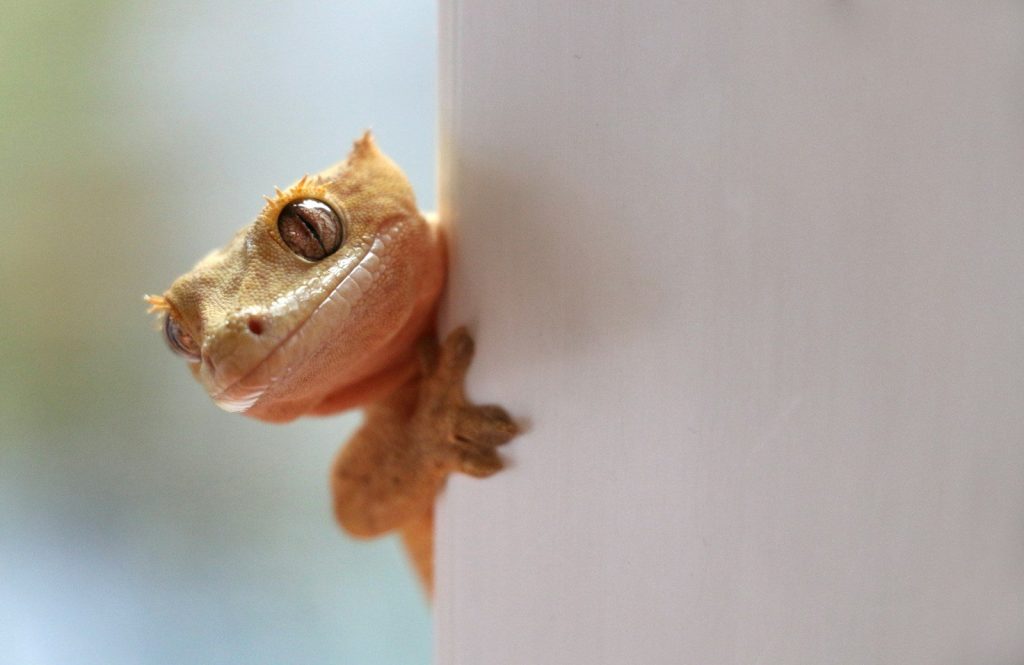
    a small lizard is peeking out from behind a wall
    Photo by Pierre Bamin on Unsplash

    The bottom of a gecko’s toe is covered with rows of very small hairs called setae. These hairs are far too small to notice without special tools.

    Each seta helps spread the gecko’s grip across many contact points. One tiny hair is not enough by itself, but millions working together can support the animal’s weight while it moves.

    The tips are even smaller

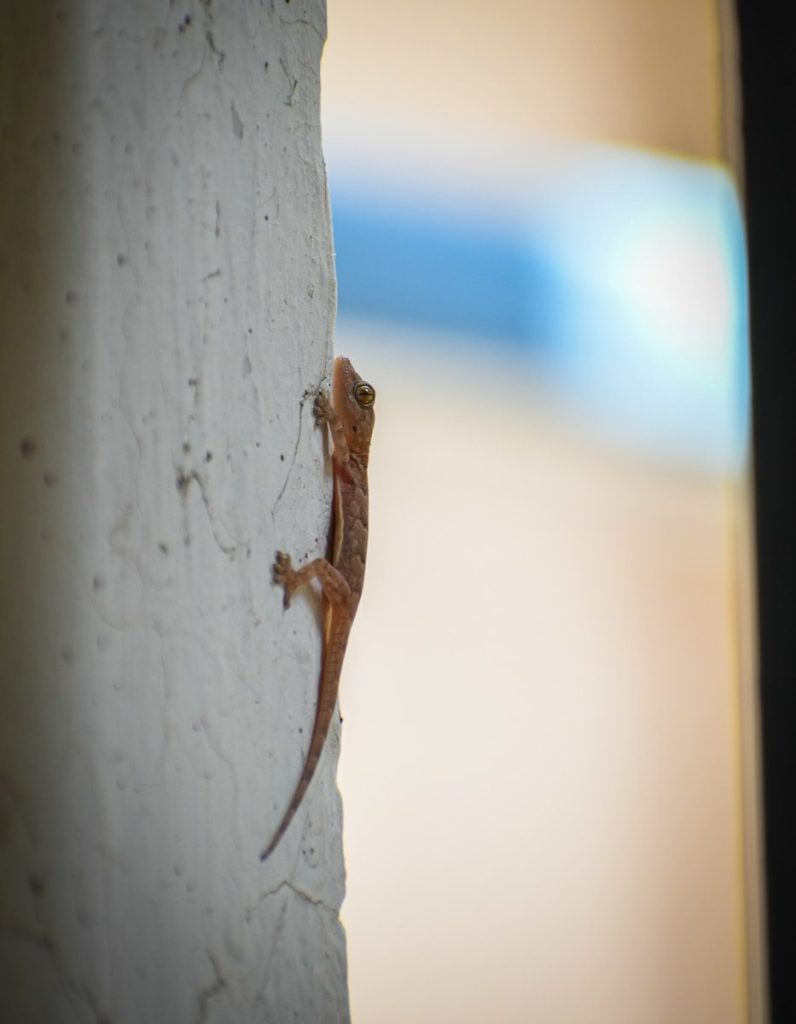
    a lizard is climbing up the side of a wall
    Photo by Garv Chaplot on Unsplash

    Setae are impressive, but the real magic happens at their tips. Each hair can branch into many smaller ends called spatulae, which look a little like tiny flat pads.

    These tiny tips help the foot touch more of the wall. More contact means more attraction between the gecko’s foot and the surface, giving it a stronger hold.

    Molecules help them hang on

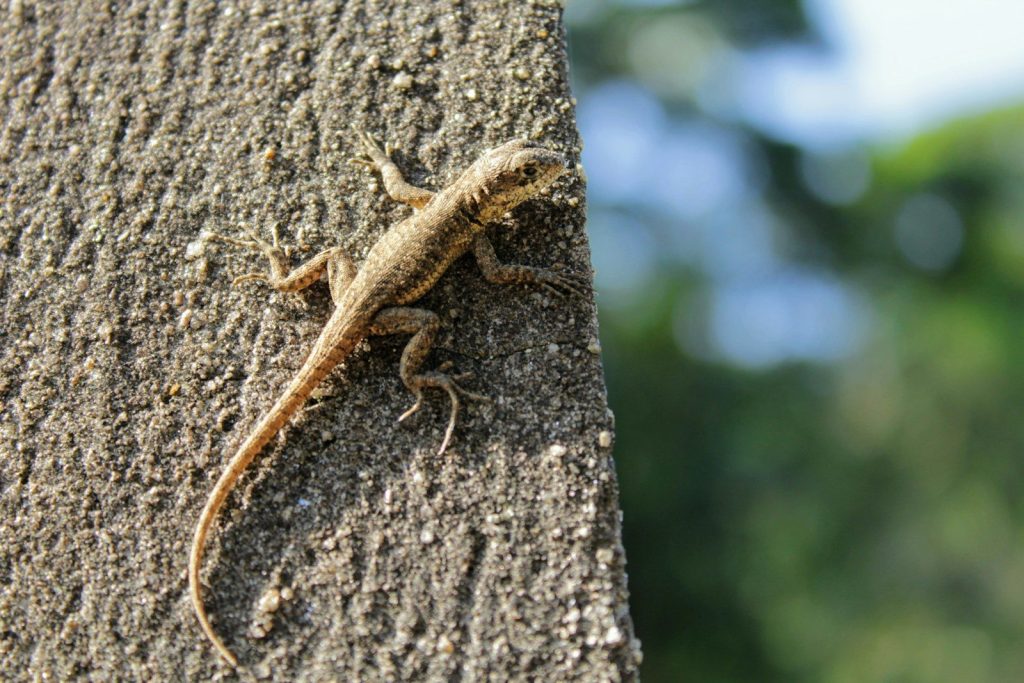
    brown lizard on brown tree trunk during daytime
    Photo by Sérgio João Carvalho da Silva on Unsplash

    Geckos use weak attractions between molecules called van der Waals forces. These forces are tiny on their own, but they become useful when many small contact points work together.

    The spatulae must get very close to the wall for this to happen. When they do, the gecko can grip glass, walls, and even ceilings with surprising strength.

    They can let go fast

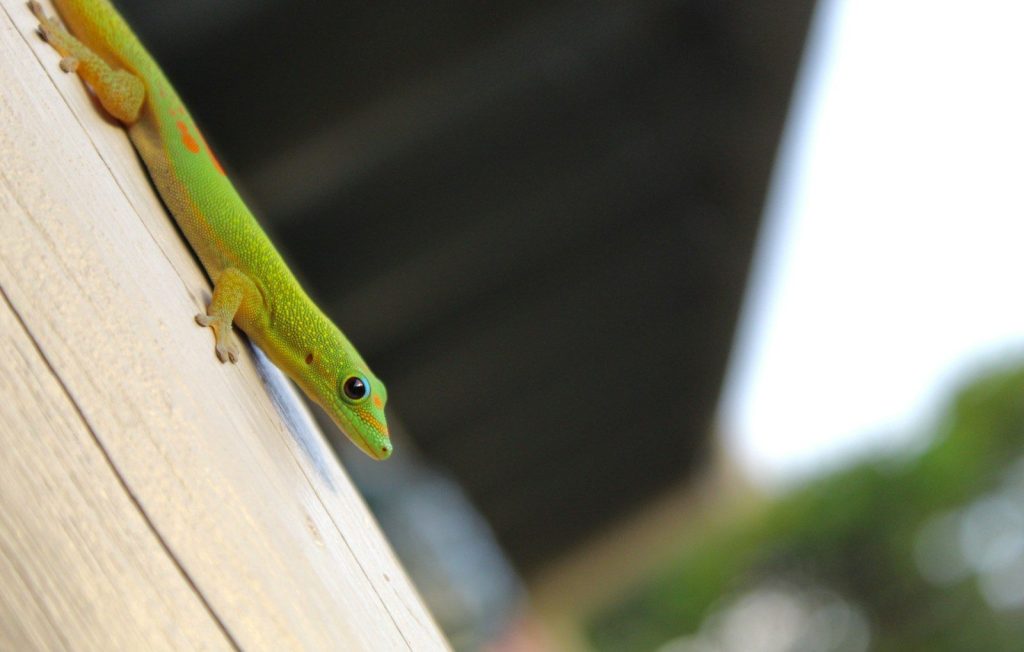
    a green gecko climbing up the side of a building
    Photo by Carter J on Unsplash

    A gecko’s grip is strong, but it is not permanent. The animal can release its toes quickly by changing the angle of the tiny hairs on its feet.

    This peel-away action helps it run, turn, and climb without getting trapped. It is more like carefully lifting tape from one edge than yanking a stuck shoe from the floor.

    It is not suction

    A gecko clings to a rough, red brick wall.
    Photo by Svenja Wagenseil on Unsplash

    People sometimes think geckos climb because their feet act like suction cups. Scientists have found that explanation does not fit, especially because gecko feet can still work on very smooth surfaces.

    Suction also would not explain the way each tiny foot hair grips. The better answer is dry contact plus many tiny molecular attractions working at the same time.

    Clean feet help them climb

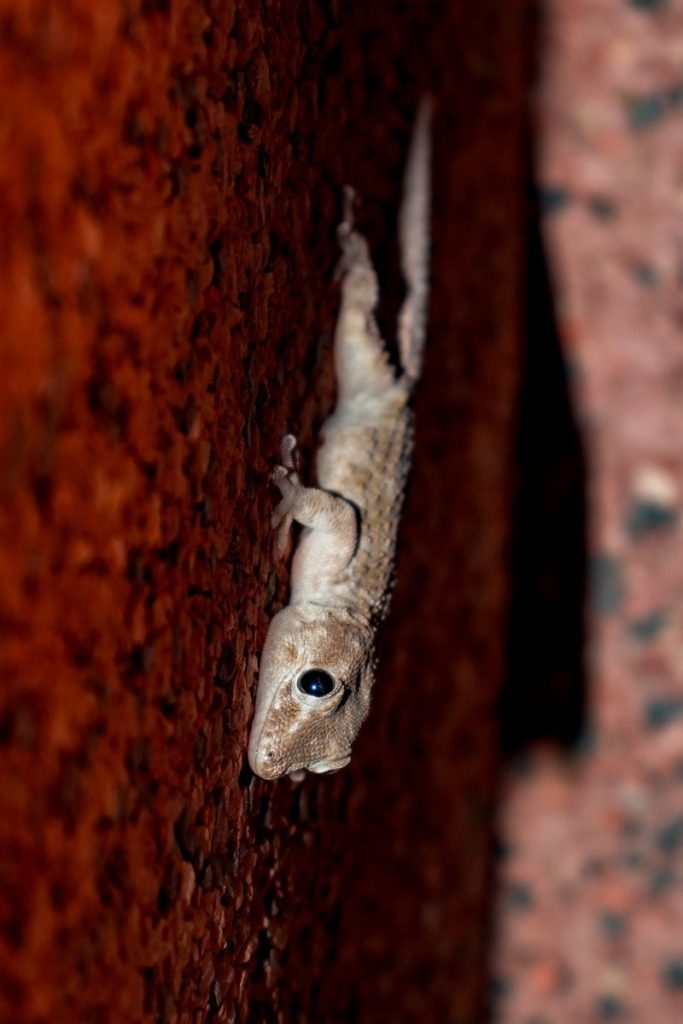
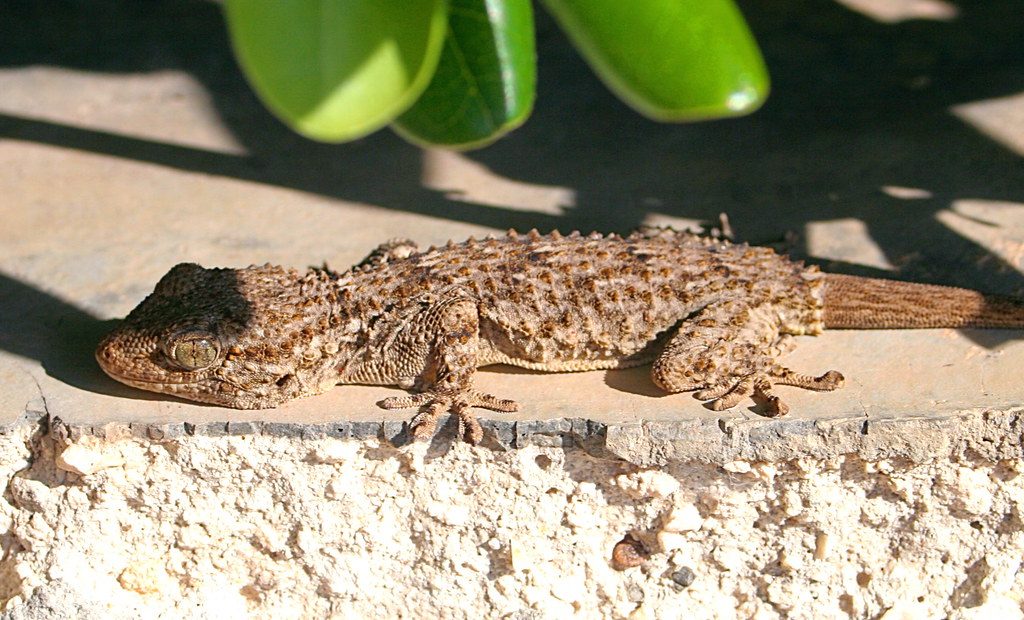
    Moorish Gecko; Mgarr, Gozo” by foxypar4 is licensed under CC BY 2.0

    A gecko’s foot system is useful because it can be used again and again. It does not depend on a layer of glue that runs out or picks up dirt easily.

    Scientists have studied how this kind of dry grip can stay effective through repeated use. That idea has helped inspire new materials and climbing tools based on gecko feet.

    Surface contact is everything

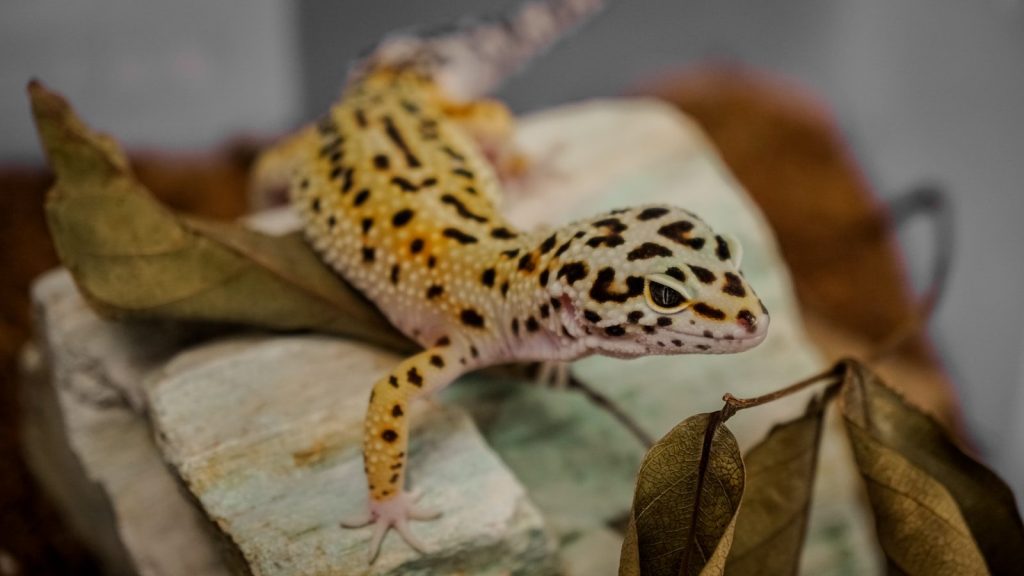
    gecko, leopard gecko, climb, wall, reptile, leopard gecko, leopard gecko, leopard gecko, leopard gecko, leopard gecko
    Photo by torstensimon on Pixabay

    A gecko does not need deep cracks or rough bark to climb. Its tiny foot tips can press close to smooth surfaces, which is why glass is not a big problem.

    Still, the grip depends on contact. If the surface or the foot cannot get close enough, the forces become weaker and climbing can be harder.

    Scientists copied the idea

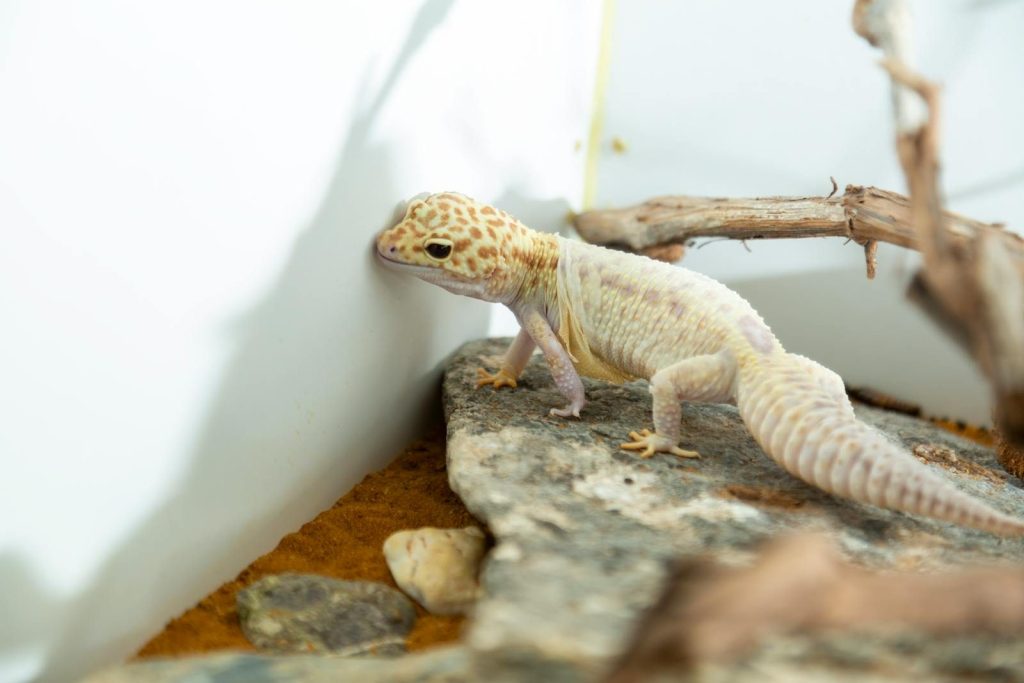
    Leopard gecko exploring its habitat, showcasing distinctive spotted pattern.
    Photo by Natasha Latinovska on Pexels

    Gecko feet have inspired research into reusable dry adhesives. Engineers like the idea because a gecko-style grip can attach without liquid glue and release without damage.

    This could help with robots, special gripping tools, and other designs that need controlled sticking. Nature solved the problem first, and scientists are still learning from it.

    The trick is tiny, not magic

    brown and white lizard on brown wood
    Photo by verdian chua on Unsplash

    Geckos climb walls because their feet turn small forces into a big effect. Millions of tiny contact points work together, giving them a strong grip without glue.

    That is what makes their movement so amazing. The gecko is not breaking the rules of nature. It is using physics at a scale too small for our eyes to see.

  • Why snowflakes almost never look exactly alike

    Why snowflakes almost never look exactly alike

    Snowflakes look simple when they land on your coat, but each one has a wild little history. A flake begins high in a cloud, where cold water vapor freezes around a tiny speck of dust or another small particle. From there, it grows while moving through changing layers of air.

    A slight shift in temperature, moisture, wind, or path can change how its branches form. That is why two flakes may look similar from far away but still differ up close. Scientists have found that simple ice crystals can sometimes match closely, but large, detailed snowflakes have so many possible growth patterns that exact twins are extremely unlikely.

    A flake starts very small

    trees and snowdrop
    Photo by Chandler Cruttenden on Unsplash

    A snowflake begins when a tiny cold water droplet freezes onto a small particle in the air. That first frozen bit becomes the seed for the ice crystal.

    As more water vapor freezes onto it, the crystal grows. It does not become fancy all at once. Its shape slowly builds as it floats, falls, and passes through changing cloud conditions.

    Water makes six-sided shapes

    white and blue balloons on bare tree
    Photo by Chandler Cruttenden on Unsplash

    Snowflakes often have six sides because of the way water molecules arrange themselves when they freeze. The molecules naturally form a hexagonal pattern inside ice.

    That hidden pattern is why many snowflakes share a basic six-sided look. Even when the outside shape gets fancy, the tiny structure inside still guides the design.

    Clouds keep changing conditions

    white clouds and blue sky during daytime
    Photo by Zbyněk Skrčený on Unsplash

    A snowflake does not grow in one steady place. It moves through cloud layers that can have different temperatures and moisture levels.

    Those small changes matter. One part of the flake may grow faster, another may slow down, and the whole crystal can take on a new style as the weather around it shifts.

    Tiny paths make big differences

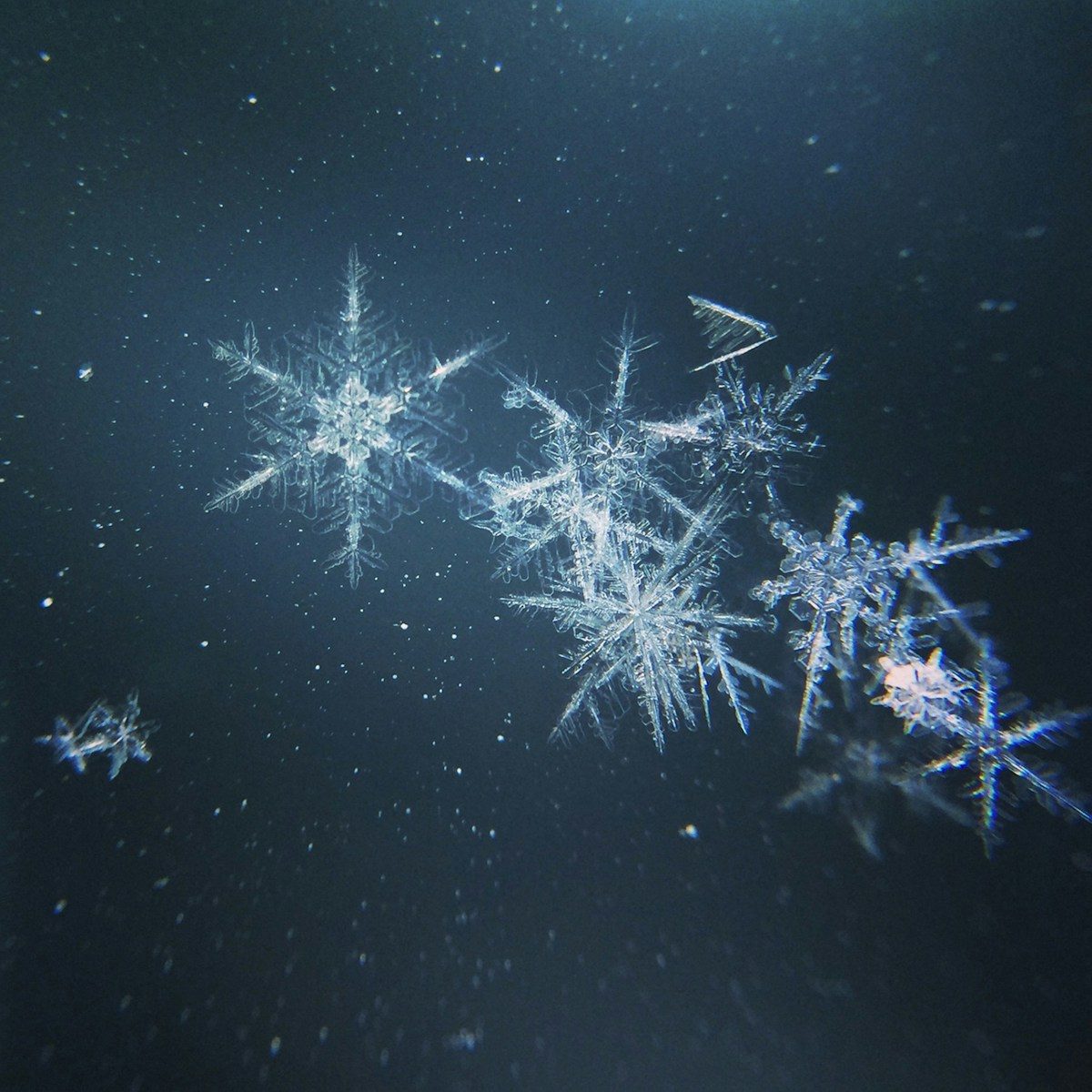
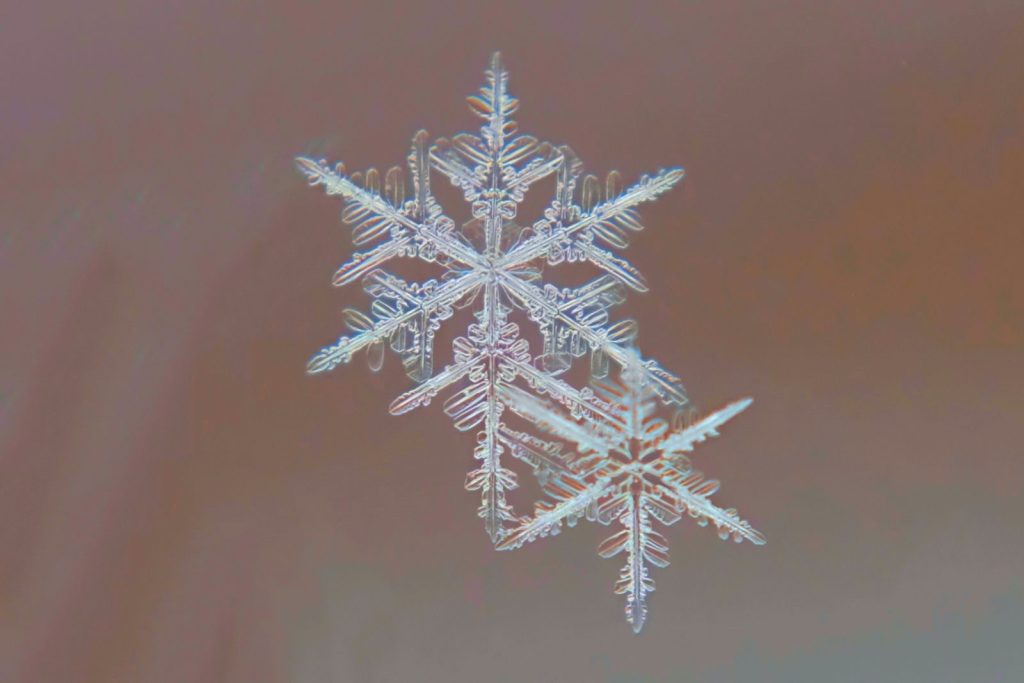
    Macro shot of intricate snowflakes showcasing winter beauty in Lapeer, Michigan.
    Photo by Kristin Morgan on Pexels

    Two snowflakes can start near each other, but they do not follow the exact same path. Wind can lift one higher, push another sideways, or drop them through different air pockets.

    That makes each journey personal. Even a small difference in route can change how much moisture the crystal meets and how quickly its arms grow.

    Branches grow in steps

    red and orange round fruits on tree branch under blue sky during daytime
    Photo by Chelsey Faucher on Unsplash

    A snowflake’s arms do not appear fully formed. They grow bit by bit as water vapor freezes onto the edges of the crystal.

    If the air is moist enough, the arms can stretch into detailed branches. If conditions are drier, the shape may stay simpler and flatter. That step-by-step growth creates many possible designs.

    Some flakes are crystal clusters

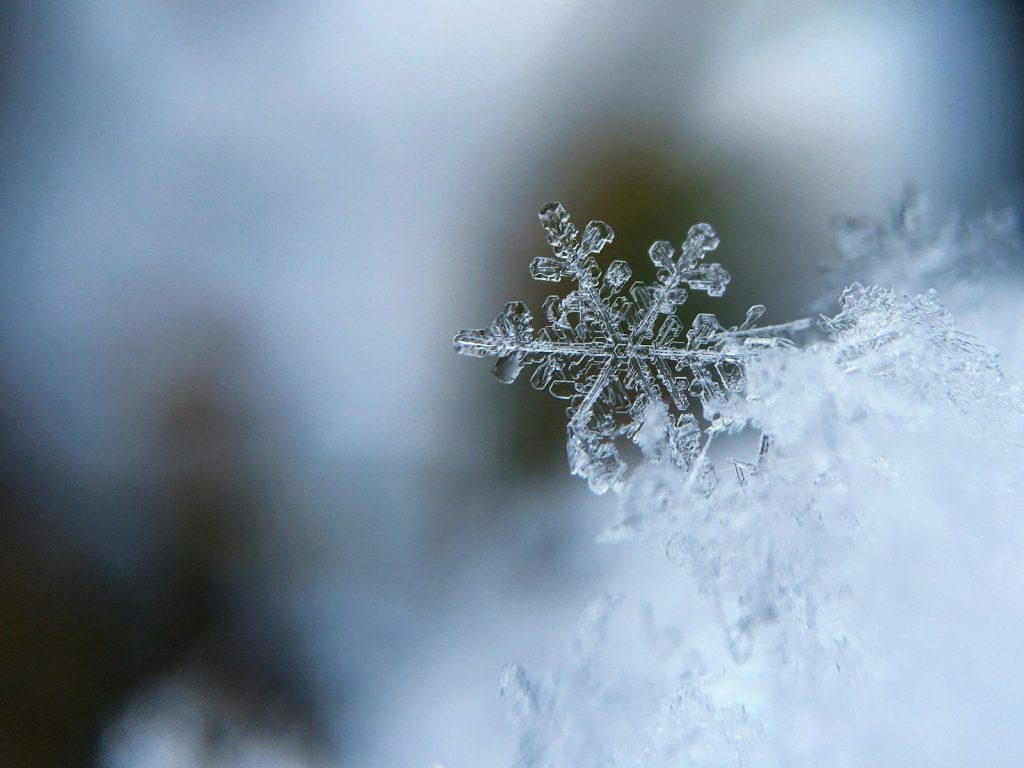
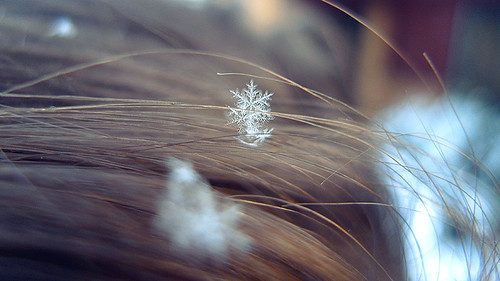
    focused photo of a snow flake
    Photo by Aaron Burden on Unsplash

    Not every snowflake is just one neat ice crystal. Some are made of many ice crystals stuck together as they fall through the sky. UCAR notes that some elaborate snowflakes can include many crystals fused into one flake.

    That adds another layer of variety. A flake can change not only through growth, but also through bumps, joining, and tiny breaks along the way.

    Similar does not mean identical

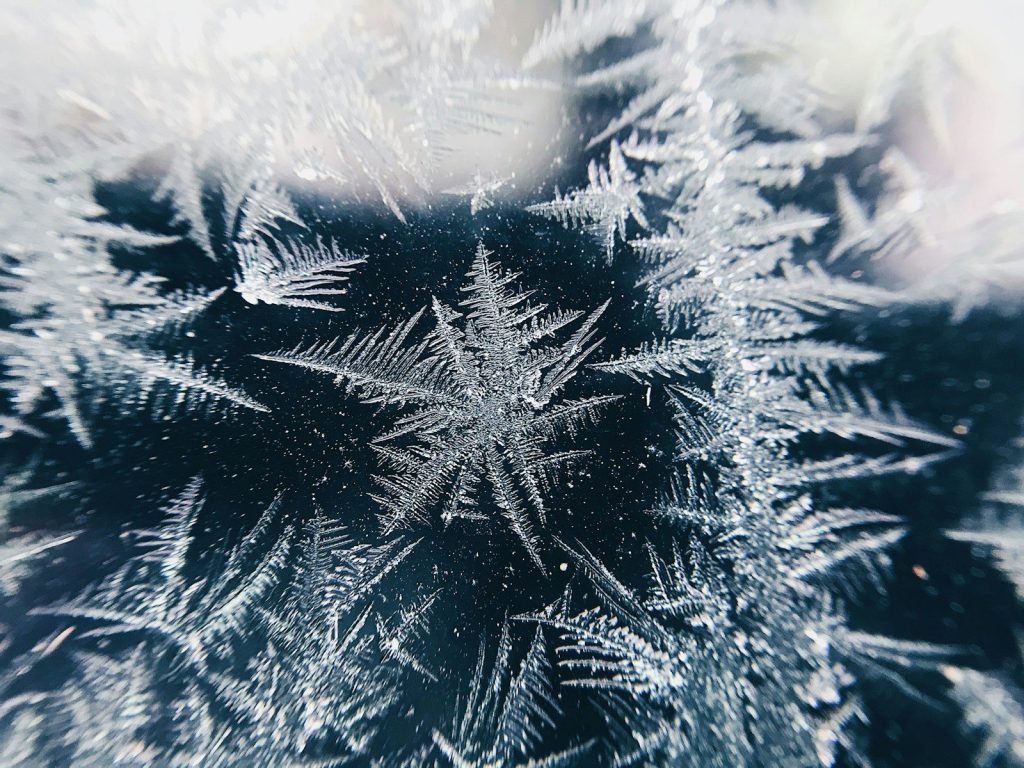
    a close up view of a frosted window
    Photo by Darius Cotoi on Unsplash

    Some small, simple ice crystals can look nearly the same, especially if they form under very similar conditions. That is why the old saying needs a little care.

    But large, complex snowflakes are different. Caltech snowflake researcher Kenneth Libbrecht explains that the number of possible complex designs is staggeringly large.

    Temperature shapes the style

    Snowflake” by Gui Seiz is licensed under CC BY-SA 2.0

    Temperature helps decide whether a snow crystal becomes a plate, column, needle, or branching star. Different cold ranges encourage different crystal shapes.

    This is why one storm can produce many kinds of flakes. If a snowflake falls through several temperature zones, its shape can record that changing trip through the air.

    Moisture adds the detail

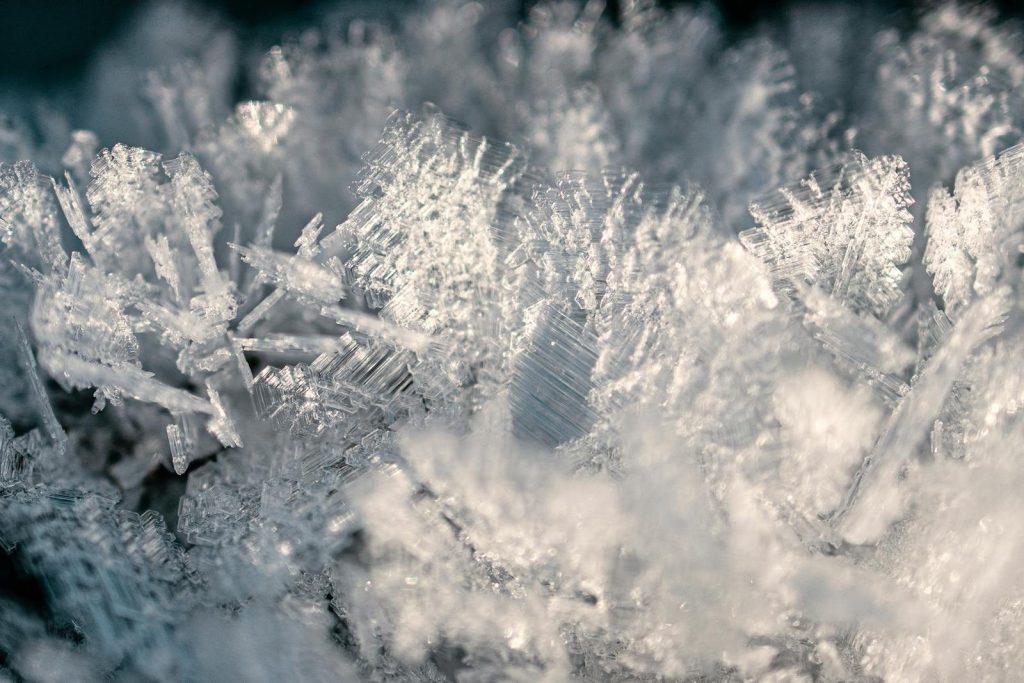
    Close-up view of detailed frost crystals on a leaf, capturing the beauty of winter's icy patterns.
    Photo by Choice on Pexels

    Moisture is another major part of the design. When the air has more water vapor, a snowflake has more material to build with.

    That extra vapor can help create longer arms and finer branches. In drier air, flakes may stay smaller or simpler. The final look depends on how much moisture the crystal meets.

    Nature rarely repeats the route

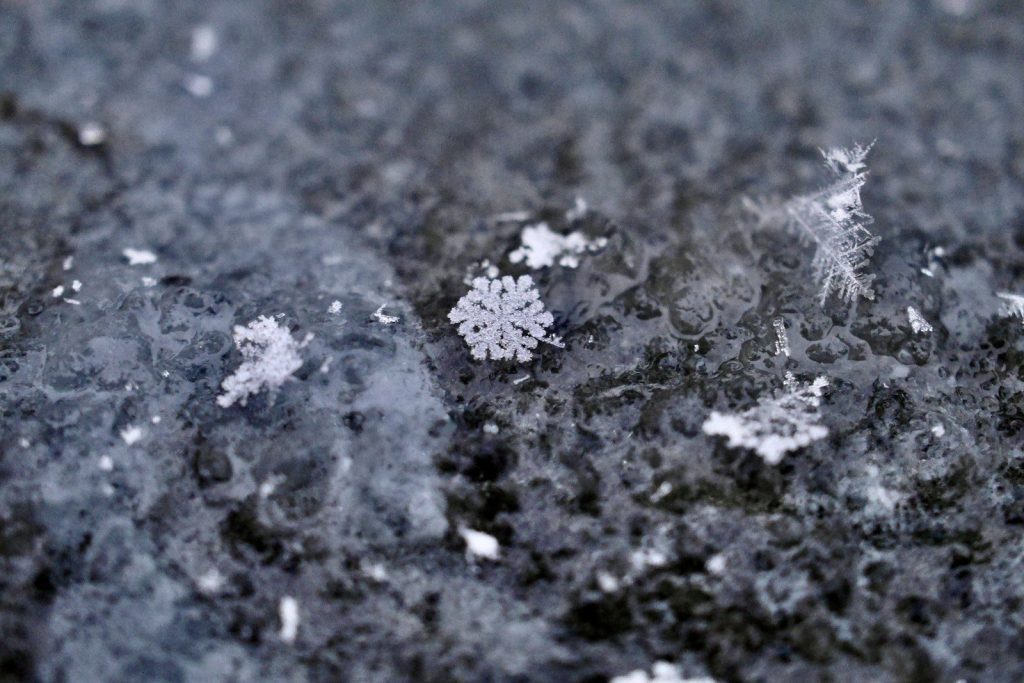
    white snow on black sand
    Photo by Mona Hamm on Unsplash

    A snowflake is shaped by its full journey, not just its starting point. Temperature, moisture, wind, height, timing, and tiny accidents all leave marks.

    That is why snowflakes almost never look exactly alike. Each one is like a frozen travel record, shaped by a path through the sky that no other flake follows in exactly the same way.