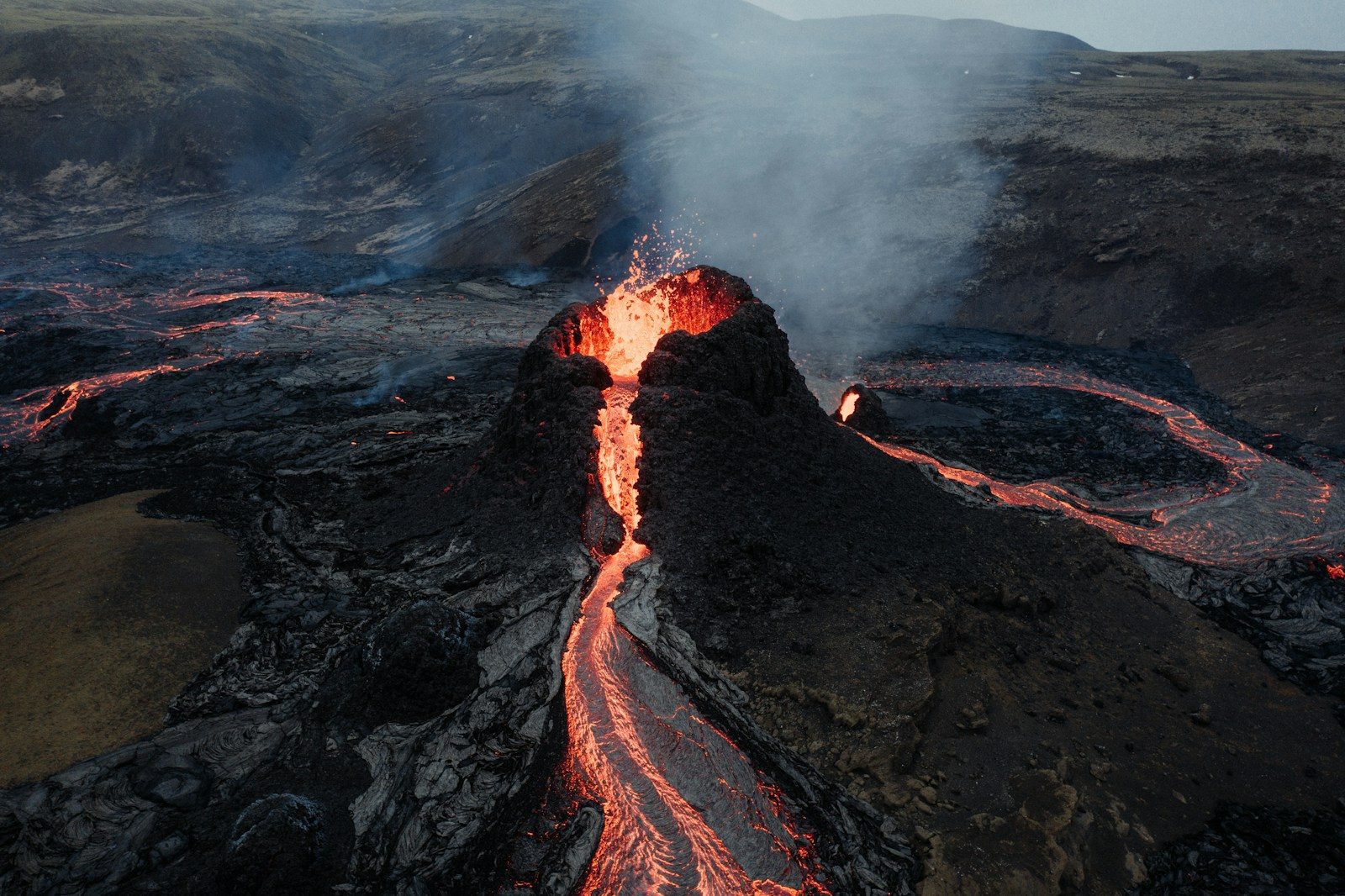
The largest volcanic eruptions in Earth’s history were far beyond anything witnessed by modern observers. Their rankings are reconstructed from ash layers, ignimbrites, calderas, and other deposits that may be buried, eroded, or scattered across continents and oceans. Scientists can identify several extraordinary events, but no list can prove with certainty which eruption was the biggest ever.
For explosive eruptions, researchers often compare the volume of erupted material and the Volcano Explosivity Index, or VEI. A VEI-8 event generally exceeds 1,000 cubic kilometers of deposits, but estimates vary depending on whether scientists report loose tephra, compacted deposits, or dense-rock-equivalent magma. The figures below are therefore best understood as informed geological estimates, not perfectly measured totals.
Scientists Measure Eruptions With Volume and the VEI

The VEI is a logarithmic scale based mainly on erupted volume, plume height, and qualitative observations. Each step generally represents a large increase in explosivity, so a VEI-8 event is vastly larger than the VEI-5 eruption of Mount St. Helens in 1980. Yet the scale is not a complete measure of danger. Smaller eruptions near populated areas can be deadlier, and long-lasting lava eruptions may release enormous volumes without ranking highly on an explosivity scale.
Wah Wah Springs Erupted 5,900 Cubic Kilometers in Utah
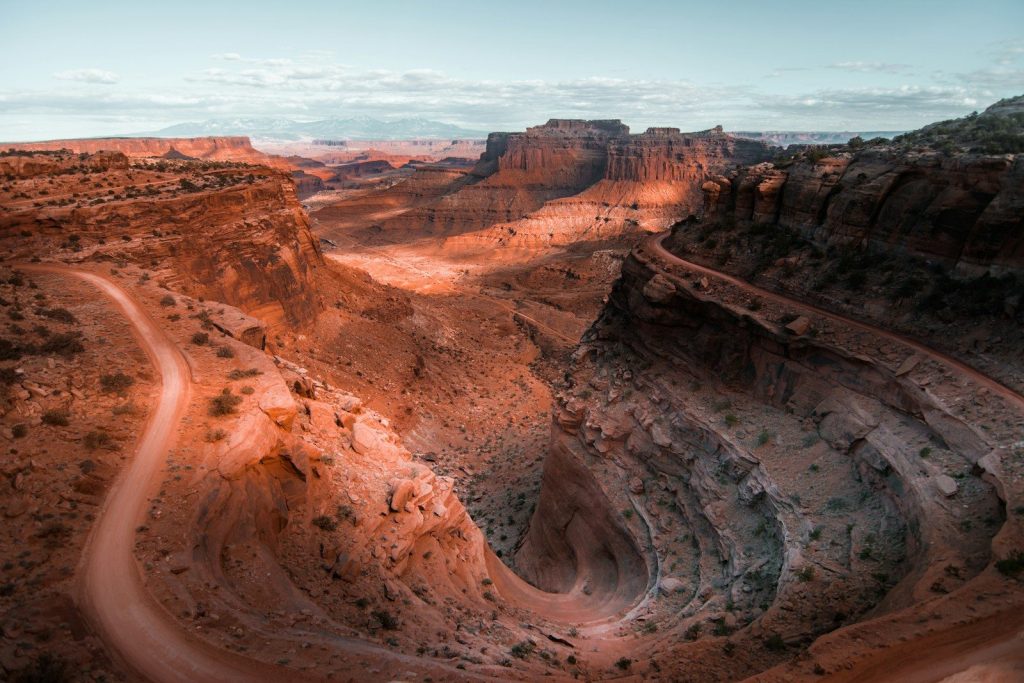
Around 30 million years ago, the Wah Wah Springs eruption in what is now southern Utah produced an estimated 5,900 cubic kilometers of volcanic material. USGS scientists identify it as one of several enormous eruptions that occurred in the region during the Oligocene. Its deposits were spread across a vast area and later altered by erosion and burial, illustrating why reconstructing ancient eruptions requires extensive mapping, geochemistry, and correlation of rock layers. Much of the original volcanic landscape has since been reshaped, making the surviving deposits especially important evidence.
Toba’s Eruption Formed Indonesia’s Massive Lake Toba Caldera
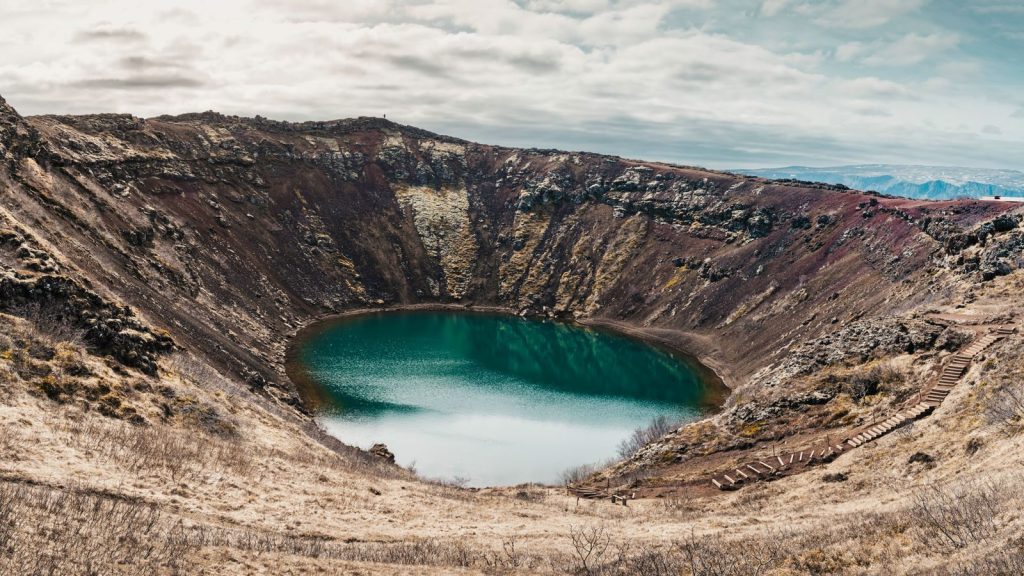
Indonesia’s Toba eruption, about 74,000 years ago, produced an estimated 5,300 cubic kilometers of material and left a huge caldera now occupied by Lake Toba. It is one of the largest known eruptions to occur while modern humans existed. Earlier claims linked Toba to a near-extinction human bottleneck, but later archaeological, genetic, and climate research has weakened the idea that one eruption nearly eliminated our species worldwide. The eruption nevertheless caused severe regional devastation and major environmental disruption.
La Garita’s Eruption Created Colorado’s Fish Canyon Tuff
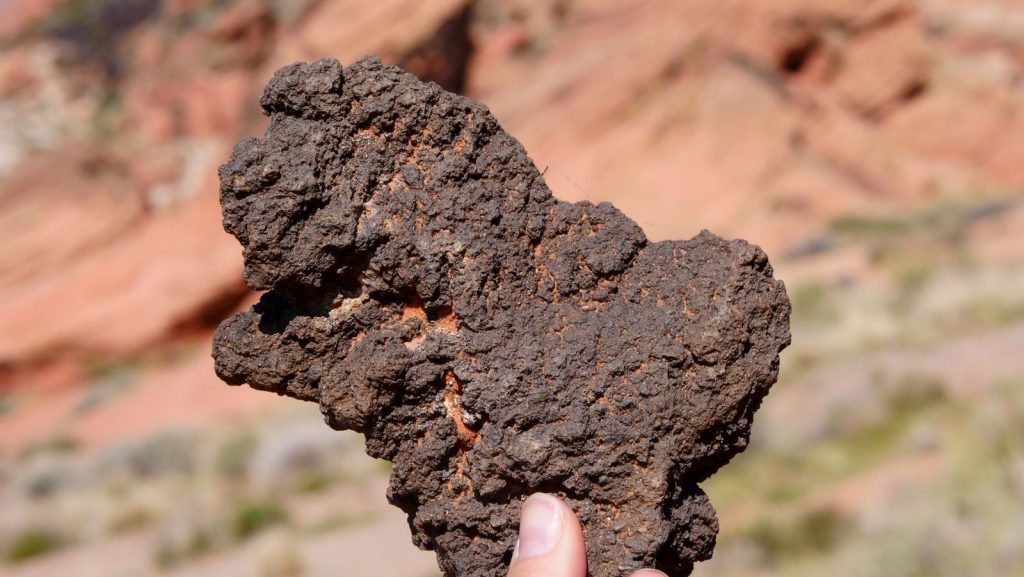
The Fish Canyon Tuff records the eruption of Colorado’s La Garita caldera about 27.8 million years ago. More than 5,000 cubic kilometers of material may have been erupted, making it one of the largest explosive events recognized on Earth. The deposit is exceptionally thick in places, but erosion has removed parts of it and its base is not always exposed. As with other ancient calderas, the quoted volume remains an estimate reconstructed from surviving rocks.
Huckleberry Ridge Erupted 2,500 Cubic Kilometers at Yellowstone

Yellowstone’s Huckleberry Ridge eruption occurred about 2.08 million years ago and released roughly 2,500 cubic kilometers of material. It was substantially larger than the later eruption that formed the present Yellowstone caldera. The event created several overlapping caldera structures and spread ash across a wide region of North America. Yellowstone remains volcanically active, but the existence of ancient supereruptions does not mean another one is imminent or predictable on a simple cycle. Current monitoring shows no evidence that a catastrophic eruption is approaching.
Oruanui Was the Most Recent Known VEI-8 Supereruption

New Zealand’s Oruanui eruption, from the Taupō volcanic system, occurred about 26,500 years ago and produced approximately 1,200 cubic kilometers of material. It is widely described as the most recent known VEI-8 supereruption. The event generated enormous pyroclastic flows and widespread ashfall, while collapse of the magma chamber helped form the caldera later occupied by Lake Taupō. Taupō remains active, although most of its eruptions are far smaller than Oruanui. Later Taupō eruptions demonstrate that one volcanic system can produce events across a very wide range of sizes.
Lava Creek Formed Yellowstone’s Present-Day Caldera
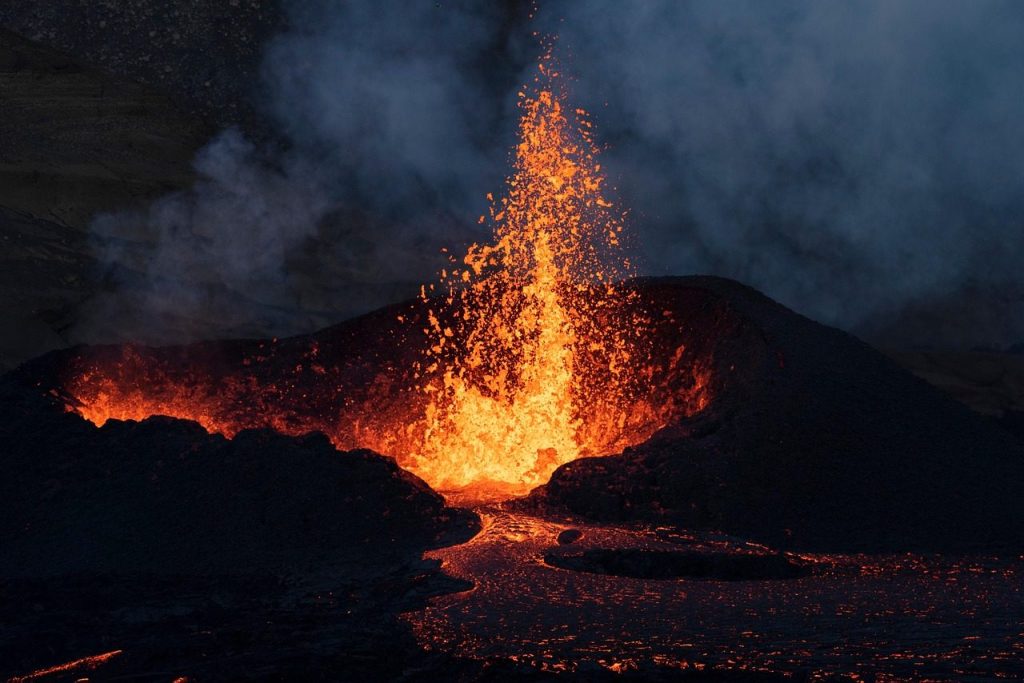
About 631,000 years ago, Yellowstone’s Lava Creek eruption released roughly 1,000 cubic kilometers of material and formed most of the present-day Yellowstone caldera. It was about 1,000 times larger by erupted volume than Mount St. Helens in 1980, according to the USGS comparison. Despite its fame, Lava Creek was not Earth’s largest known eruption and was not even the biggest event produced by the Yellowstone hotspot system. Its deposits remain a central reference for understanding Yellowstone’s present geology.
Tambora’s 1815 Eruption Caused the Year Without a Summer
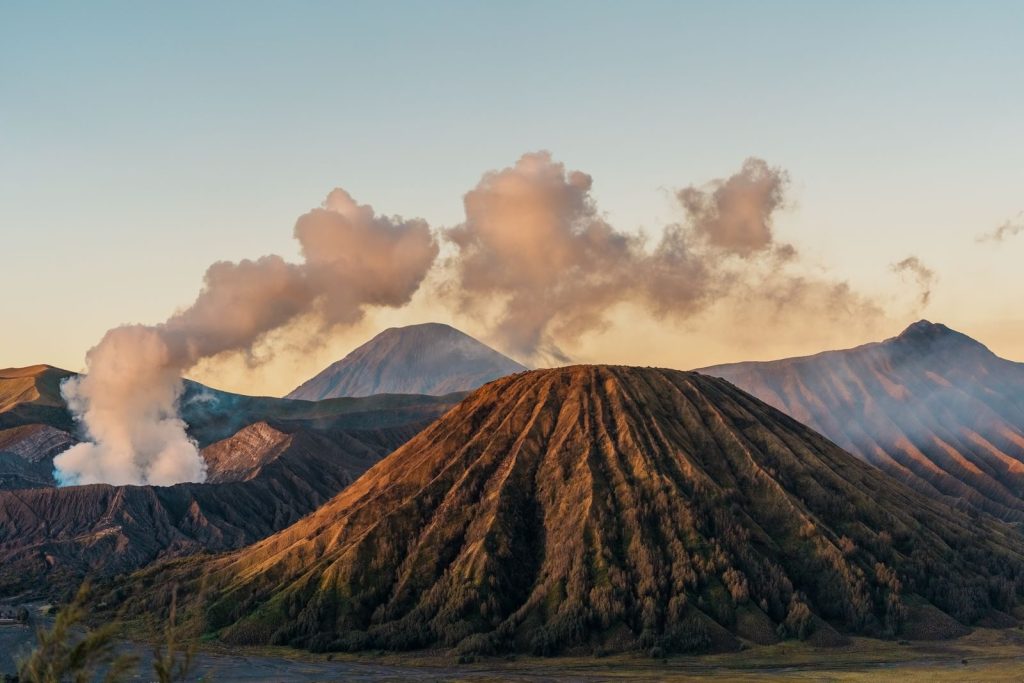
Mount Tambora’s 1815 eruption in present-day Indonesia was much smaller than the ancient VEI-8 events, yet it was the largest eruption in recorded history. NASA estimates that about 150 cubic kilometers of tephra were produced. The eruption devastated communities around Sumbawa and injected enough sulfur-rich material into the atmosphere to contribute to global cooling and the 1816 “Year Without a Summer,” with severe crop failures in several regions. The human consequences made Tambora historically more visible than much larger prehistoric eruptions.
New Evidence Can Change Ancient Eruption Rankings
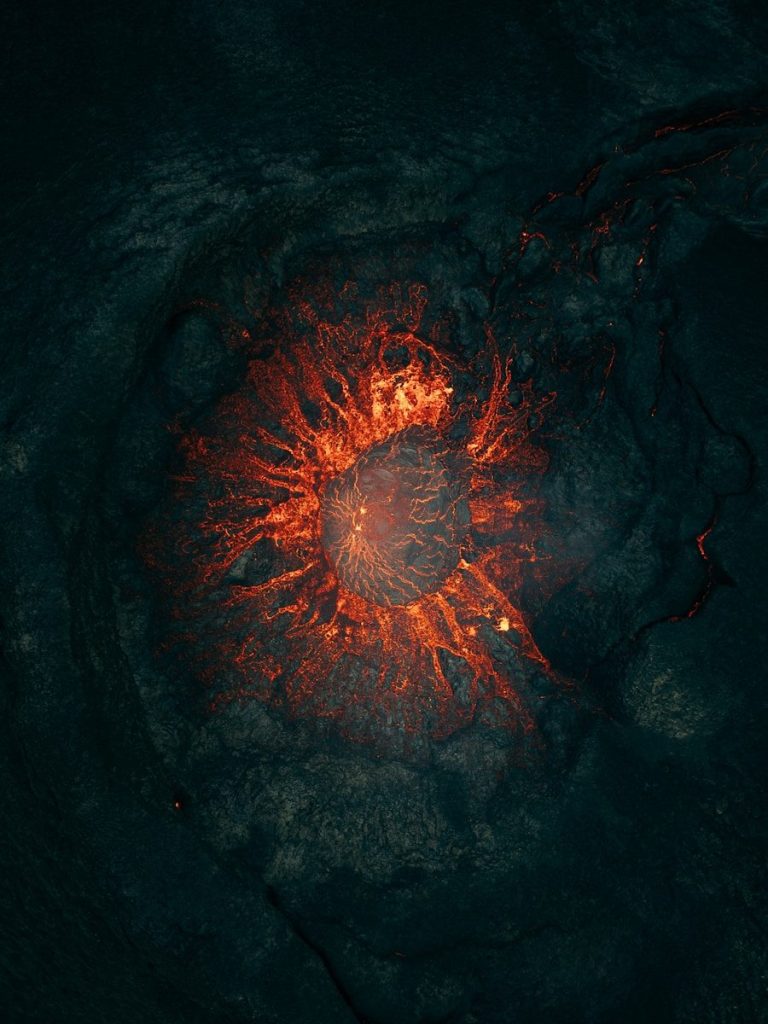
Ancient eruption rankings will continue to change as geologists discover buried calderas, remap deposits, and revise volume calculations. Older evidence is especially incomplete because erosion, tectonics, vegetation, oceans, and later eruptions can hide or destroy deposits. That is why careful sources usually say “largest known” rather than “largest of all time.” The geological record preserves astonishing events, but it is an incomplete archive rather than a complete scoreboard. Comparisons are most meaningful when sources use the same volume definition and clearly state uncertainty.
Featured Image: Photo by Ása Steinarsdóttir on Unsplash
Leave a Reply