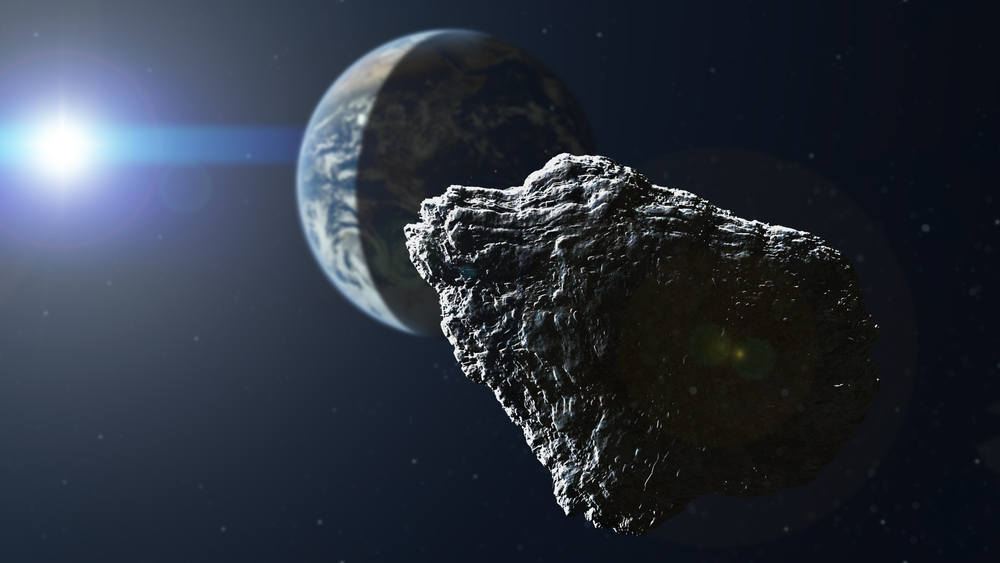
Asteroid Bennu is not scheduled or expected to hit Earth. NASA’s best current assessment gives it a 1-in-2,700 chance of impact on September 24, 2182, the most significant single date in its calculated risk window. That equals about 0.037 percent, meaning the overwhelming probability is that Bennu will miss the planet.
Claims that Bennu “will” strike Earth or carries the force of “22 atomic bombs” remove essential context. The first claim turns a small probability into certainty, while the second does not identify which nuclear weapon or explosive yield is being used. Bennu deserves scientific attention because its orbit is unusually well measured, not because a collision has been predicted.
Bennu Is a Carbon-Rich Rubble-Pile Asteroid
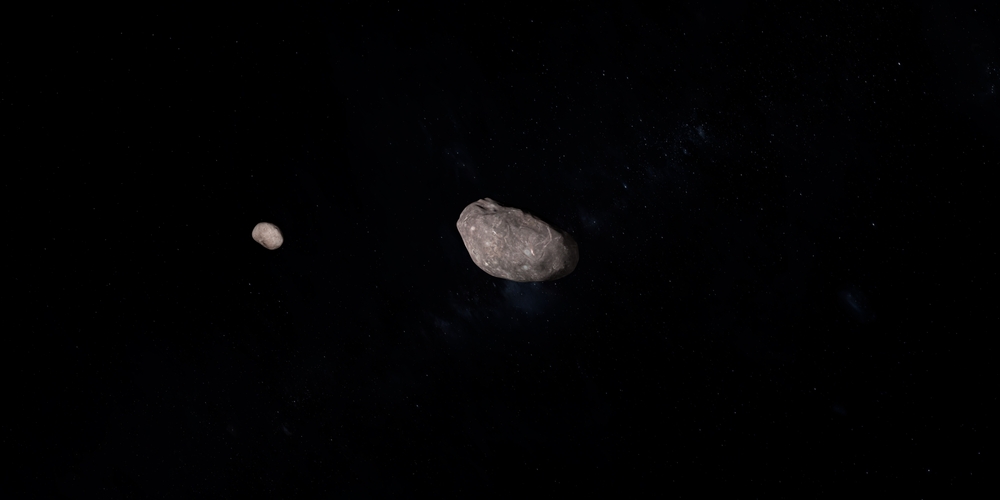
Bennu is a dark, carbon-rich near-Earth asteroid about one-third of a mile, or roughly 500 meters, wide. It passes relatively close to Earth about every six years and completes an orbit around the Sun in a little over a year. Its low density and boulder-covered shape indicate that it is a loosely assembled rubble pile, formed from fragments of a larger parent body that was broken apart by collisions. NASA selected it for close study partly because its composition preserves primitive material and its orbit brings it within reach of spacecraft.
NASA Estimates Bennu’s 2182 Impact Risk at 1-in-2,700
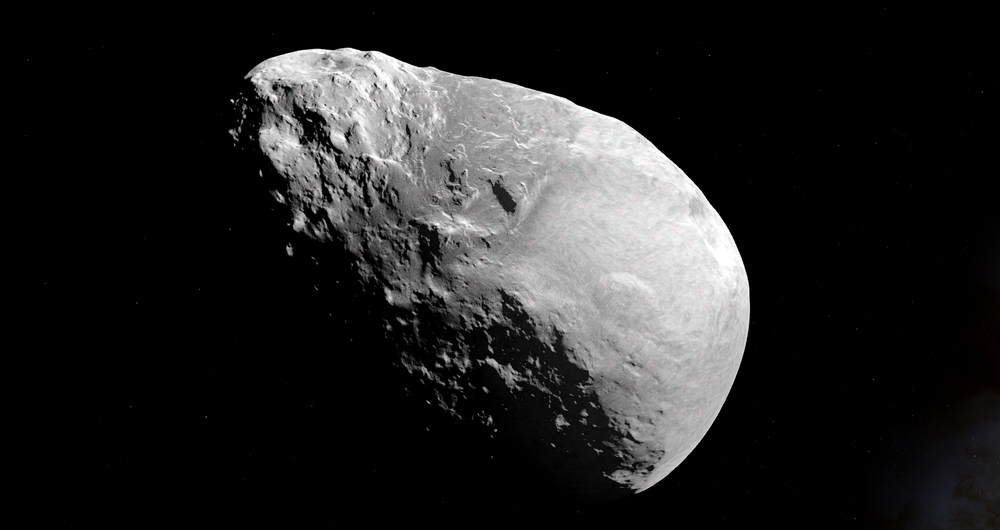
NASA calculates a cumulative impact probability of about 1 in 1,750 through the year 2300. That total combines several possible future dates, while the 1-in-2,700 figure applies specifically to September 24, 2182. Both probabilities are low, but they are high enough for Bennu to remain a priority object for planetary-defense research. Risk figures can also change as new observations further refine an asteroid’s orbit. Neither number represents a warning of a certain or near-term collision.
Bennu’s 2135 Earth Flyby Will Shape Its Later Orbit
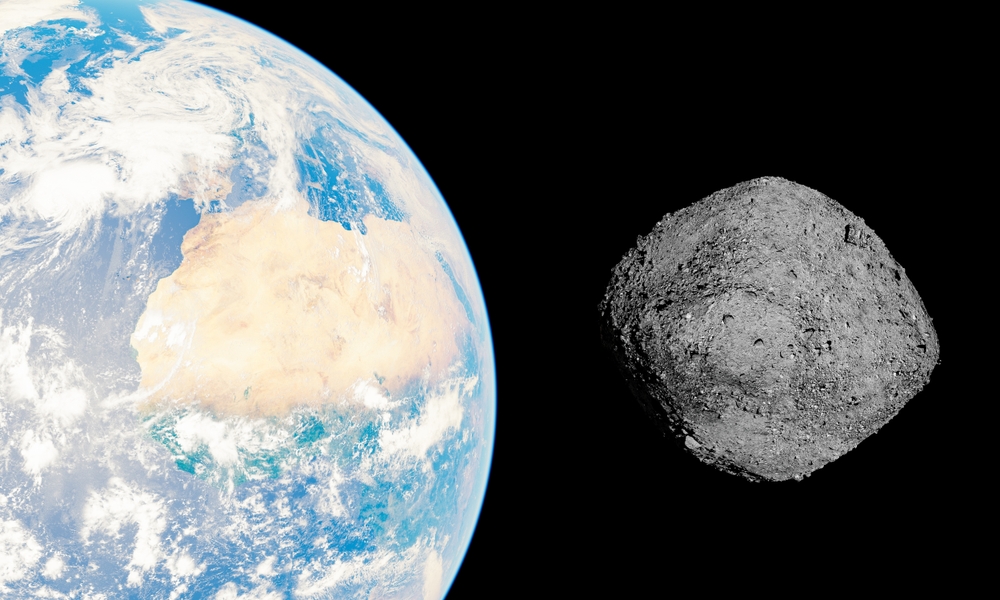
The decisive encounter comes in 2135, when Bennu will pass close to Earth without hitting it. Earth’s gravity will bend the asteroid’s path, and tiny differences in the flyby distance could influence where Bennu travels decades later. Scientists can model its trajectory with high confidence through 2135; beyond that encounter, the calculations branch into multiple possible paths, which is why impact probabilities are expressed statistically rather than as a fixed prediction. NASA states clearly that the asteroid poses no danger during that 2135 flyby.
Gravitational Keyholes Could Redirect Bennu Toward Earth
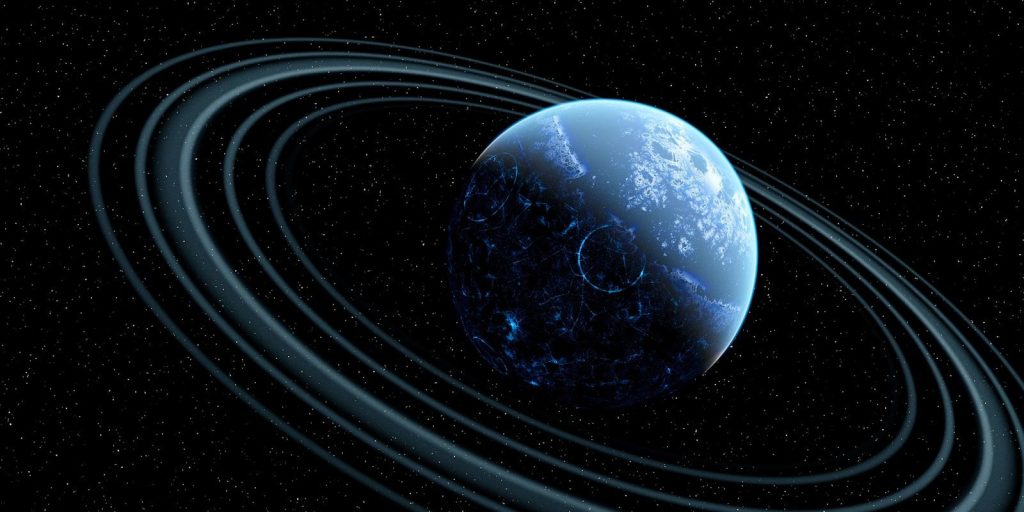
During the 2135 approach, Bennu could pass near small regions of space called gravitational keyholes. Entering a keyhole would place the asteroid on a later orbit that returns to Earth at the same time as the planet, creating a possible impact. Most paths miss those keyholes. Researchers therefore work to determine Bennu’s position as precisely as possible, because a difference of only a small distance in 2135 could produce a much larger separation decades later. This is orbital resonance, not a mysterious force pulling Bennu toward Earth.
Sunlight Slowly Changes Bennu’s Orbit Through the Yarkovsky Effect
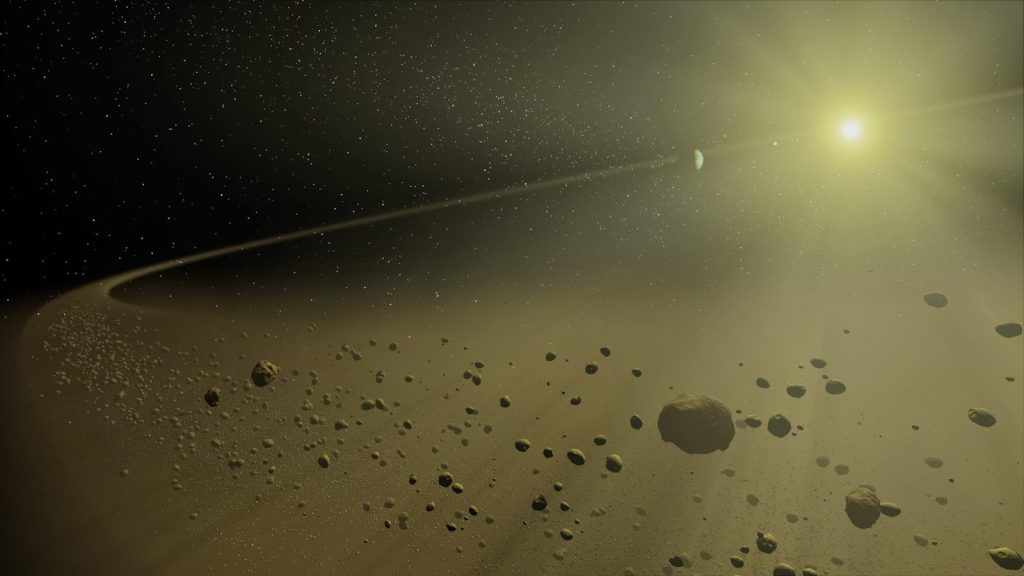
One of the hardest forces to model is the Yarkovsky effect. Sunlight heats Bennu’s surface, and the delayed release of that heat as infrared radiation produces a tiny thrust. NASA compared its force on Bennu to the weight of three grapes, yet the effect accumulates over decades. OSIRIS-REx measured Bennu’s shape, spin, mass, and thermal behavior closely, allowing scientists to narrow orbital uncertainties far beyond what ground-based observations alone could achieve. The mission also accounted for gravity from planets, moons, and hundreds of other asteroids.
A Bennu-Sized Impact Could Disrupt Climate for Years
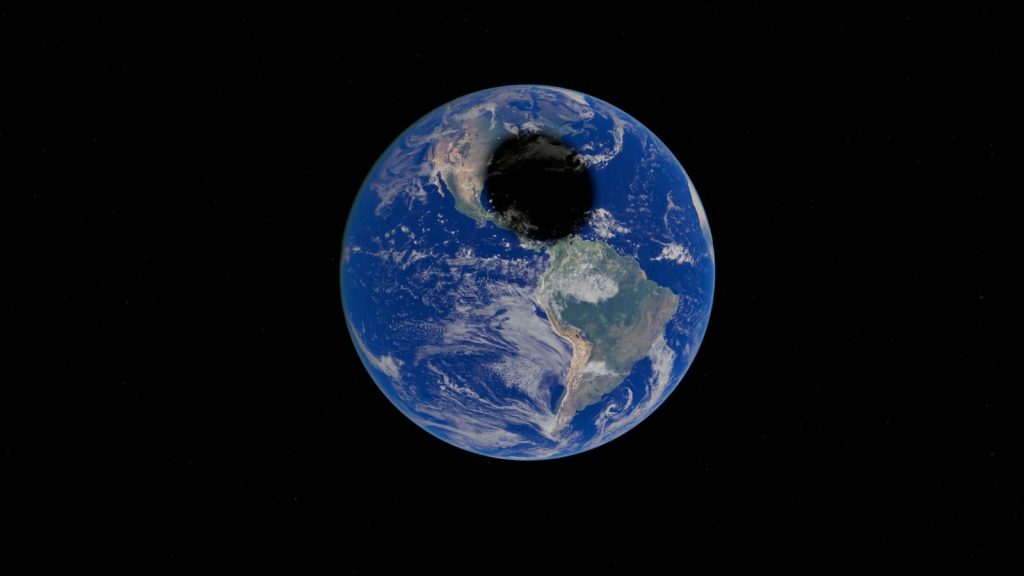
A 2025 peer-reviewed climate study modeled hypothetical impacts by a Bennu-sized asteroid; it did not predict that Bennu itself will collide with Earth. In simulations that injected 100 million to 400 million metric tons of dust into the stratosphere, global climate, atmospheric chemistry, and photosynthesis were disrupted for several years. The exact consequences of any real impact would depend heavily on speed, angle, composition, and whether the object struck land or ocean. Those modeled outcomes describe a class of impact scenarios rather than a forecast for 2182.
OSIRIS-REx Returned Bennu Samples to Earth in 2023

Bennu is scientifically valuable for reasons beyond planetary defense. NASA’s OSIRIS-REx spacecraft collected material from its surface in 2020 and delivered the sample to Earth in September 2023. Research published in 2025 found pre-solar stardust, organic matter with interstellar origins, and abundant minerals altered by water in Bennu’s parent body. Those findings make the asteroid a record of chemical processes that operated before and during the solar system’s formation. Scientists continue studying the returned grains in laboratories around the world.
NASA Tracks Bennu, but No Deflection Mission Is Needed
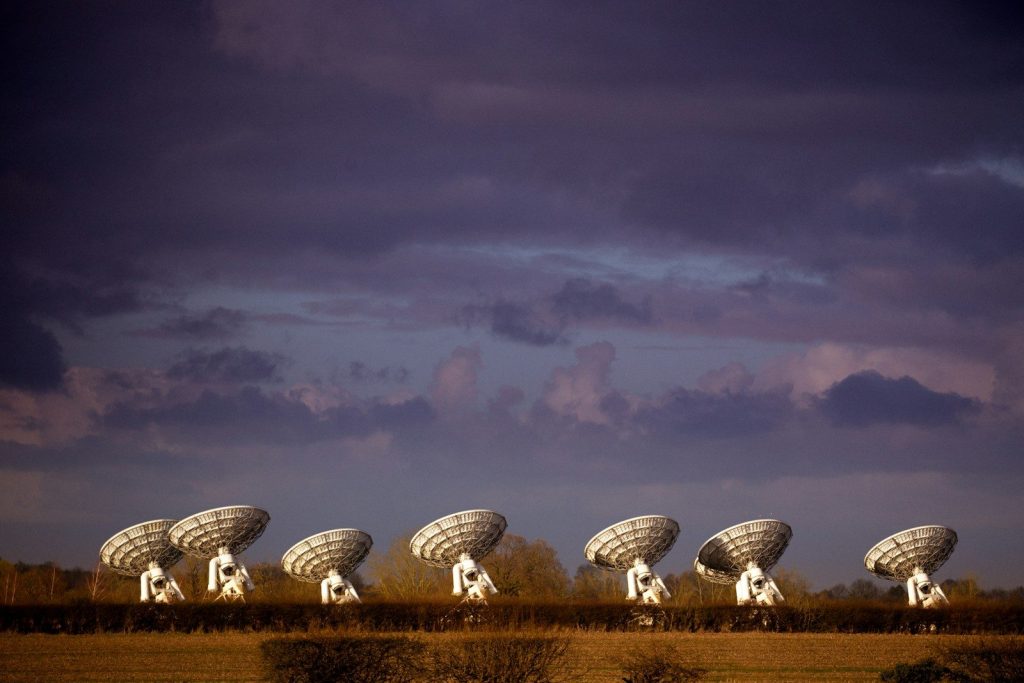
Bennu shows why long-term asteroid tracking matters. Its small but measurable risk gives scientists time to improve observations, test orbital models, and develop deflection techniques before any threat becomes urgent. NASA’s DART mission has already demonstrated that a spacecraft impact can change an asteroid moon’s orbit. For Bennu, no deflection mission is currently required; continued monitoring and research are the appropriate response to a remote, centuries-away possibility. The central lesson is preparedness without exaggeration, panic, or false certainty.
Featured Image: Shutterstock
Leave a Reply