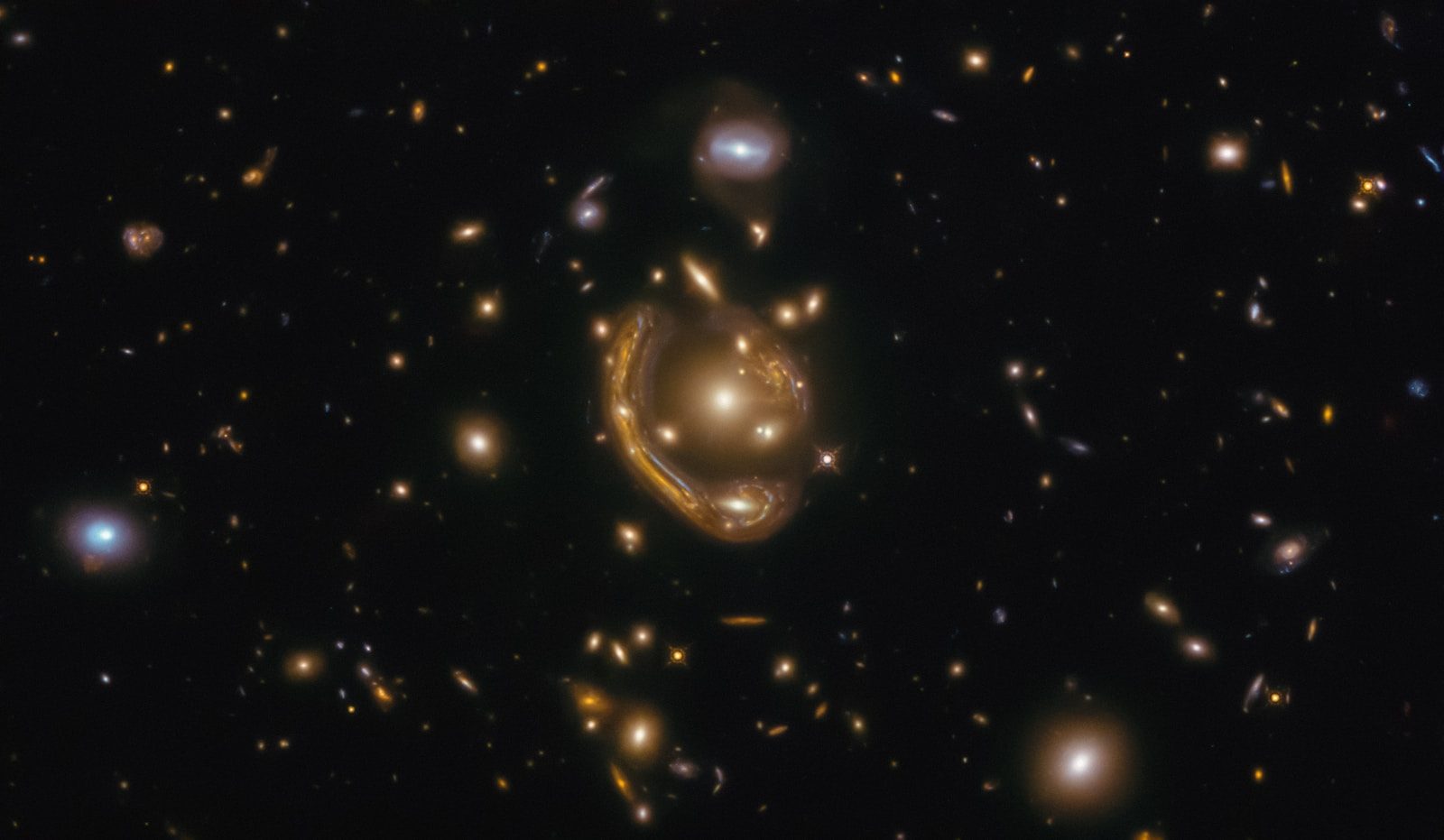
Most people think the universe looks evenly spread out across deep space. We assume stars and galaxies scatter smoothly everywhere we look.
But astronomers recently detected colossal cosmic formations hiding in deep sky surveys. Their gigantic size challenges our understanding of physical laws.
Discovering The Giant Ring Structure

Deep sky mappers identified a massive ring of galaxies stretching over one billion light years across. The shape is vast. According to astronomers from the University of Central Lancashire, this mega structure covers a huge chunk of our observable night sky. Scientists never expected to find a shape so immense. Yet another giant formation was found nearby.
Challenging The Cosmological Principle
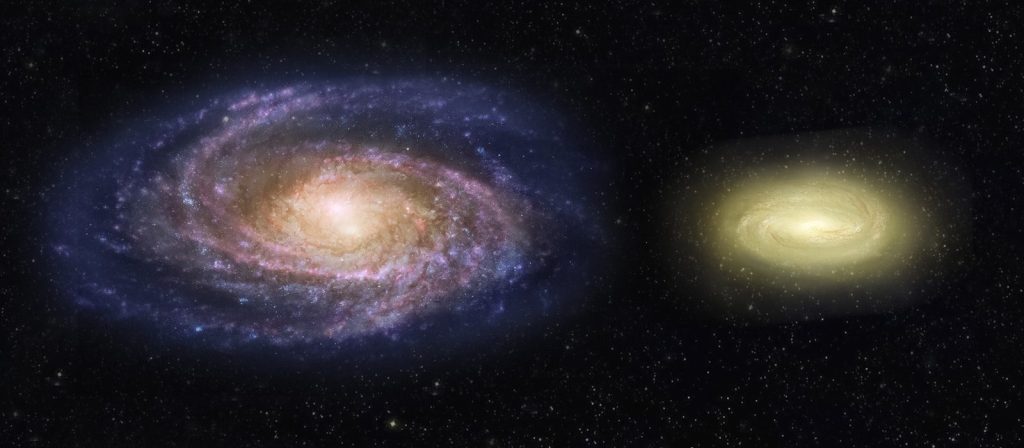
Standard physics suggests matter should distribute evenly across extreme cosmic distances. Math sets strict limits. According to cosmological models from NASA, no single structure should ever exceed one billion light years in length. Finding several gigantic patterns shatters old cosmic rules completely. But scientists soon noticed something even stranger about these formations.
Mysterious Alignment Across Light Years
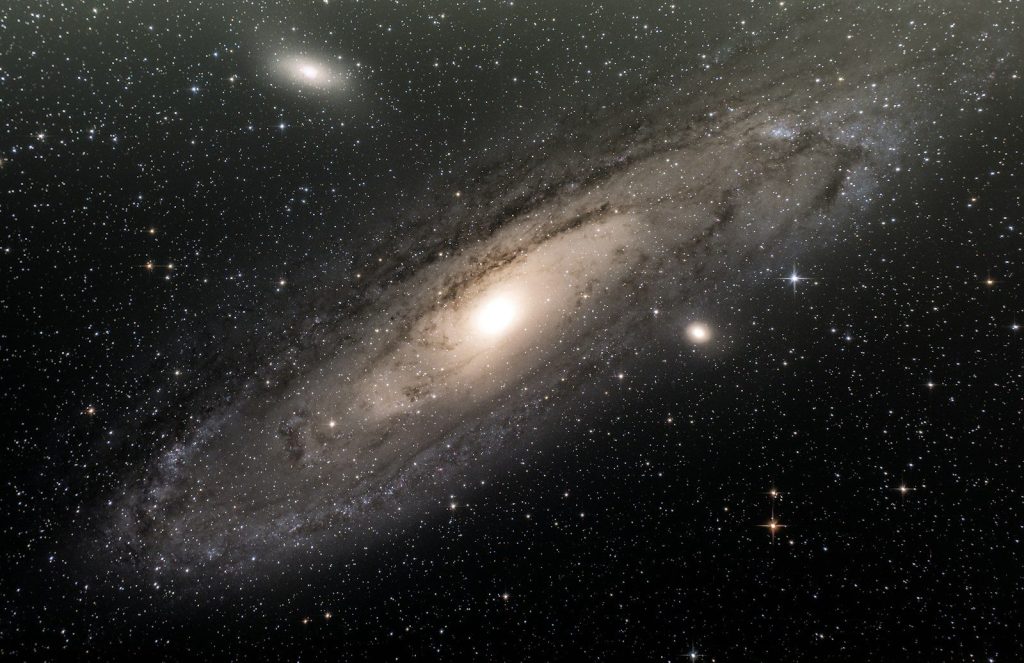
These mega structures appear near each other in the same cosmic neighborhood. Coincidence seems mathematically impossible. According to galaxy survey data from deep space telescopes, both structures share similar distance signatures and cosmic age. Their shared location points toward unknown physical forces. Yet theoretical physicists think gravity alone cannot explain them.
Echoes From The Early Universe

Ripples created during the Big Bang may have guided matter into huge cosmic threads. Shockwaves froze in time. According to research published in the Astrophysical Journal, primitive plasma oscillations shaped early galactic seeds billions of years ago. These invisible tracks might extend much further than we can see. But another theory points to cosmic strings.
Defects In Fabric Of Reality
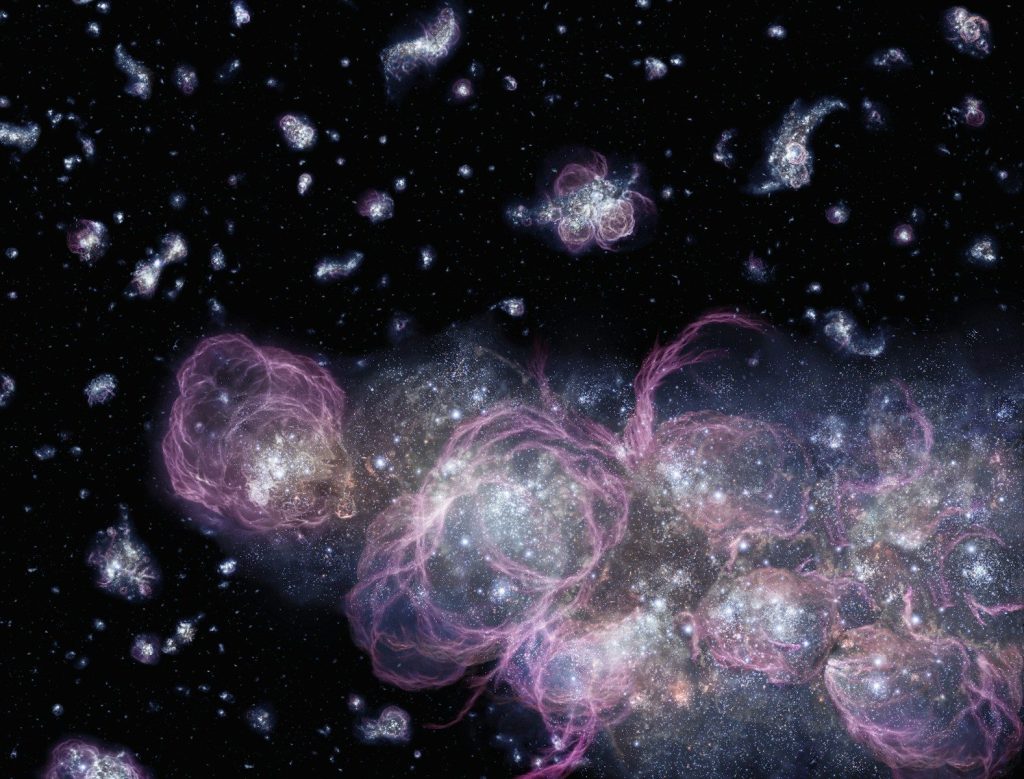
Theoretical line defects in spacetime could trap galaxies along massive invisible cracks. Reality might contain seams. According to theoretical physics reports, topological defects formed as the early universe cooled rapidly after expansion. These cosmic strings could pull millions of galaxies into huge loops. However, mapping these distant regions requires advanced technology.
Rewriting Modern Cosmology Textbooks

Finding giant structures forces researchers to refine fundamental cosmic equations. Science continuously updates itself. According to sky survey teams, future space observatories will scan deeper regions to check if larger formations exist. Uncovering bigger cosmic loops would change astronomy forever. But these discoveries are already changing how we view existence.
A New Vision Of Cosmos
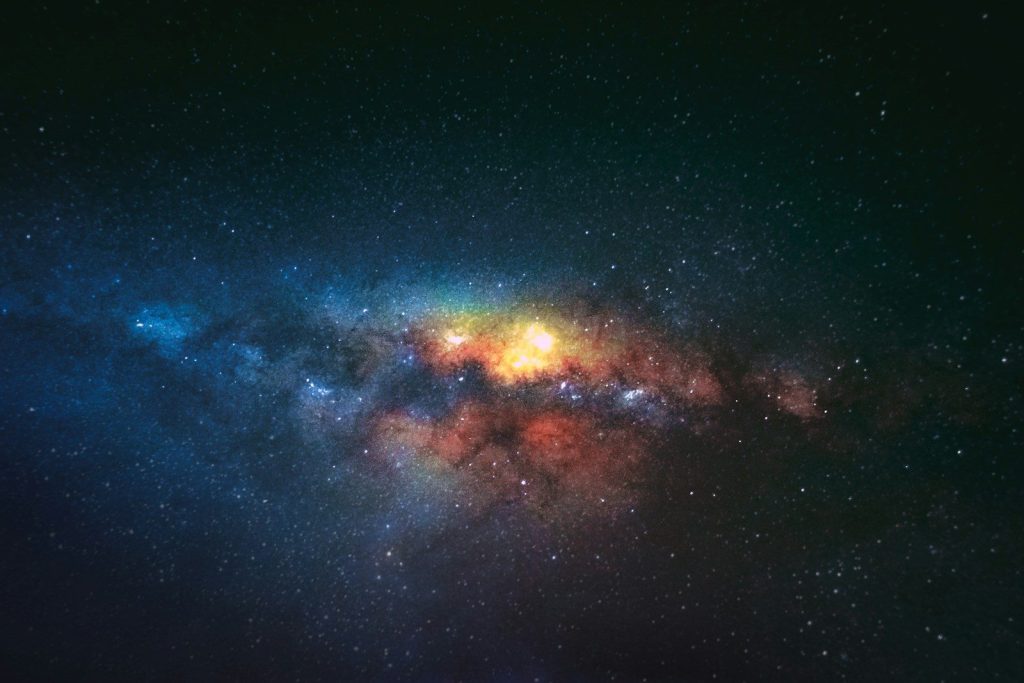
Studying gigantic galactic rings reminds us how much mysterious territory remains unexplored in space. Knowledge grows every day. According to space science researchers, every new cosmic discovery brings humanity closer to understanding fundamental laws. This article is for informational purposes only.
Featured Image: Photo by NASA Hubble Space Telescope on Unsplash
Leave a Reply