
Most tourists believe the Great Pyramids are solid limestone structures containing only a few above-ground burial rooms. People assume archaeologists mapped every hidden corridor inside these stone monuments long ago.
But non-invasive scanning technologies show an intricate network of deep shafts carved straight into bedrock below. Subterranean chambers hide ancient engineering feats that remain largely unexplored today.
Ground Radar Scans Bedrock Floors

Advanced ground-penetrating radar beams penetrate deep limestone bedrock beneath ancient desert monuments. Images revealed cavities. According to geophysical reports from Cairo University, radar pulses detected vertical shafts plunging over thirty feet into solid rock. These carved openings connect to horizontal limestone tunnels extending far beyond pyramid footprints. Ancient builders designed these passages with extreme precision.
Osiris Shaft Dips Below Water

A three-level subterranean complex known as the Osiris Shaft descends nearly one hundred feet below ground level. Water floods lower levels. According to archaeological survey logs from Egyptian heritage agencies, workers carved massive granite sarcophagi directly inside deep flooded chambers. Transporting heavy stone containers into narrow underground shafts required advanced rigging systems. That engineering skill raises questions about underground ritual uses.
Acoustic Vaults Echo Low Frequencies
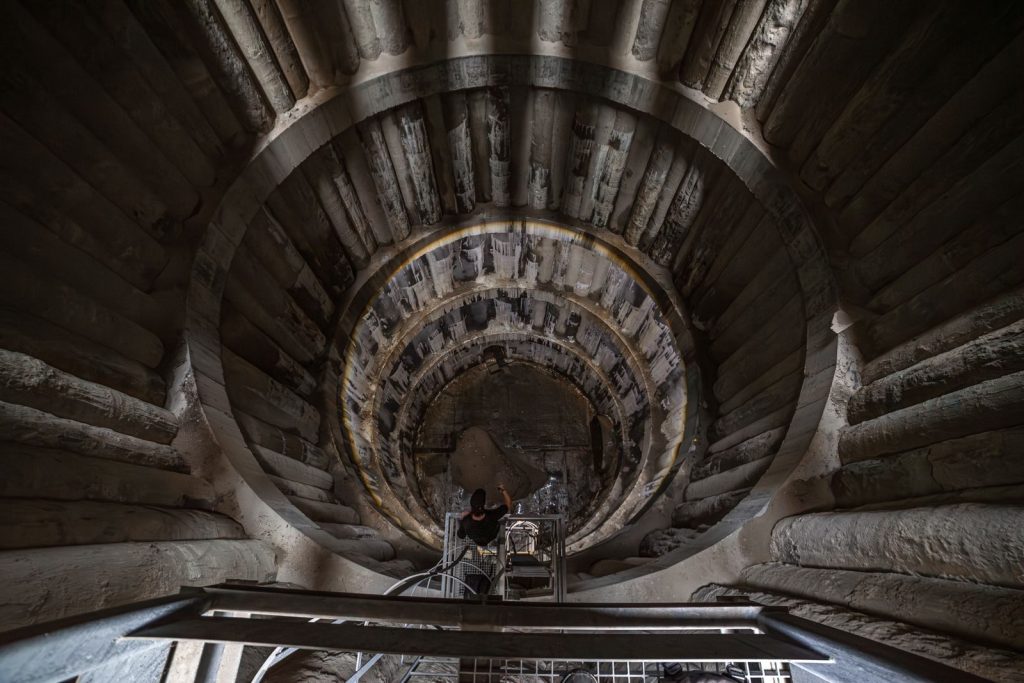
Underground limestone chambers vibrate strongly when specific musical tones or vocal chants echo through narrow stone shafts. Chambers amplify sound. According to acoustic research published by the Acoustical Society of America, precise room dimensions create low-frequency resonance throughout subterranean networks. Priests likely used acoustic amplification during secret sacred ceremonies. Sound waves may have served another structural purpose.
Cosmic Muons Detect Sealed Voids

Astrophysicists used cosmic ray muon detectors to map density variations inside stone structures above underground bedrock. Hidden spaces emerged clearly. According to survey reports from the ScanPyramids team, sub-atomic particle imaging confirmed a thirty-foot-long sealed void behind northern pyramid walls. This void sits directly above known subterranean passages. Accessing these chambers requires delicate non-destructive excavation methods.
Air Shafts Ventilate Deep Chambers

Narrow square shafts slope upward at precise angles from underground rooms to outer pyramid faces. Fresh air circulates continuously. According to architectural studies at the German Archaeological Institute, these narrow channels provided fresh air for workers carving deep rock vaults. Alignments also matched prominent star constellations across ancient night skies. Star targeting revealed symbolic religious connections.
Water Channels Flood Lower Vaults

Subterranean water channels linked to ancient Nile flooding cycles intentionally submerged lower sarcophagus chambers during high water seasons. Symbolic rivers flowed below. According to hydrological research at the Ministry of Antiquities, artificial flooding recreated mythical primeval waters from ancient Egyptian creation stories. Submerged stone vaults guarded sacred royal symbols from tomb robbers. Modern research continues uncovering these underground networks.
Mapping Egypt’s Lost Subterranean World

Exploring subterranean chambers beneath Giza alters traditional understandings of ancient Egyptian engineering capabilities and ritual architecture. Non-invasive technology allows scientists to map underground voids without damaging precious historic limestone. According to international archaeological teams, ongoing subsurface mapping will uncover more secret vaults across the desert plateau. This article is for informational purposes only.
Featured Image: Photo by Astrid Sosa on Pexels
Leave a Reply