Author: Dylan

  • The $500 Billion Lunar Gold Rush – Moon South Pole Secrets

    The $500 Billion Lunar Gold Rush – Moon South Pole Secrets

    The Moon is not simply a glowing rock in the night sky. In 2026 it became the most valuable piece of real estate in the solar system. A massive “Lunar Gold Rush” is currently underway, with world powers and private companies hurrying toward the Moon’s South Pole. Experts estimate that the resources buried there are worth at least $500 billion. This isn’t just planting flags anymore; it is about survival and massive profit.

    The South Pole is the target, because it contains something more precious than gold: ice. This ice can be turned into drinking water, oxygen and most importantly rocket fuel. If we can harvest fuel on the Moon it becomes the ultimate gas station for the rest of the galaxy. This discovery has transformed space exploration from a scientific hobby into a high-risk industrial race. But the ice is hidden in places where sunlight does not shine, creating a terrifying challenge for the robots already on the ground.

    Water is the New Lunar Oil

    blue and white floral textile
    Photo by Annie Spratt on Unsplash

    For decades, we thought the Moon was a dry, dead desert. We were wrong. NASA has confirmed that billions of tons of water ice are trapped in “permanently shadowed regions.” Because these craters never see sunlight, the ice has stayed frozen for billions of years. Companies are now designing giant “lunar drills” to extract this resource from the dust. Whoever controls the water controls the path to Mars. But water isn’t the only treasure hiding in the grey dirt.

    Harvesting Energy for a Million Years
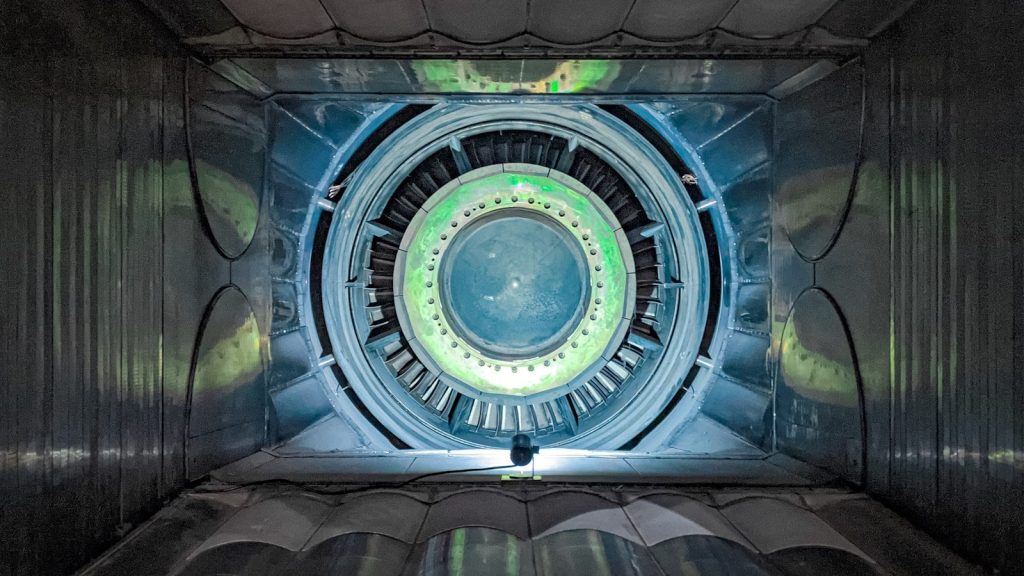
    a circular window with a circle in the middle
    Photo by Ethan Currier on Unsplash

    The Moon’s South Pole also contains high concentrations of Helium-3. This rare isotope is almost impossible to find on Earth, but it is the perfect fuel for nuclear fusion. Scientists believe that just a few shuttle-loads of Helium-3 could power the entire United States for a year. It is a clean, limitless energy source that could end the climate crisis once and for all. However, the machines needed to mine it have to survive the most brutal environment known to man.

    Robots are Already Building the First Cities

    robot, humanoid, office, advanced, technology, interactive, expression, mechanics, sensors, modern, artificial, intelligence, circuit, high technology, autonomous, innovation, cybernetics, robotics, technique, machine, ai is generated
    Photo by ImJey on Pixabay

    We aren’t sending humans first; we are sending builders. Autonomous robots are currently being tested to 3D-print lunar habitats using “regolith,” or moon dust. These structures will protect future astronauts from radiation and meteorites. These robots work 24/7 without air or food, turning a desolate landscape into a functional outpost. It is a masterclass in automated engineering that is happening 238,000 miles away. But wait until you see the “Lunar GPS” that is currently being launched.

    The First Satellite Network for the Moon

    an artist's rendering of a space station in orbit
    Photo by Andrej Sachov on Unsplash

    To navigate the deep craters of the South Pole, you need more than a compass. A new constellation of satellites is being placed in lunar orbit to provide the Moon’s first navigation and communication network. This “Lunar GPS” will allow mining bots and human rovers to pinpoint their location within inches. Without this network, explorers would get lost in the dark, frozen valleys forever. But this network is also tracking something mysterious moving on the surface.

    Hidden Craters That Defy The Laws of Physics
    a man standing in a tunnel with a flashlight
    Photo by Mick Haupt on Unsplash

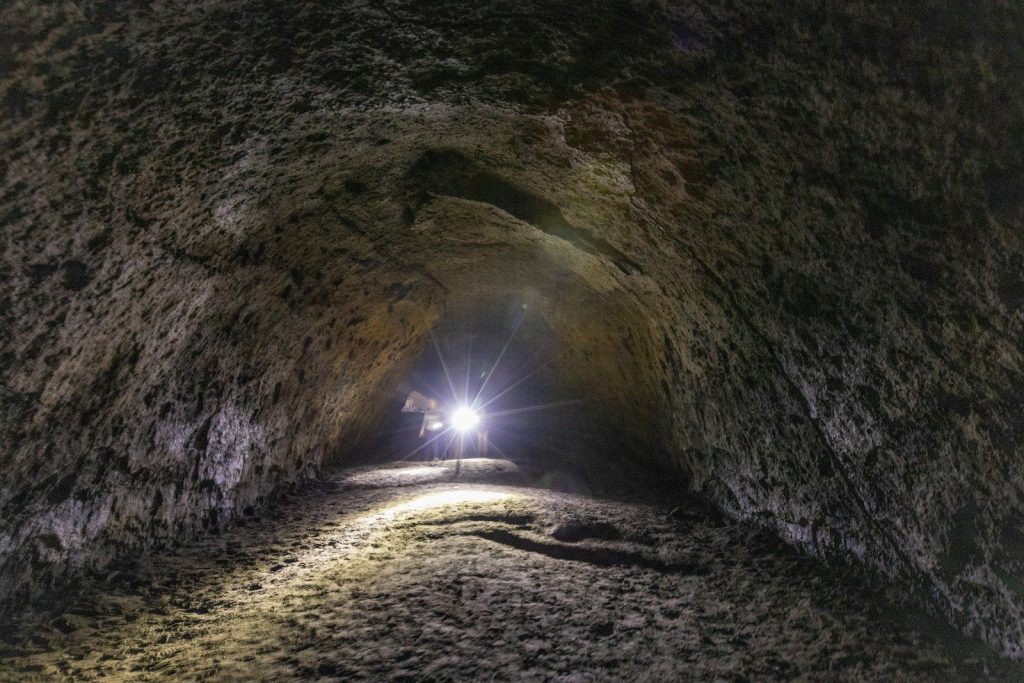
    Deep-space scans have revealed massive “lava tubes” beneath the lunar surface. These are giant, natural tunnels created by ancient volcanic activity. They are large enough to house entire cities and provide a natural shield against the vacuum of space. Inside these tubes, the temperature is surprisingly stable. It is the perfect place for a permanent human colony. But explorers are finding that some of these caves contain strange, unidentifiable chemical signatures.

    Sovereignty and the New Space Law Conflict

    a piece of paper with writing on it
    Photo by NISZOgen on Unsplash

    Who owns the Moon? The 1967 Outer Space Treaty says no nation can own it, but it doesn’t address private companies mining resources. As the “Gold Rush” intensifies, legal experts are scrambling to write new laws to prevent a “lunar war.” We are seeing the birth of “Safety Zones” where countries can operate without interference. It is a diplomatic nightmare that could boil over at any moment. But the biggest secret isn’t what we are taking from the Moon.

    The Launchpad to the Rest of the Galaxy
    A research station in a desert landscape, resembling the surface of Mars, with red rock formations.
    Photo by Wine Food Travel on Pexels

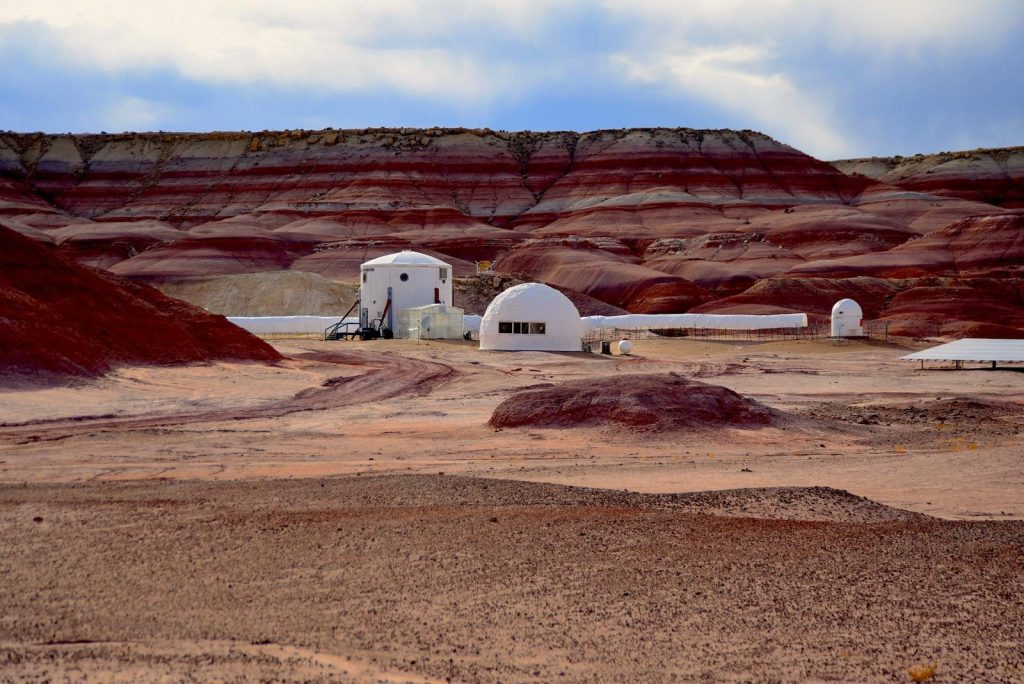
    The ultimate goal of the $500 billion rush is to use the Moon as a stepping stone. Because the Moon has very low gravity, it is much easier and cheaper to launch rockets from the lunar surface than from Earth. The South Pole will become the industrial hub for missions to Mars, Jupiter, and beyond. We are building the first port for a multi-planet civilization. But you won’t believe how this tech is already changing your own brain right now.

    The Final Countdown for the Lunar Era
    Rocket launchpad with a tall rocket and surrounding structures.
    Photo by Jay Wedgeworth on Unsplash

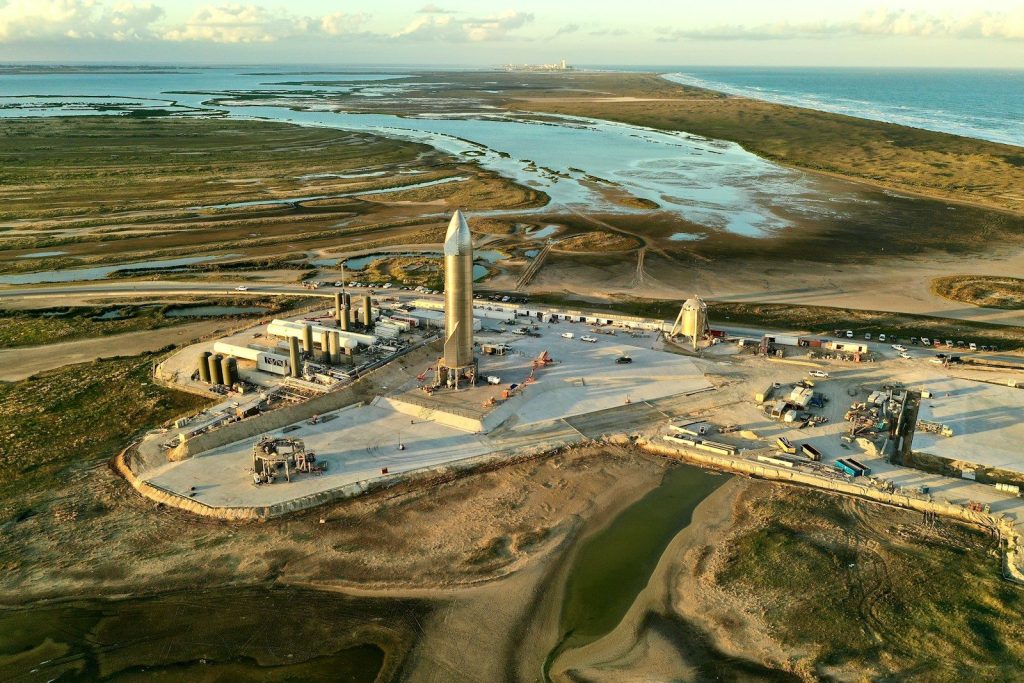
    The next three years will decide the winner of this race. With missions scheduled by NASA, China, and SpaceX, the South Pole is about to get very crowded. We are living through the most significant moment in human history since we first walked upright. The resources are there, the tech is ready, and the money is flowing. The Moon is open for business, but are we ready for what we will find in the permanent dark?

    Featured Image: Photo by WikiImages on Pixabay

  • Why modern bridges are actually designed to “break” during an earthquake

    Why modern bridges are actually designed to “break” during an earthquake

    When a massive earthquake hits, you might think the goal of a bridge is to stand perfectly still. But in modern engineering, that is exactly how a bridge collapses. If a bridge is too stiff, the energy of the earthquake will snap the concrete like a dry twig. Today, the world’s most advanced bridges are actually designed to “break” in very specific places. Engineers call these “sacrifice zones.” By allowing certain parts of the bridge to fail or move, the main structure stays standing, and lives are saved. It is a “smart” way of handling disaster that turns a bridge into a giant, flexible machine.

    The secret is “Base Isolation” and “Ductile Design”. Instead of fighting Earth’s movement, the bridge rides it like a surfboard. By using rubber pads, giant springs, and “fuses” that are meant to snap, engineers can control exactly where the damage happens. This makes sure that the parts carrying the cars never lose their strength. But how can a “broken’ bridge actually be safer than a solid one?

    The philosophy of sacrifice zones

    broken brown concrete bridge
    Photo by Indira Tjokorda on Unsplash

    In an earthquake, the energy has to go somewhere. If it doesn’t have a “weak spot” to go to, it will find its own. Engineers build “plastic hinges” into the support columns. These are areas that are designed to bend and deform during a quake. They soak up the energy like a sponge. The concrete might crack and look “broken,” but the steel inside stays strong. It is like the crumple zone on a car. The bridge is “sacrificed” to keep the people on top safe. But the real magic happens at the very bottom.

    Riding on giant rubber sandwiches

    arches, architecture, bridge, columns, nature, construction, curve, engineering, foundation, outdoors, steel, travel, water
    Photo by Pexels on Pixabay
    Modern bridges often sit on “Lead-Rubber Bearings.” These look like giant sandwiches made of rubber and steel. When the ground shakes, these pads allow the entire bridge to slide back and forth while the columns stay still. The rubber absorbs the vibrations before they can reach the main structure. It effectively “disconnects” the bridge from the earthquake. In a major quake, a bridge might move three feet in every direction and still come back to its original spot. But what happens when the road itself needs to move?

    Expansion joints that act like zippers

    A close-up view of an urban bridge showcasing its architectural design during daylight.
    Photo by Anshu Kumar on Pexels

    Have you ever seen those metal “teeth” in the road when you drive over a bridge? Those are expansion joints. Usually, they handle changes in temperature, but in an earthquake, they are a lifesaver. They allow the different sections of the bridge to pull apart and crash back together without destroying the pavement. During a quake, these joints act like a “zipper” that opens and closes to handle the movement. Without them, the road would buckle and toss cars into the air. But the “dampers” are the secret weapon for wind and quakes.

    Using giant shocks to slow the shake

    palace, london, parliament, big ben, england, river thames, palace of westminster, buildings, architecture, city, skyline, clock tower, bridge, river, westminster, tower, british, travel, uk, thames, clock, landmark, urban, history, capital, tourism, historical, europe, cityscape, historical architecture, gothic architecture, london, london, london, london, london, england
    Photo by derwiki on Pixabay

    Inside the towers of many bridges are giant hydraulic pistons called “Viscous Dampers.” These work exactly like the shock absorbers on your car, but they are the size of a bus. They are filled with a thick oil that resists movement. When the bridge starts to sway, the dampers push against that movement and turn the energy into heat. This keeps the bridge from swinging too far and falling over. It is a high-tech way to “calm” the bridge during a crisis. But why do some bridges use “breakaway” walls?

    The wall that is meant to fall

    bridge, column, monochrome
    Photo by Pexels on Pixabay

    On the sides of a bridge, engineers often build “Breakaway Retaining Walls.” These are not meant to hold up the bridge; they are just there to look nice and hold the soil. In an earthquake, these walls are designed to fall over instantly. This clears a path for the main bridge columns to move freely. If the walls were too strong, they would block the bridge’s movement and cause a total failure. It is one more part that is “designed to break” so the whole system can survive. But is a flexible bridge scary to drive on?

    Why “rigid” is a dirty word in engineering

    low-angel photography of bridge during daytime
    Photo by Mason Kimbarovsky on Unsplash

    If you are on a bridge during an earthquake, you will feel it move. This can be terrifying, but it is a sign that the bridge is working. A bridge that doesn’t move is a bridge that is about to snap. Modern engineers have moved away from the idea of “impenetrable fortresses.” They now build “living systems” that can adapt to the Earth’s power. The “breaking” you see is actually a carefully planned survival strategy. It is the height of human intelligence working against nature’s raw force. But how much does this “broken” safety cost?

    The price of a bridge that bends

    a bridge over a body of water next to a forest
    Photo by Meatball Overexposure on Unsplash

    Building a bridge with dampers, rubber bearings, and sacrifice zones is 20% to 30% more expensive than building a “regular” bridge. But the cost of a bridge collapse is measured in billions of dollars and thousands of lives. Governments are finally realizing that it is cheaper to build a bridge that “breaks” than to rebuild one that has fallen. We are investing in “controlled failure” to ensure our long-term survival. Every crack you see might be exactly what was planned to keep you alive. But wait until you see why Saudi Arabia’s dream is turning into a nightmare.

    The final verdict on modern safety

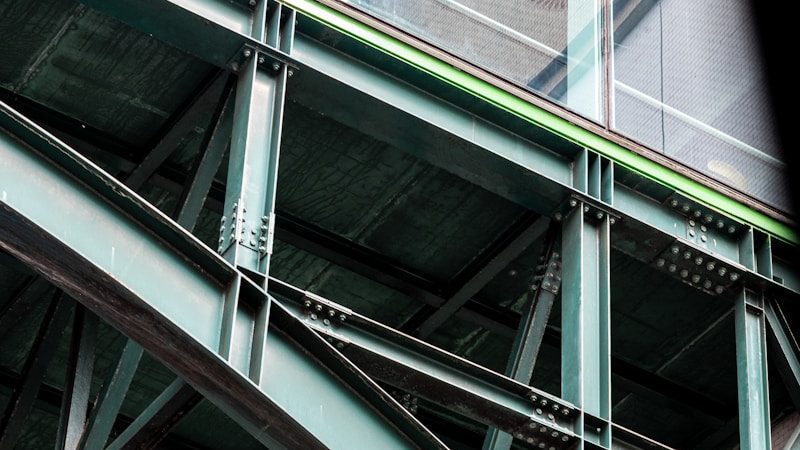
    Green steel beams form an industrial bridge structure.
    Photo by Juan Pablo on Unsplash

    The next time you drive over a bridge, look for joints and hinges. You are riding on a work of “calculated destruction”. We have learned to work with the Earth rather than against it. The “broken” parts are the secret of our strength. It is a high-speed physics game where losing a few pieces means winning the game. We are building a world that can bend without breaking, and it’s a future on which we can all stand. Are you ready for the next “breakthrough’ in our world?

    Featured Image: Photo by Lance Asper on Unsplash

  • The manufacturing flaw that’s quietly killing the electric car revolution

    The manufacturing flaw that’s quietly killing the electric car revolution

    The electric automobile revolution was supposed to save our planet and our wallets. We were promised cheap travel, low maintenance and a clean future. Behind the scenes, a major manufacturing flaw is causing a silent disaster. Thousands of electric vehicles (EVs) are sent to the scrapyard for problems that would be a simple fix in a gas car. Because of how these cars are built, even a tiny bit of damage to the battery casing can make the entire vehicle a “total loss.” This hidden flaw is driving insurance rates up and making used EVs almost impossible to sell. If we don’t fix how we build these cars, the revolution could end before it really begins.

    The problem lies in “cell consistency” and the “unrepairable battery.” In most EVs, the battery is part of the car’s structure. It is glued or welded into the frame to save weight and space. This sounds like smart engineering, but it means you can’t replace just one part of the battery. If a single cell fails or a rock hits the bottom of the car, the whole $20,000 battery must be replaced. But that is just the beginning of the problem.

    The unfixable battery pack design

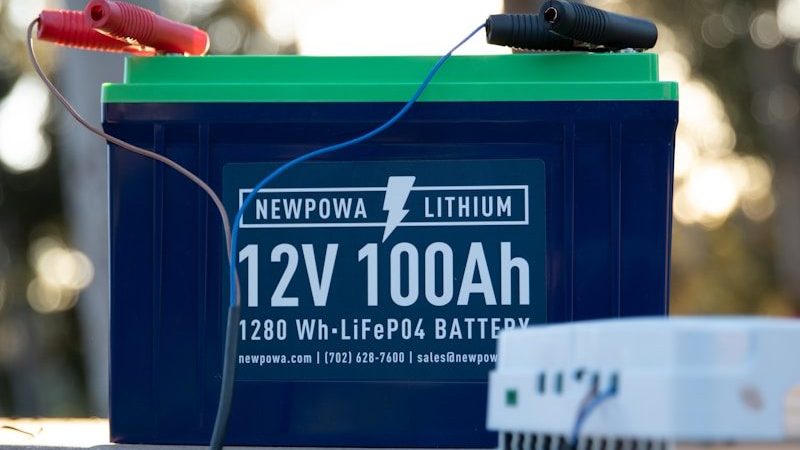
    a battery and a charger sitting on a bench
    Photo by Newpowa on Unsplash

    In a traditional car, you can swap out an engine or a transmission. In a modern EV, the battery is often “potted” in a hard plastic foam to keep it safe from vibrations. This makes it impossible for a mechanic to get inside and fix a loose wire or a bad sensor. Because nobody can see what’s wrong inside, insurance companies choose to throw the whole car away rather than risk a fire. We are creating “disposable” cars that cost $60,000. But the weight of these batteries is causing another problem on the road.

    The crushing weight of the battery

    a man is working on a car's engine
    Photo by Maxim Hopman on Unsplash

    Batteries are incredibly heavy. An electric SUV can weigh 1,000 pounds more than its gas equivalent. This extra weight puts a massive strain on tires and suspension parts. EV tires wear out 30% faster than regular tires, creating more microplastic pollution. It also means that when an EV hits a pothole, the damage is much more severe. The car is literally “crushing” its own components because of a manufacturing choice to use heavy, low-density batteries. But wait until you see the “software glitch” that stops the car.

    The software that locks the hardware

    a close up of a car tire on a sidewalk
    Photo by J Z on Unsplash

    Modern EVs are “computers on wheels.” Every part of the car is controlled by software that is proprietary to the manufacturer. This means you cannot take your car to a local mechanic for a simple electronic fix. If the software “glitches,” it can “brick” the entire car, making it unmovable. Manufacturers are using this to prevent people from using third-party parts. It is a manufacturing flaw designed to keep you paying the dealer forever. But the “thermal runaway” risk is the scariest part.

    The hidden fire risk in the frame

    a car is seen through a glass window
    Photo by John Cameron on Unsplash

    When a lithium battery gets damaged, it can enter “thermal runaway.” This is a chemical fire that produces its own oxygen and cannot be put out with water. Because the battery is built into the bottom of the car, a fire there will melt the frame in minutes. Firefighters often have to let the car burn for days or submerge it in a giant tank of water. This danger is why many parking garages are starting to ban electric cars. It is a fundamental flaw in how we store energy in vehicles. But the depreciation is what hits the wallet.

    The used car value trap

    black and silver car on parking lot
    Photo by Michael Fousert on Unsplash

    Because everyone is afraid of a failing battery, used EVs are losing their value faster than any other type of car. Who wants to buy a 5-year-old car if the battery might die tomorrow and cost $20,000 to fix? This manufacturing choice has destroyed the “resale” market. People are finding themselves stuck with cars that they owe more money on than they are worth. It is a financial disaster for the average family. But can “solid state” technology save us?

    The gamble on solid-state batteries

    Close-up of a scientist handling metal samples in a laboratory experiment with precision tools.
    Photo by ThisIsEngineering on Pexels

    The car industry is betting everything on “Solid State” batteries. They are supposed to be lighter, safer and easier to repair. They are still years away from mass production. For now, manufacturers still pump out cars with the same old flaws. We are building the “old” tech while we wait for the “new” tech to arrive. It is a high-risk gamble that could leave millions of drivers with “obsolete” cars. Wait until you see why bridges are actually designed to break.

    The end of the disposable car era

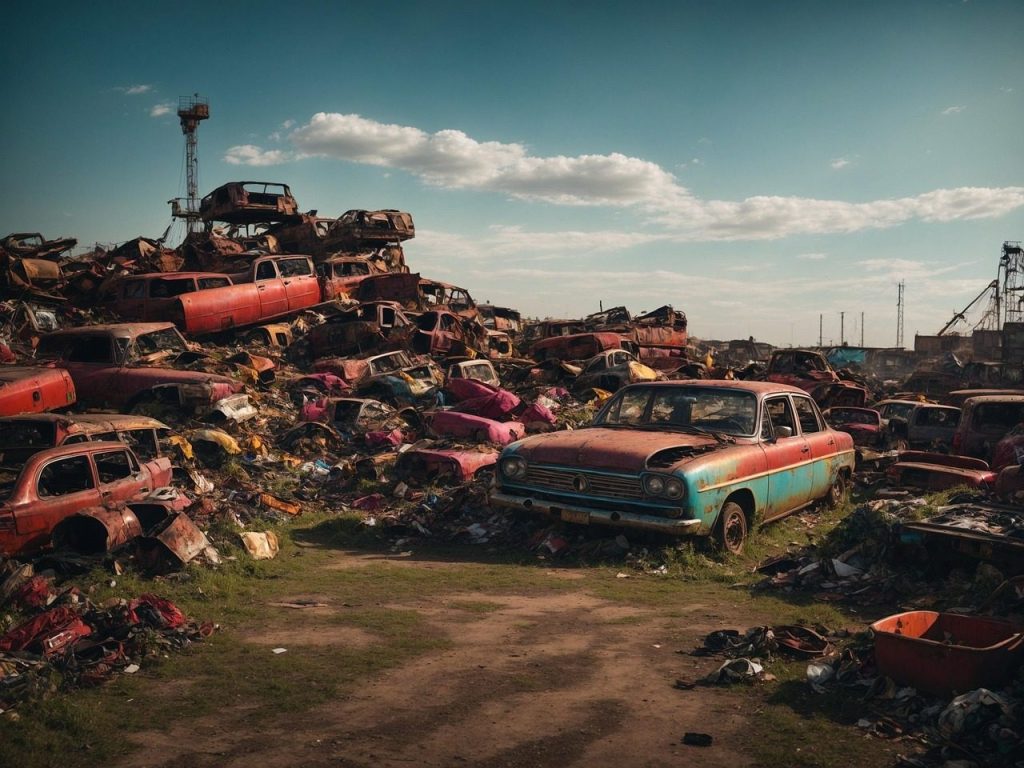
    ai generated, scrapyard, car, scrap, rust, trash, garbage, landfill, old, waste, ai generated, scrapyard, scrapyard, scrapyard, scrapyard, scrapyard, scrap
    Photo by TheDigitalArtist on Pixabay
    The electric car revolution isn’t dead, but it needs a major reboot. We have to stop building cars as “disposable gadgets” and go back to building them as machines that can be fixed. The manufacturing flaw of the “unrepairable battery” is a choice, not a necessity. If we want a green future, we need cars that last 20 years, not 5. We are learning the hard way that you can’t save the planet with a product that goes into the trash. The next generation of EVs will have to be built to break, but in a way that we can put them back together.

    Featured Image: Photo by PHLAIR on Unsplash

  • A submersible found a dark mirror on the seafloor – then saw the bodies

    A submersible found a dark mirror on the seafloor – then saw the bodies

    The deep ocean is one of the most hostile environments on Earth. It is a place of absolute darkness, crushing pressure, and freezing temperatures. Yet, when a research submersible dove to the bottom of the ocean, the crew spotted something that looked impossible. They saw what appeared to be a shimmering lake with a perfectly flat, dark surface. It looked exactly like a dark mirror resting on the seafloor. But as the submersible moved closer to investigate, the ocean researchers gasped. The edges of this mysterious lake were littered with the perfectly preserved bodies of deep-sea creatures. This discovery is shedding light on a terrifying natural phenomenon known as a brine pool. The science behind these underwater lakes of death is absolutely mind-boggling. It reveals how extreme chemistry can create a perfect, silent trap in the deep sea.

    Diving into the deep unknown

    black and white water pump
    Photo by Simon Infanger on Unsplash

    Deep-sea exploration requires highly specialized submersibles. These vessels are built to withstand pressures that would instantly crush a human. According to reports from the Ocean Exploration Trust, a research team was exploring the Gulf of Mexico when they spotted the anomaly. The cameras on the robotic arm caught a strange, shimmering boundary on the seafloor. It looked like a body of water within the ocean itself. This bizarre sight immediately captured the attention of the scientific crew.

    The illusion of an underwater lake

    smelled, fishes, nature, water, sea, animal, underwater, underwater world, dive, red sea, reef, to travel, stingray, sea creatures, sea animal, creature
    Photo by Franziska_Stier on Pixabay

    The shimmering surface was actually the boundary of a brine pool. These pools are bodies of water that have an incredibly high salt concentration. According to studies by researchers at the University of Miami, this water is up to five times saltier than normal ocean water. Because of this extreme density, the brine does not mix with the surrounding sea. It settles in deep depressions on the seafloor, creating a perfect underwater lake. But this beautiful mirror hides a highly lethal chemical secret.

    A toxic chemical cocktail of death

    A dark room with a blue light coming from the ceiling
    Photo by Алекс Арцибашев on Unsplash

    Brine pools are completely devoid of oxygen. They are also packed with toxic levels of hydrogen sulfide and heavy metals. According to research published in the journal Scientific Reports, this chemical mix is highly lethal to almost all marine life. Any fish, crab, or shrimp that accidentally swims into the pool experiences immediate toxic shock. They cannot breathe in the dense, oxygen-free water. This rapid effect leads to a grim scene around the edges of the pool.

    Finding the perfectly preserved victims

    a group of fish swimming in a body of water
    Photo by erika m on Unsplash

    The edges of these brine pools are often covered in dead marine life. Submersible cameras have captured images of crabs and fish lying perfectly still at the water’s edge. According to marine biologists, these creatures have been dead for years. Yet, their bodies look as if they died just moments ago. They are not decaying. This eerie preservation is a direct result of the extreme environment inside the brine pool.

    Why the bodies never decay

    A mesmerizing jellyfish with tentacles gracefully floating in a deep blue underwater setting.
    Photo by Nina Simková on Pexels

    Decomposition requires oxygen and active bacteria. Because the brine pool contains zero oxygen, normal decaying organisms cannot survive inside the water. According to studies by the Marine Science Institute, the high salt content acts like a natural preservative, essentially pickling the creatures. This stops the natural process of decay completely. The bodies remain intact on the seafloor for decades. But these pools are not entirely lifeless.

    Extreme life thriving in the dead zone

    white and black abstract painting
    Photo by National Cancer Institute on Unsplash

    Brine pools are home to specialized organisms called extremophiles. These are bacteria and microbes that have adapted to survive in highly toxic environments. According to research from the University of Texas, these microbes use the chemical energy from the brine to create food. This process is called chemosynthesis. It allows a unique ecosystem to survive without any sunlight or oxygen. This discovery is helping scientists search for life on other planets.

    Unlocking the deepest mysteries of Earth

    Mountains reflect in a dark, wet landscape.
    Photo by Karsten Winegeart on Unsplash

    The discovery of brine pools is changing how we look at the ocean floor. These extreme environments prove that Earth still holds secrets that challenge our understanding of biology. By studying these pools, researchers are learning how life can adapt to the most hostile conditions imaginable. It is a powerful reminder of the diversity of our world. The deep ocean continues to be a frontier of endless discovery and scientific wonder.

    Featured Image: Photo by Victor Oonk on Unsplash

  • The Micro-Pump Miracle – How Engineers Shrunk Extreme Liquid Cooling

    The Micro-Pump Miracle – How Engineers Shrunk Extreme Liquid Cooling

    If you have ever felt your smartphone get hot while playing a game or recording a video, you have felt the failure of modern engineering. For years, the only way to keep a powerful computer cool was with giant fans and liters of liquid. But in 2026, a “Micro-Pump Miracle” has arrived. Engineers have successfully shrunk a full-scale liquid cooling system down to the size of a postage stamp.

    This isn’t just a fancy heat sink; it is an active, high-pressure pump system that lives inside your phone. It moves specialized cooling fluid across the processor at incredible speeds, whisking away heat before it can ever slow down your device. This breakthrough means your next phone could have the power of a high-end gaming PC without ever getting warm. It is a total reset for the mobile tech industry. But how do you fit a mechanical pump into a device that is only 7 millimeters thick?

    The Magic of Piezoelectric Pressure

    Abstract, colorful, swirling pattern with purples and blues.
    Photo by Logan Voss on Unsplash

    The secret isn’t a traditional motor. Instead, the micro-pump uses “Piezoelectric” materials that vibrate trillions of times per second when electricity hits them. These vibrations act like tiny heartbeats, pushing the cooling fluid through microscopic channels etched into the silicon. It has no moving parts to break and makes zero noise. It is essentially a “solid-state” pump that never wears out. But what is the mysterious liquid flowing through your phone?

    Using Synthetic Blood to Cool Chips

    black circuit board
    Photo by Cristiano Firmani on Unsplash

    Regular water would destroy a phone, so engineers developed a “Synthetic Heat-Blood.” This fluid is non-conductive and can absorb ten times more heat than water. It is designed to work at the molecular level, grabbing heat from the processor and carrying it to the phone’s metal frame to be released. This fluid is so efficient that the processor stays at room temperature even under the heaviest loads. But wait until you see what this does to your battery life.

    Ending the Battery Drain Forever

    smartphone, mobile, phone, gadget, touchscreen, battery, charger, cord, hand, battery, battery, battery, battery, battery, charger, charger, charger, charger
    Photo by StockSnap on Pixabay
    Heat is the number one killer of battery life. When your phone gets hot, the battery’s chemical reactions become inefficient, and the charge disappears in minutes. By keeping the entire system cool, the micro-pump miracle increases battery life by 30 percent overnight. It also prevents the “throttling” that makes old phones feel slow. Your phone will perform like it’s brand new for its entire life. But this technology isn’t just for phones.

    Pocket-Sized Artificial Intelligence is Here

    black android smartphone displaying home screen
    Photo by The Average Tech Guy on Unsplash

    Running a massive AI model like ChatGPT locally on a phone used to be impossible because the chips would melt. With active liquid cooling, the 2026 smartphone can run full-scale AI models entirely offline. This means your private data never has to leave your device. You can translate entire languages or generate 8K videos in your pocket without an internet connection. We are witnessing the birth of the truly “Personal” AI assistant. But how do they manufacture something so tiny?

    Printing Cooling Systems with Lasers

    a close up of a machine with a red light on it
    Photo by Jakub Żerdzicki on Unsplash

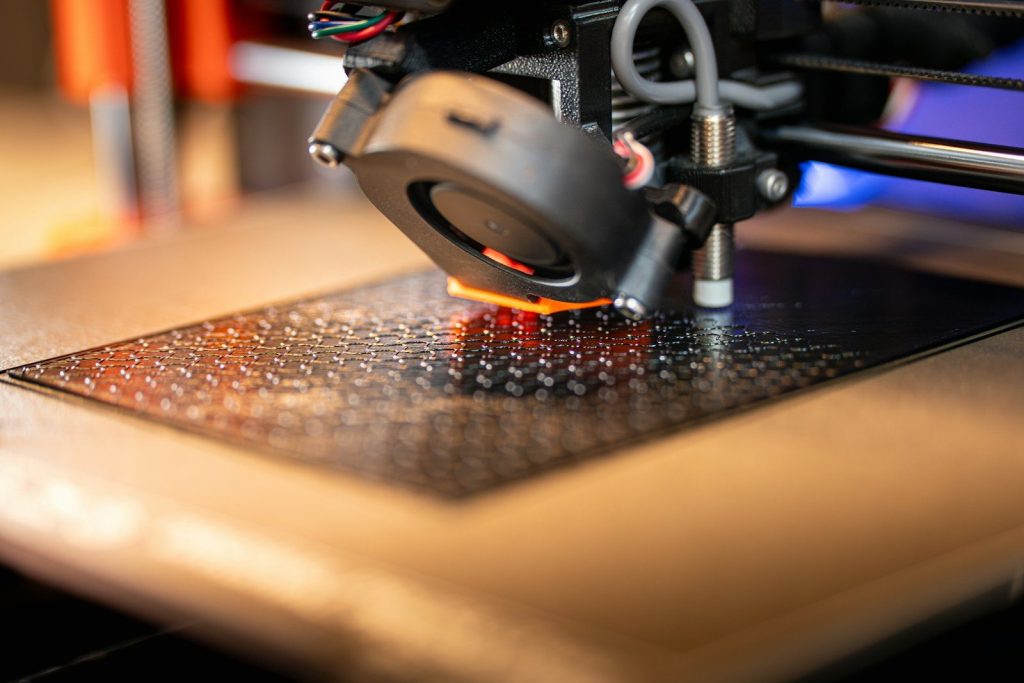
    You can’t build these pumps on a traditional assembly line. Instead, they are “grown” using 3D laser lithography. Scientists use lasers to carve channels into the chips that are smaller than a human hair. It is a level of precision that was reserved for the aerospace industry until now. This manufacturing breakthrough is what allowed the cost to drop enough for consumer electronics. But wait until you see the next big move in the global battery war.

    The End of the Hot Laptop Era

    a laptop computer sitting on top of a white desk
    Photo by Ibrahim Abazid on Unsplash

    Laptops are the next target for the micro-pump miracle. By replacing heavy, loud fans with these silent pumps, engineers are designing laptops that are as thin as a tablet but as powerful as a workstation. We are finally moving into a world of “Silent Power.” No more fan noise during meetings and no more hot laps. It is a lifestyle shift that everyone has been waiting for. But can this technology handle the extreme power of a cargo ship?

    A Future Without Thermal Limits

    battery, motorcycle battery, battery acid, scooter battery, battery pack, fill up, load, electricity, 12v, acid, battery, battery, battery, battery, battery
    Photo by Ralphs_Fotos on Pixabay

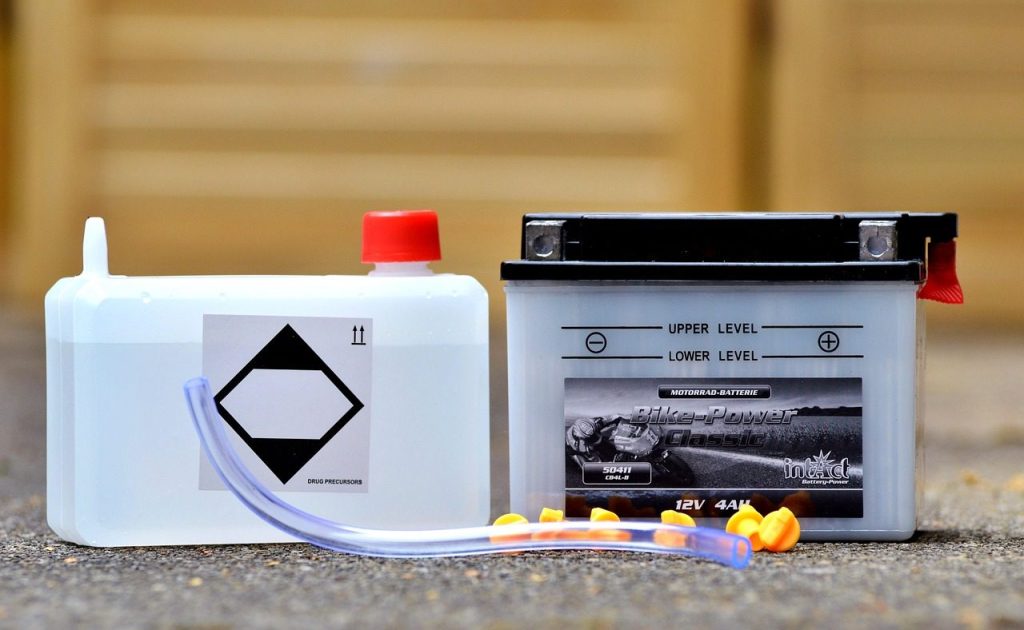
    The micro-pump is just the beginning. The same logic is being used to cool electric car batteries and city-wide power grids. We are removing the “Heat Wall” that has held back human technology for a century. The 2026 tech reveals that when we solve the cooling problem, we solve the performance problem. The future is cool, fast, and incredibly quiet. But while we fix our gadgets, a different type of battery is quietly taking over the world’s oceans.

    Featured Image: Photo by Austin on Unsplash

  • Cellular Time Travel – The Medical Breakthrough Making Old Cells Young

    Cellular Time Travel – The Medical Breakthrough Making Old Cells Young

    Human aging has always been viewed as a one-way street. We are born, we grow, and our cells slowly lose their ability to repair themselves. But in 2026, the medical world is buzzing with a discovery that feels like a scene from a science fiction movie. Researchers have successfully performed what they are calling “Cellular Time Travel.” By using a specific cocktail of proteins, scientists have managed to “reset” the internal clock of adult stem cells, making them act and function as if they were decades younger.

    This isn’t just about looking better in the mirror; it is about restoring the fundamental building blocks of the human body. These rejuvenated cells regain their youthful energy and precision, allowing them to repair damaged tissues with incredible speed. This breakthrough is hitting the news as a potential cure for age-related decline. We are looking at a future where “getting old” might be a choice rather than a certainty. But how do you actually convince a cell to forget its own history? The secret lies in a process called epigenetic reprogramming. But wait until you see what this means for our most vital organs.

    The Epigenetic Reset Button

    Woman in sleek attire operates cutting-edge laboratory equipment in a tech-focused environment.
    Photo by cottonbro studio on Pexels

    Every cell carries a record of the stress and damage it has endured. This record is stored in the epigenome. The new 2026 breakthrough uses “Yamanaka Factors” to scrub these records clean. It is like formatting a cluttered hard drive back to its original factory settings. Once the “noise” is removed, the cell remembers how to be young again. It starts producing the same proteins it did during childhood. But can this process actually be controlled safely inside a living human?

    Fixing Broken Hearts from Within

    heart, organ, muscle, line art, biology, anatomy, cardiac, vintage, retro, antique
    Photo by GDJ on Pixabay

    The most immediate application of cellular time travel is in heart health. After a heart attack, the muscle usually scars and stays weak forever. By injecting these “young” stem cells directly into the heart, doctors are seeing the scars disappear and be replaced by healthy, beating muscle. It is a level of healing we thought was impossible for the human body. The heart essentially learns to beat with youthful vigor once again. But what happens when we apply this logic to the human brain?

    A Shield Against Memory Loss

    Nervous Tissue: Spinal Cord Motor Neuron
    Photo by Bioscience Image Library by Fayette Reynolds on Unsplash

    Our neurons are the oldest cells in our bodies, and they rarely regenerate. This makes conditions like Alzheimer’s a nightmare. However, early 2026 trials show that “resetting” the supporting cells in the brain can stop and even reverse cognitive decline. The “young” cells clear away the toxic plaques that cloud our memory. We are watching the first real evidence that dementia could be a reversible condition. But how does this technology affect the way we look on the outside?

    The End of Skin Aging

    Detailed image highlighting dry, flaky skin texture for dermatological study.
    Photo by www.kaboompics.com on Pexels

    While organ repair is the priority, the cosmetic benefits are hard to ignore. This breakthrough allows for a permanent “skin reset.” Instead of creams that sit on the surface, this treatment works at the cellular level to restore collagen production to teenage levels. Scars, wrinkles, and sun damage are simply erased as the cells revert to their healthiest state. It is a total transformation of the dermatology industry. But wait until you see the “Longevity Pill” currently in development.

    Making the Treatment Affordable

    Close-up of a nurse in gloves giving a vaccination to a patient.
    Photo by www.kaboompics.com on Pexels

    High-tech cures are usually for the rich, but the 2026 “Time Travel” proteins are surprisingly easy to manufacture. Scientists are already working on a way to deliver these factors through a simple injection or even a pill. The goal is to make cellular rejuvenation as common as a flu shot. Governments are looking at this as a way to lower the massive cost of elder care. But is there a hidden danger to living in a body that never feels old?

    The Ethics of the New Human

    Elderly man with glasses and gray hair appearing pensive and thoughtful indoors.
    Photo by cottonbro studio on Pexels

    If everyone stays young, our society will have to change completely. Philosophers and lawmakers are debating the rules of a world where people can live for 150 years or more. Will there be enough jobs? How will retirement work? We are being forced to redefine what it means to have a “natural” lifespan. It is the most important conversation of the decade, and it’s happening right now. But can this technology actually prevent future diseases before they even start?

    Pre-Emptying Sickness Forever

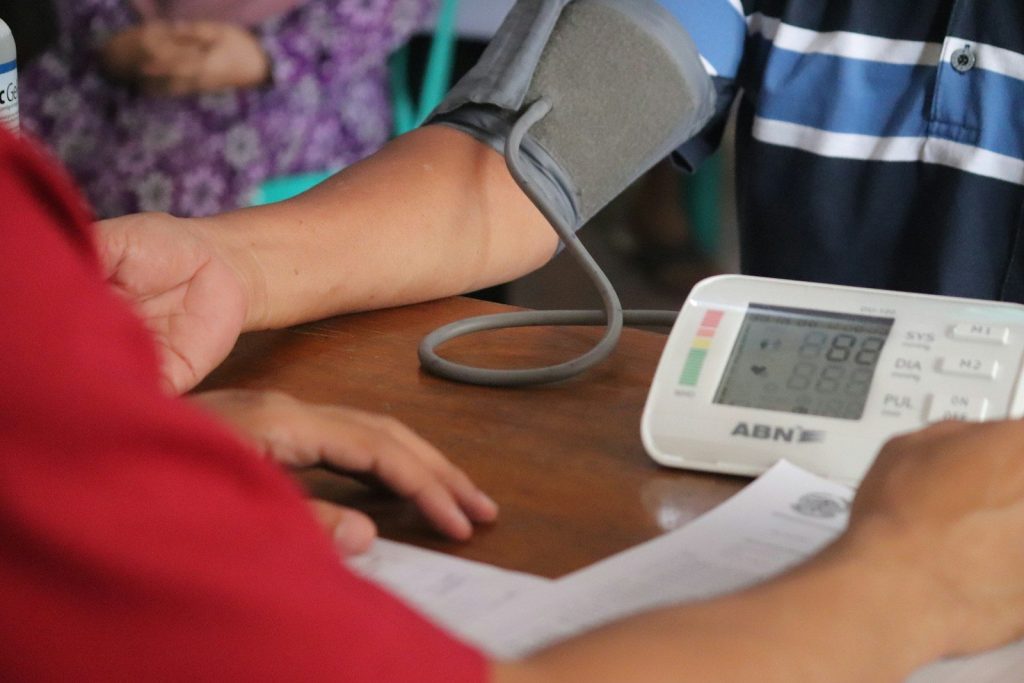
    a person with a blood pressure meter on a table
    Photo by Mufid Majnun on Unsplash

    The ultimate goal of cellular time travel is “Proactive Health.” By resetting our cells every few years, we could potentially prevent cancer and organ failure from ever occurring. We are moving from a world of “sick care” to a world of “vitality maintenance.” The 2026 data proves that we are no longer at the mercy of our biological clocks. We have finally found the keys to the engine room. But while we fix our cells, what is happening to the clothes we wear every day?

    The Journey to a Perfect Body

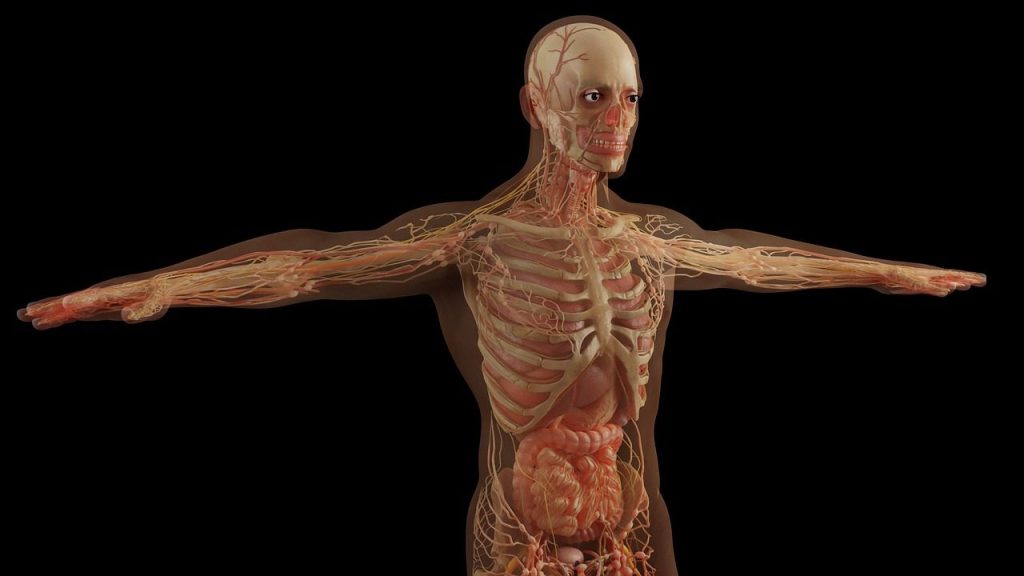
    anatomy, skull, skeleton, muscles, organs, human organs, science, health, human, bones, nerves, human body, body, man, medical, 3d, model, adult, 3d render, anatomy, human body, human body, human body, human body, human body
    Photo by Monoar_CGI_Artist on Pixabay

    The cellular time travel breakthrough is the final piece of the puzzle for a healthier future. We have learned to work with the body instead of fighting it. Every day, more data arrives proving that we can cure the “incurable.” The world is getting safer, one cell at a time. But are you ready for the “Smart Underwear” that is currently being woven in high-tech textile labs?

    Featured Image: Photo by Marek Piwnicki on Pexels

  • Is Smart Underwear Made of Bio-Sensing Silk the Next Health Frontier?

    Is Smart Underwear Made of Bio-Sensing Silk the Next Health Frontier?

    The future of healthcare isn’t in a pill bottle or a giant hospital machine; it is sitting inside your dresser. In 2026, a revolutionary material called “Bio-Sensing Silk” has arrived, and it is moving into the world of everyday fashion. Specifically, “Smart Underwear” is hitting the news as the most important medical device you will ever own. This isn’t just about comfort; it is about having a high-tech lab pressed against your skin 24 hours a day.

    Scientists have figured out how to weave microscopic sensors directly into silk fibers that are soft enough for daily wear. These sensors can track your heart rate, stress levels, and even your hydration without a single wire. Because underwear sits close to the body’s core, it provides the most accurate health data possible. We are looking at a world where your clothes warn you about a health crisis before you even feel a symptom. But how does a piece of silk actually “talk” to your doctor?

    The Secret of the Conductive Thread

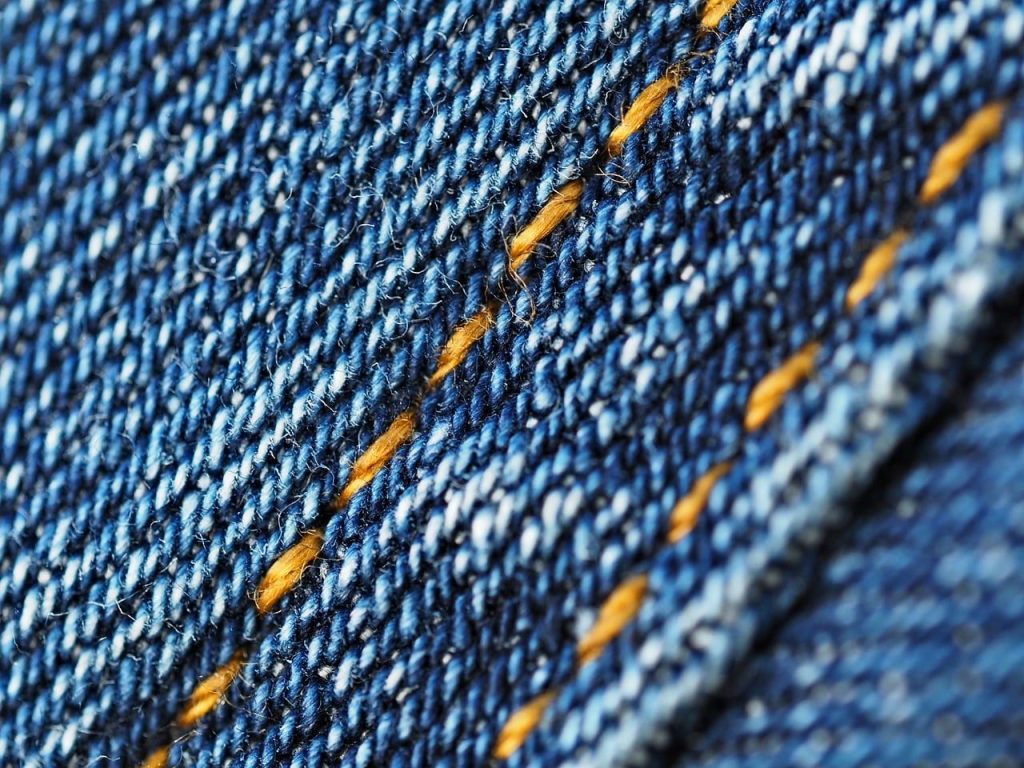
    jeans, denim, blue, seam, material, hd wallpaper, desktop backgrounds, macro, close up
    Photo by Ralf1403 on Pixabay

    The secret lies in a “liquid metal” coating applied to natural silk. This coating allows the fabric to conduct electricity without losing its flexibility or softness. The silk acts as a giant sensor that wraps around your body. When your skin produces sweat or your heart beats, the conductive silk picks up the tiny electrical signals. This data is then processed by a tiny, button-sized chip hidden in the waistband. But can this silk actually detect a heart attack before it happens?

    Real-Time Heart Health Monitoring

    healthcare, diagnostics, machine learning, data analytics, precision medicine, drug discovery, remote monitoring, telemedicine, virtual assistants, clinical trials, image recognition, predictive analytics, personalized treatment, natural language processing, robotics, genomics, patient engagement, rehabilitation
    Photo by geralt on Pixabay
    Unlike a watch that sits on your wrist, bio-sensing underwear is perfectly positioned to monitor your heart’s electrical rhythm. In 2026, these garments are being used to detect “silent” arrhythmias that often go unnoticed. If the sensors pick up an irregular pattern, they instantly send an alert to your smartphone and your doctor. It is like having a cardiologist watching over you every second of the day. But wait until you see how this tech handles your stress levels.

    Tracking Stress Through Your Sweat

    a close up of a pair of white sneakers
    Photo by Jaime Marrero on Unsplash

    Our sweat contains a goldmine of information about our mental state. The bio-sensing silk can detect tiny amounts of cortisol—the stress hormone—in your perspiration. If your levels spike while you are at work or home, your “Smart Underwear” can suggest a breathing exercise or a break. It is a physical way to monitor mental health that doesn’t rely on you “feeling” stressed. But is this high-tech clothing actually washable in a normal machine?

    The World’s First Washable Computer

    white front load washing machines
    Photo by Oli Woodman on Unsplash

    In the past, wearable tech was bulky and fragile. Bio-sensing silk is different because it is “Durable by Design.” The liquid metal coating is bonded to the silk at a molecular level, meaning you can throw it in a regular washing machine. It can be stretched, folded, and worn for years without losing its sensing power. We have finally moved past the “gadget” phase of wearables into true “lifestyle” integration. But who is paying for all this expensive silk?

    Affordable Health for Every Neighborhood

    coronavirus, people, face mask, crowd, covid-19, pandemic, covid, covid infections, stop covid-19, disease, sickness, epidemic, mask, healthcare, protection, safety, diversity, covid-19, covid, covid, covid, covid, covid
    Photo by Elf-Moondance on Pixabay

    While silk sounds expensive, the 2026 manufacturing process has become surprisingly cheap. Large-scale labs are now “printing” these sensors onto silk by the mile. Governments are looking at bio-sensing underwear as a way to lower overall healthcare costs. By preventing hospital visits through early detection, the clothing pays for itself in just a few months. We are seeing the democratization of high-end medical care. But is there a catch to being “always connected?”

    Privacy in the Age of Medical Fabric

    a person holding a stethoscope
    Photo by Nappy on Unsplash

    The biggest concern is who owns your heart rate data. To solve this, the bio-sensing silk uses “Local Encryption.” Your health data is processed on the chip and only shared with your doctor through a secure, private link. You have the “kill switch” to stop the data flow at any time. It is a “Privacy-First” approach to the future of medicine. But as we fix our bodies, we are also changing our phones. Are you ready for the micro-pump miracle?

    The Future of the Human Body

    Empowering portrait of a young woman showcasing a futuristic prosthetic arm in a studio setting.
    Photo by cottonbro studio on Pexels

    Bio-sensing silk is just the first step in the “Biological Revolution.” We are moving toward a future where our technology and our bodies are perfectly in sync. From the clothes we wear to the memories we save, the line is disappearing. We are building a world that is safer, cleaner, and more intelligent. Keep your eyes on the headlines, because the next big medical breakthrough is already hitting the stores. But wait until you see how engineers just shrunk extreme liquid cooling for your pocket.

    Featured Image: Photo by Davis Vidal on Pexels

  • Why the Arrival of Agriculture Didn’t Actually Stop Ancient Humans From Fishing

    Why the Arrival of Agriculture Didn’t Actually Stop Ancient Humans From Fishing

    We have always been told a very simple story about human history. First, we were hunter-gatherers, and then we “invented” agriculture, settled down, and stopped looking for wild food. It was portrayed as a clean break—the “Agricultural Revolution.” But a massive new archaeological survey has just proven that this story is a lie. New evidence shows that even after humans mastered wheat and cattle, they continued to fish at an “industrial” scale.

    Researchers found that ancient farming villages were often built right next to the most productive fishing spots. Instead of giving up the old ways, they combined them. Agriculture wasn’t a replacement; it was a “side hustle.” This discovery is hitting the news as the “Hybrid Survival” model. It turns out that ancient humans were much better at managing their risks than we ever suspected. But why would a farmer spend all day at sea when he has a field full of food?

    The “Safety Net” of the Sea

    fishing, nature, fisherman, sunset, sea, ocean, silhouette, vietnam, traditional
    Photo by Quangpraha on Pixabay

    Farming is a high-risk gamble. A single drought or a swarm of locusts can wipe out a year’s worth of work. The ocean, however, is a much more reliable resource. By continuing to fish, ancient farmers created a “biological safety net.” If the crops failed, they could always turn back to the water. This dual strategy is likely the only reason many of the world’s first civilizations survived their first major climate shifts. But the tools they used are what really shocked the researchers.

    High-Tech Hooks from the Stone Age

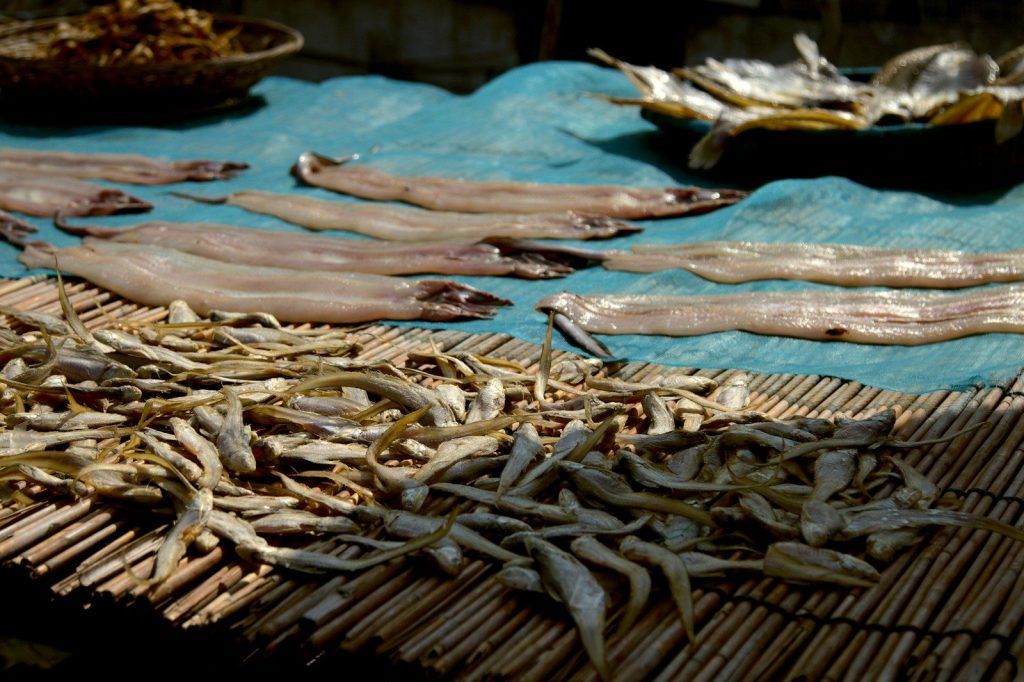
    A bunch of dead animals that are laying on the ground
    Photo by Francesco Ungaro on Unsplash

    Archaeologists have uncovered thousands of bone and shell fishhooks in early farming sites. These hooks were designed with sophisticated barbs and eyelets that match modern designs. They even found “lures” made of shiny mother-of-pearl. This proves that fishing wasn’t just a backup plan; it was a highly skilled craft that humans continued to perfect even while they were breeding cows. They were “multi-skilled” professionals. But wait until you see the size of the fish they were catching.

    Monsters of the Deep in the Village Pot

    Close-up of a fish skeleton displayed against a black backdrop.
    Photo by ClickerHappy on Pexels

    The bone fragments found in these ancient kitchen pits don’t belong to small pond fish. They belong to giant deep-sea species like tuna and sturgeon. This means that “farmers” were actually building sturdy boats and sailing miles out into the open ocean. They were braving the waves to bring back hundreds of pounds of protein to their villages. This changes our entire view of how “settled” these people really were. They were still explorers at heart. But did they prefer fish over beef?

    The Health Secret of the Ancient Diet

    Close-up of assorted nuts and berries on a wooden tray highlighting healthy eating.
    Photo by atelierbyvineeth . . . on Pexels

    New analysis of human tooth enamel from 7,000 years ago shows that many early farmers got up to 50% of their protein from the sea. This “Omega-rich” diet kept them much healthier than if they had lived on grain alone. They had stronger bones and better eyesight than later generations who relied purely on farming. The “Hybrid Diet” was the secret to the human population explosion. But the next discovery shows that fishing also shaped their social life.

    Fishing as a Team Sport

    A group of people standing on a beach next to a net
    Photo by Sohan Rahat on Unsplash

    You can’t catch a six-foot sturgeon alone. Fishing encouraged large-scale cooperation between different families in the village. They had to build nets together and maintain the boats as a community. This social bonding is what eventually led to the creation of the first real laws and governments. The “rules of the sea” were likely the first rules humans ever wrote down. But what happens when the fish start to disappear?

    The First Environmental Regulations

    brown fish on blue table
    Photo by Andy Tang on Unsplash

    In later agricultural sites, archaeologists found evidence of the first “closed seasons” for fishing. They found piles of fish bones that only belonged to certain sizes of fish, suggesting the ancients were throwing the small ones back to keep the population healthy. They were the world’s first conservationists. They knew that if they overfished, their “safety net” would break. But the arrival of giant cities changed the balance forever.

    The End of the Hybrid Era

    houses near sea during sunset
    Photo by Janosch Diggelmann on Unsplash

    As cities grew into empires, the connection to the sea began to fade for the average person. Farming became the only way to feed millions, and fishing became a specialized industry for a few. We lost the “Hybrid Survival” skills that kept us healthy for millennia. Today, we are trying to rediscover those ancient secrets to save our own food supply. The past is a blueprint for a more resilient future.

    The Final Lesson from the Ancient Coast

    a group of people walking on a beach
    Photo by Shiva Mardahi on Unsplash

    The discovery that agriculture and fishing worked together for centuries is a wake-up call. It proves that there is no single “right way” for humans to live. We have always been a species that adapts and combines the best of all worlds. As we face our own climate crisis, we can look back at these ancient villagers for inspiration. They knew that diversity is the key to survival. Are you ready for the next breakthrough in our understanding of human history?

    Featured Image: Photo by Fahim on Unsplash

  • The Solomon’s Knot Mystery: The Stunning Ancient Mosaic Just Uncovered Beneath a Bustling Modern City

    The Solomon’s Knot Mystery: The Stunning Ancient Mosaic Just Uncovered Beneath a Bustling Modern City

    Every day, thousands of people walk over a secret they never knew existed. In the heart of a bustling European city, a routine construction project for a new subway line has just hit the jackpot. Construction workers digging thirty feet below the pavement stopped their machines when they saw a flash of color in the grey dirt. They had accidentally uncovered a massive, perfectly preserved Roman mosaic floor featuring the legendary “Solomon’s Knot.”

    This geometric pattern, consisting of two interlocking loops, was considered a symbol of eternity and protection in the ancient world. Finding it here, in the middle of a modern shopping district, is a “historical bomb.” The mosaic is over forty feet wide and likely belonged to a luxury villa that was the center of power 1,800 years ago. It is a total transformation of what we know about the city’s origins. But what exactly does this mysterious knot represent?

    The Symbol That Crosses Continents

    Explore the ancient mosaic patterns set against the rugged landscape of Vathia, Greece, under a clear blue sky.
    Photo by Lydia Griva on Pexels

    The Solomon’s Knot isn’t just a pretty design. It is one of the oldest symbols in human history, appearing in cultures from Rome to China. Because the loops have no beginning and no end, they were used as a “spiritual lock” to keep out demons. In this newly discovered villa, the knot was placed at the very center of the dining hall. It was meant to protect the guests while they ate and talked. But who were the people walking on this masterpiece?

    Life in the Underground Villa

    brown plastic bucket near brown concrete building
    Photo by Yaopey Yong on Unsplash

    Archaeologists believe the villa belonged to a high-ranking Roman governor. Along with the mosaic, they have found fragments of painted plaster walls and bronze lamps. The level of luxury is staggering for what was supposed to be a small frontier town. It seems this city was much more important to the Roman Empire than history books ever suggested. The villa was essentially a “smart home” of the ancient world, complete with heated floors. But how did the mosaic stay so bright?

    The Secret of the Roman Stone

    a close up of a mosaic on a wall
    Photo by Adrien Antal on Unsplash

    The mosaic is made of thousands of tiny cubes called “tesserae.” The Roman artists used natural stones like marble, limestone, and even glass to get the colors just right. Because the city was built directly on top of the villa, the layers of asphalt and concrete acted as a protective seal. The moisture was kept out, and the colors never faded. It is a biological miracle that the stones haven’t shifted at all in 1,800 years. But wait until you see what was found hidden under the knot.

    A Hidden Message in the Mortar

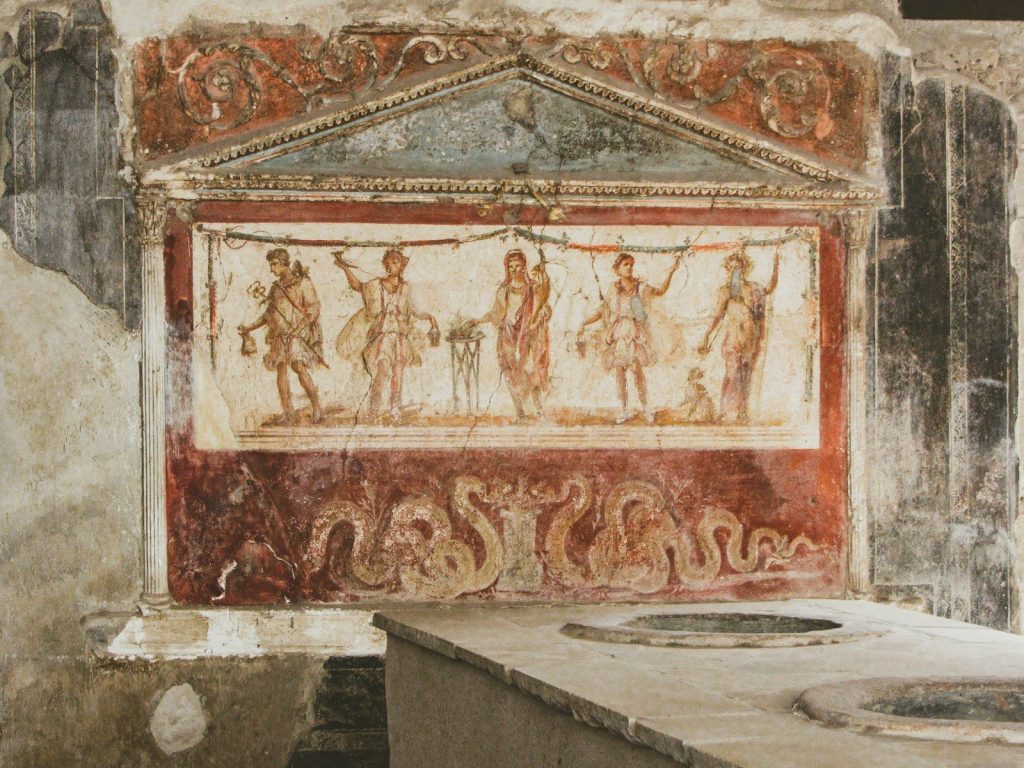
    Ancient mosaic with greek inscription and floral pattern
    Photo by Cansu Sarp on Unsplash

    When researchers lifted a small, loose section of the Solomon’s Knot, they found a surprise. Scratched into the drying mortar underneath was the name of the artist: “Felix.” In the Roman world, mosaic artists were usually anonymous slaves or low-wage workers. For Felix to leave his name suggests he was a “superstar” of his time. This discovery gives a human name to a masterpiece that has been nameless for centuries. But the city’s modern growth is now a major threat.

    The Battle Between Progress and History

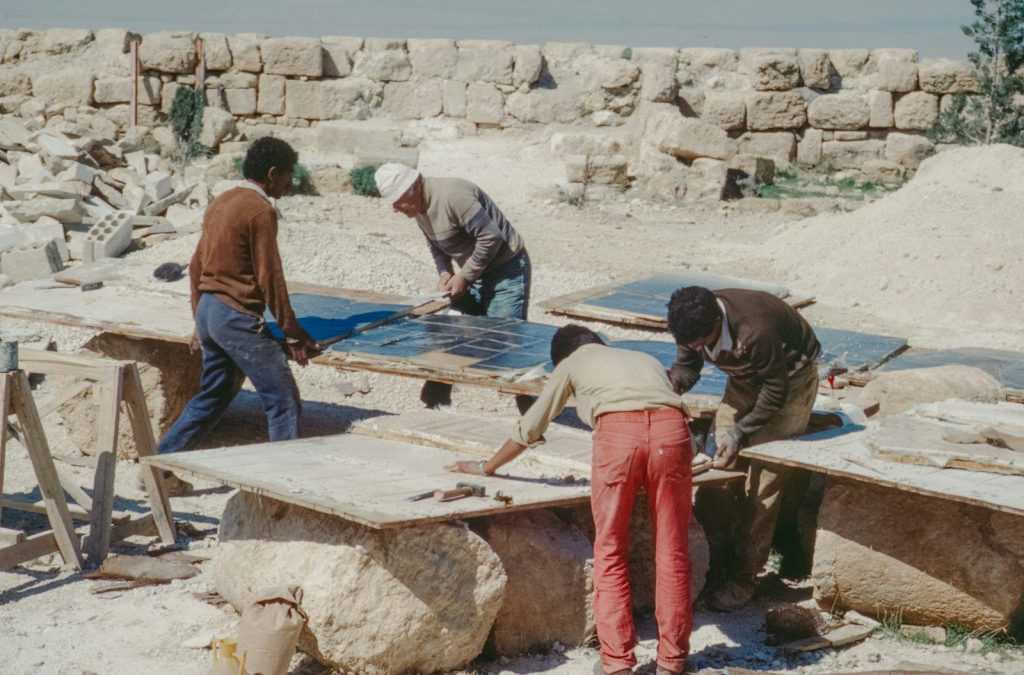
    Workers polishing large stone slabs outdoors
    Photo by Annie Spratt on Unsplash

    Now that Solomon’s Knot has been found, the billion-dollar subway project has been put on hold. There is a massive public debate happening right now: should the mosaic be moved to a museum, or should the subway be rerouted to keep the history where it belongs? Moving such a large mosaic is incredibly risky and could shatter the stones. Rerouting the subway would cost millions. It is a high-stakes standoff between the past and the future. But the knot is telling us another secret.

    A Global Network of Knowledge

    eyeglasses, world map, map, map of the world, nickel glasses, glasses, vacations, plan, world map, world map, world map, world map, world map, map, map, map
    Photo by beasternchen on Pixabay

    Finding Solomon’s Knot in this specific city proves that ancient architects were following a “global blueprint.” They were sharing design tips and symbolic meanings across thousands of miles without the internet. It shows a level of “intellectual trade” that we are only just beginning to map. The knot is a reminder that humans have always been connected. But while these Romans were building cities, they were still doing something very “primitive.”

    The Final Verdict on the City’s Roots

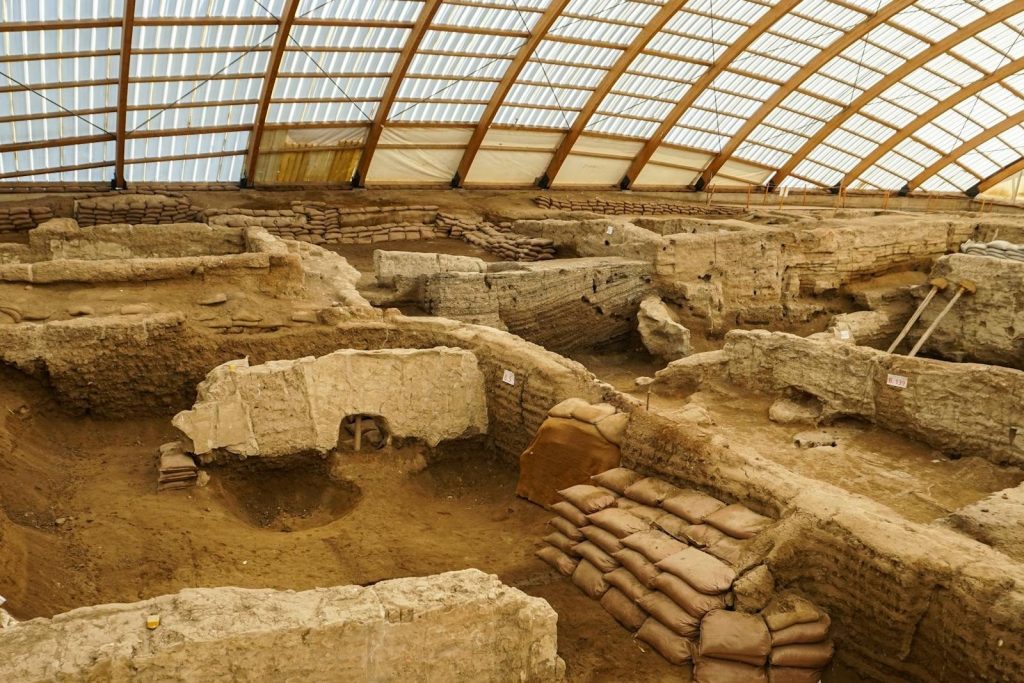
    Explore the excavated ancient site of Çatalhöyük in Çumra, Konya, Türkiye, showcasing remarkable ruins.
    Photo by Talha Aytan on Pexels

    The Solomon’s Knot discovery is a wake-up call for modern urban planners. It reminds us that we are just the latest layer in a long story. As we continue to dig, we are finding that our ancestors were much more like us than we thought. They loved beauty, security, and luxury. The mystery of the knot is finally opening up, but are you ready to hear why the arrival of farming didn’t stop people from fishing?

    The Puzzle is Just Beginning

    a painting on the side of a building
    Photo by Casey Lovegrove on Unsplash

    We have only uncovered about 20% of the villa. There is so much more to find beneath the city streets. Every time a bulldozer hits the ground, we might be seconds away from the next world-changing discovery. The Solomon’s Knot was just the first piece of the puzzle. Keep your eyes on the dirt, because the history books are being rewritten in real-time. But why did our ancestors keep their fishing poles even after they learned to farm?

    Featured Image: Photo by David Klein on Unsplash

  • What Eerie Relics Are Hiding Inside the Newly Discovered 2,300-Year-Old Scythian Tomb?

    What Eerie Relics Are Hiding Inside the Newly Discovered 2,300-Year-Old Scythian Tomb?

    Deep in the Altai Mountains of Siberia, a team of archaeologists has just cracked open a portal to a forgotten world. They have discovered a massive, undisturbed tomb belonging to the Scythians—the legendary nomadic warriors who terrified the ancient Greeks. Because the tomb was built into a permafrost zone, it has acted as a giant natural refrigerator for over 2,300 years. This isn’t just a site of old bones; it is a time capsule of “eerie” perfection.

    Inside, researchers found the mummified remains of royalty, still wearing their clothes and covered in intricate tattoos that look like they were inked yesterday. The Scythians were known for their love of gold and their brutal rituals, and this tomb contains both in shocking amounts. From gold-plated horses to masks made of human skin, the relics are a grim reminder of a culture that lived and died by the sword. But how did these items stay so perfect for two millennia?

    The Secret of the Frozen Mound

    archaeology, burial mound, hill, stonehenge, stones, building, burial mounds, great stone grave, ditch, place of worship, sightseeing, tomb, boulders, pillars, burial mound, stonehenge, stonehenge, stonehenge, tomb, tomb, tomb, tomb, tomb
    Photo by gerwitt on Pixabay

    The Scythians built their tombs, called “Kurgans,” by stacking stones over a wooden burial chamber. In the Altai region, rainwater would seep into the stones and freeze. This created a permanent block of ice inside the tomb that never melted, even in summer. This “frozen shield” prevented bacteria from breaking down organic materials. We are finding leather, wood, and silk that are as strong as the day they were buried. But the most disturbing find was the skin.

    Tattoos of the Ancient Dead

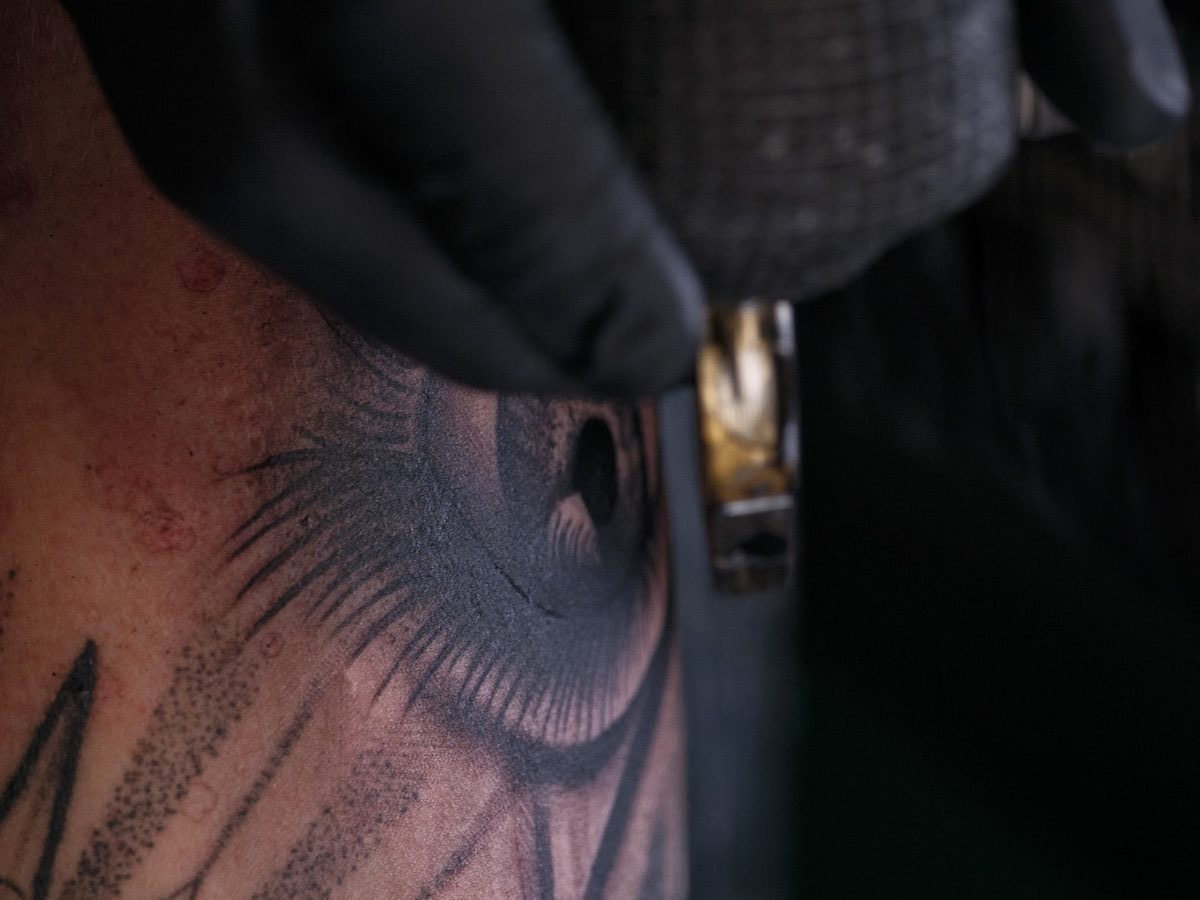
    Tattoo artist working on eye design
    Photo by Haberdoedas on Unsplash

    One of the mummies in the tomb is a high-ranking warrior whose entire body is covered in complex tattoos. The designs feature mythical creatures like griffins and “monstrous” deer with flowering antlers. For the Scythians, these tattoos weren’t just art; they were a map of the warrior’s life and rank. The ink has stayed so clear that scientists can actually see individual needle marks. But wait until you see the gold-covered companions that were found next to him.

    Horses Built for the Afterlife

    a gold statue of a man riding a horse
    Photo by Jay Kettle-Williams on Unsplash

    The Scythians believed that a warrior needed his horses in the next world. In this tomb, eighteen horses were found sacrificed and placed in a circle around the main chamber. Each horse was wearing a “costume” made of gold and silver. Some wore masks that turned them into dragons or reindeer. These weren’t just work animals; they were spiritual guides designed to fly the king to the stars. But the humans weren’t the only ones wearing masks.

    The Eerie Face of the Shaman

    Eerie figure with mask and red candle in a haunting forest setting.
    Photo by Dmitry Demidov on Pexels

    In a smaller side chamber, researchers found a set of masks made from processed leather and real human hair. These were likely used by shamans during the burial ceremony. The Scythians were famous for using hemp and “magic” herbs to enter trances before talking to the dead. The masks have a terrifying, frozen expression that was meant to scare away evil spirits. It is a level of ritualism that feels like it belongs in a movie. But why did they need so much gold?

    A King’s Ransom in Gold

    bells, shop, display, decoration, gold, bells, bells, bells, gold, gold, gold, gold, gold
    Photo by SwastikArora on Pixabay

    The tomb is packed with hundreds of small gold plaques that were once sewn onto the royal clothing. These plaques depict scenes of lions attacking stags and warriors in battle. The Scythians were master goldsmiths, but they had no permanent cities. They carried their entire bank account on their backs. Finding this much gold in one spot is a miracle, as most Scythian tombs were looted centuries ago. But there is a hidden danger in the tomb that still works.

    Weapons Still Sharp Enough to Kill

    arrows on organizer near trees
    Photo by Marija Zaric on Unsplash

    The researchers also found a “Gorytos,” which is a combined bow-case and quiver, still full of arrows. The tips of these arrows are coated in a dark, sticky substance. In the ancient world, Scythian archers were famous for using “deadly venom” made from snake blood and rotted human remains. Even after 2,300 years, the residue is being handled with extreme caution. The warriors are still guarding their king. But wait until you see the secret message hidden in the “Knot” found under a modern city.

    The Future of the Scythian Legacy

    a painting of a cross on a black background
    Photo by Karsten Klemme on Unsplash

    The excavation of this frozen Kurgan will take another five years. Scientists are using 3D scanners to map the mummies’ internal organs before the ice melts. Every relic tells a story of a culture that was both beautiful and terrifying. We are finally learning the truth about the “ghosts of the steppe.” But while we dig in the mountains, a construction crew in a busy city just hit a “Solomon’s Knot” that has been waiting to be solved.

    Featured Image: Photo by Europeana on Unsplash