Most people view time as a steady river flowing in one direction from past to future. We assume jumping forward or backward in time belongs strictly to science fiction movies.
But modern theoretical physics and advanced artificial intelligence show that time is far more flexible than we think. Complex math suggests temporal shortcuts might actually exist in nature.
Einstein’s Relativity Made Time Bendable

General relativity proved that gravity and extreme speed slow down time relative to an outside observer. Clocks run differently. According to flight measurement data from NASA, atomic clocks on orbiting satellites tick slightly faster than identical clocks on Earth. High speeds literally bend time. But moving forward into the deep future is physically proven.
Traveling Forward Through Time Dilation
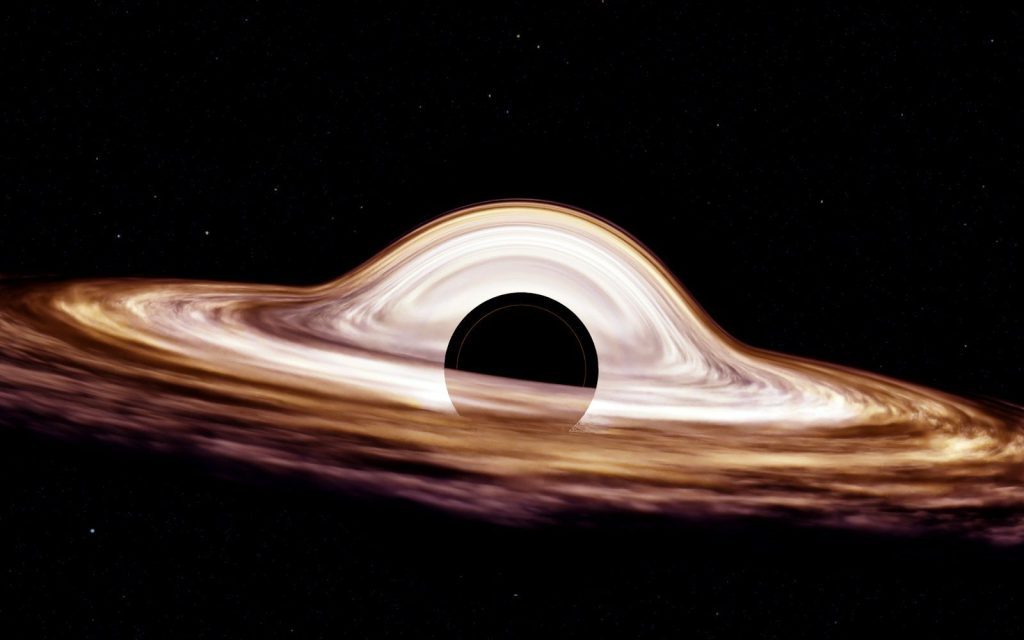
Spacecraft traveling near light speed allow astronauts to age hours while Earth passes through centuries. Fast travel acts like a time leap. According to astrophysics trajectory models, orbiting near massive black holes creates extreme time dilation effects. Future travel is mathematically possible today. However, traveling into the past presents far bigger physical problems.
The Grandfather Paradox Puzzle
Changing past events creates logical contradictions that seem to violate cause and effect rules. Reality protects itself. According to quantum physics studies at Stanford, feedback loops in spacetime might naturally prevent paradoxes from ever occurring. Nature might block past alterations completely. But wormholes offer a theoretical shortcut through spacetime.
Wormholes As Spacetime Bridges
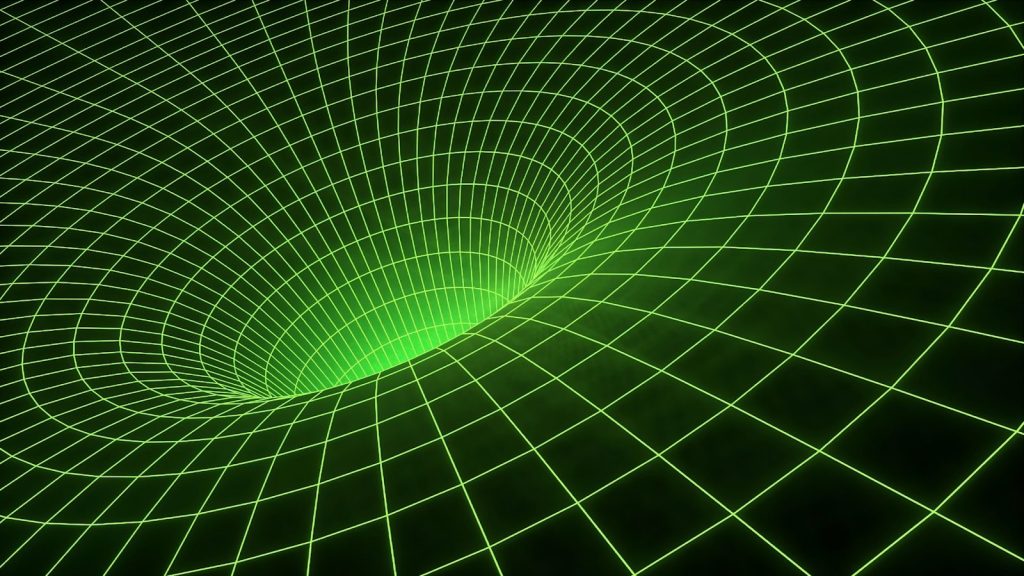
Theoretical tunnels through spacetime could connect two distant points in space and time instantly. Bridges exist in math. According to theoretical astrophysics calculations, stabilizing a traversable wormhole requires exotic matter with negative mass. Scientists have never observed negative mass in nature. Yet advanced AI systems are analyzing quantum equations differently.
AI Simulations Of Future Scenarios
Advanced machine learning algorithms simulate future global weather and technological shifts with incredible precision. Code predicts outcomes. According to computer science reports, neural networks analyze billions of variables to model planetary conditions centuries ahead. These predictive models offer a digital glimpse into future eras. But simulating physical worlds raises another wild theory.
Simulated Universes And Digital Reality
If future supercomputers can simulate conscious worlds, our reality might be a computer simulation itself. Math models reality. According to theoretical papers from Oxford University, simulated environments could run past historical scenarios endlessly inside advanced hardware. Virtual worlds bypass physical time constraints entirely. Yet quantum computers are testing these limits today.
Testing Quantum Time Crystals

Novel states of matter called time crystals repeat patterns across time without absorbing thermal energy. Perpetual motion at the atomic scale. According to experimental lab physics, time crystals maintain repeating structural changes endlessly without violating thermodynamic laws. Studying these structures unlocks fresh physics insights. But understanding time remains one of science’s ultimate quests.
Unlocking Mysteries Of Tomorrow
Exploring relativistic physics and artificial intelligence expands how humanity understands temporal limits and future possibilities. Science continues testing new boundaries. According to theoretical physicists, unraveling nature’s deepest rules brings us closer to mastering time itself. This article is for informational purposes only.
Featured Image: Photo by Igor Omilaev on Unsplash
Leave a Reply