
Scientists rely on classical laws of physics to explain how energy and matter interact across the universe. We expect physical rules to remain constant in every laboratory experiment.
But recent subatomic experiments have produced bizarre anomalies that standard theories cannot explain. These unexpected results are forcing physicists to question our fundamental understanding of reality.
The Subatomic Particle Anomaly
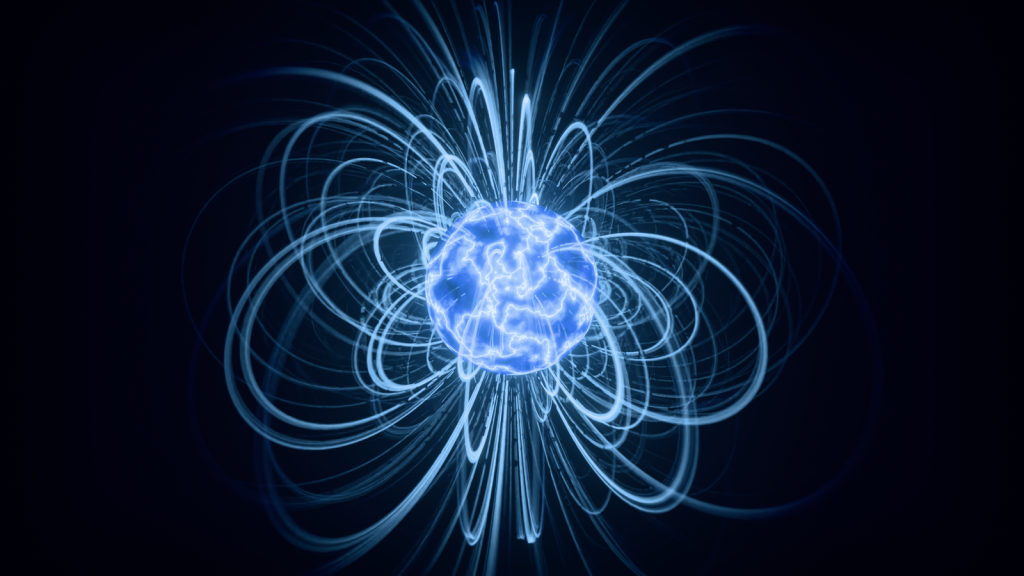
High-energy particle accelerators smash atoms together to test fundamental forces of nature. Expectation matched standard math. According to lab reports from Fermi National Accelerator Laboratory, tiny subatomic particles called muons wobbled faster than existing physics models predicted. That tiny wobble hints at undiscovered forces in the universe. But the anomaly was only the first clue.
Unseen Forces At Play

Four fundamental forces govern all matter, including gravity, electromagnetism, and two nuclear forces. Physics felt fully solved. According to theoretical physicists analyzing quantum data, an unknown fifth force might be interacting with subatomic particles during high-speed collisions. Discovering a new force would reshape modern physics. Yet quantum weirdness goes even deeper than particles.
Action At A Distance

Quantum entanglement links two particles together across vast distances instantly. Distance seems to vanish. According to research published in Physical Review Letters, changing the state of one particle alters its entangled partner across light-years instantly. Albert Einstein famously called this behavior spooky action at a distance. But cosmic observations revealed an even bigger mystery.
The Universe Expansion Puzzle

Astrophysicists measure how fast the universe is expanding using space telescope observations. Speed kept changing unexpectedly. According to galaxy survey data from NASA’s Hubble Space Telescope, nearby cosmic expansion rates disagree sharply with measurements from the early universe. This discrepancy suggests missing physics in our cosmic timeline. But dark matter hides another massive problem.
Missing Mass In Galaxies

Galaxies rotate so fast that gravity from visible matter should let them fly apart. Something holds them together. According to astronomical research models, invisible dark matter makes up most galactic mass without emitting any detectable light. We can feel its gravity, yet we cannot see it. But quantum gravity creates the ultimate deadlock.
Unifying Quantum And Gravity

General relativity explains massive gravity, while quantum mechanics explains microscopic particles. The two theories contradict. According to theoretical physics papers, no current mathematical framework successfully unites gravity with quantum-scale interactions. Finding a unified theory remains the greatest challenge in modern science. But strange laboratory findings continue opening new paths.
Rewriting The Science Textbooks

When current physical laws fail, scientists enter exciting eras of discovery that reshape human knowledge completely. Breaking old rules paves the way toward breakthroughs in energy and technology. According to quantum research institutions, exploring physical anomalies brings us closer to understanding reality. This article is for informational purposes only.
Featured Image: Photo by Gwenn Klabbers on Unsplash
Leave a Reply