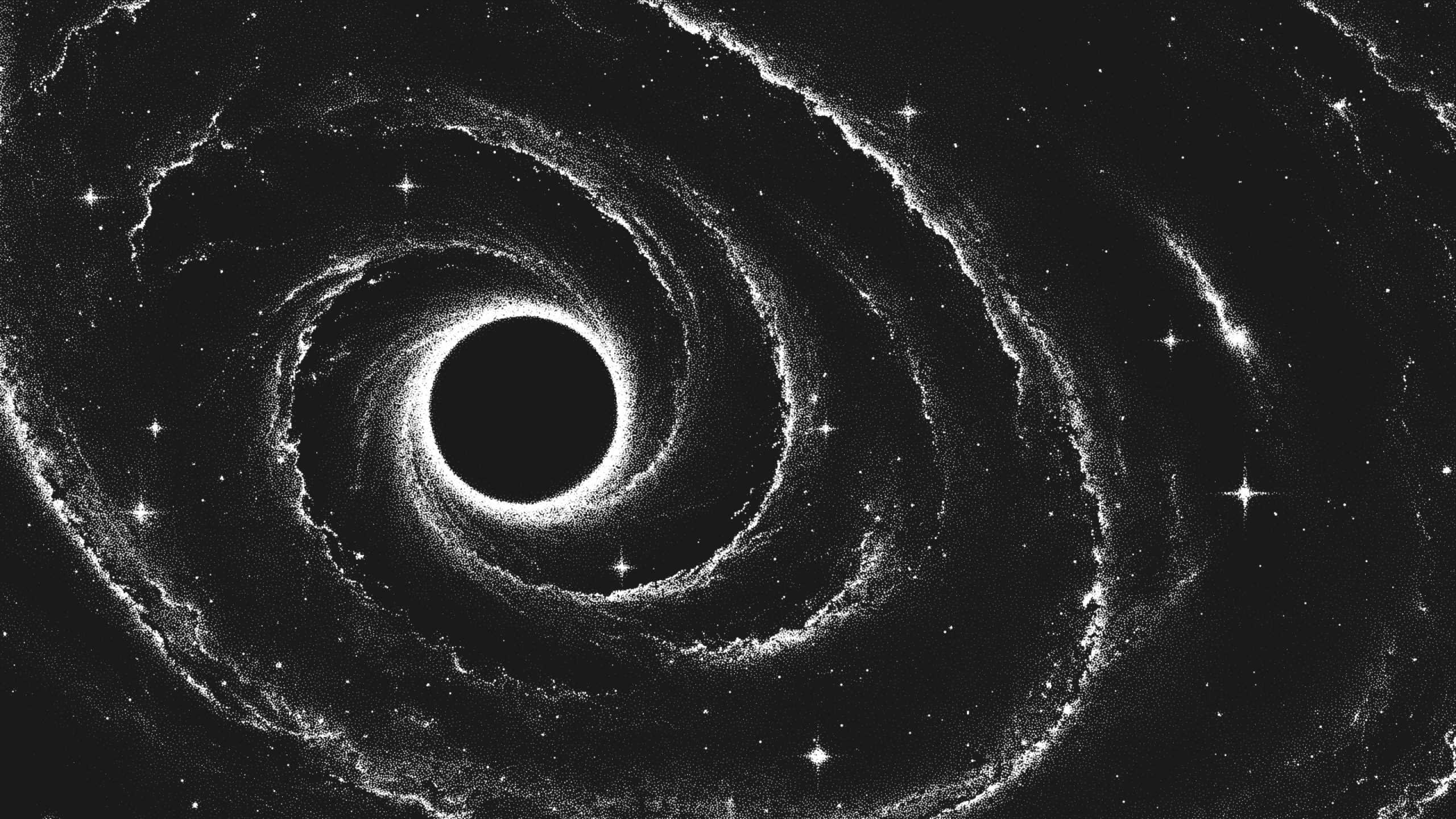
Wormholes are no longer discussed only in science fiction. For decades, physicists have used them as demanding tests of general relativity, quantum theory, black-hole physics, and causality. Serious research has produced mathematically consistent models and laboratory simulations of related quantum behavior, but it has not discovered a cosmic tunnel or shown that people could travel through one.
The central result is subtler than a portal between stars. Einstein gravity permits bridge-like geometries, yet keeping a traversable throat open usually requires unusual negative energy or modified physics. Quantum models can imitate limited traversability under tightly controlled assumptions. Each advance has clarified both what equations allow and why a usable wormhole remains beyond evidence or engineering.
Einstein Rosen Bridge Spacetime Diagram
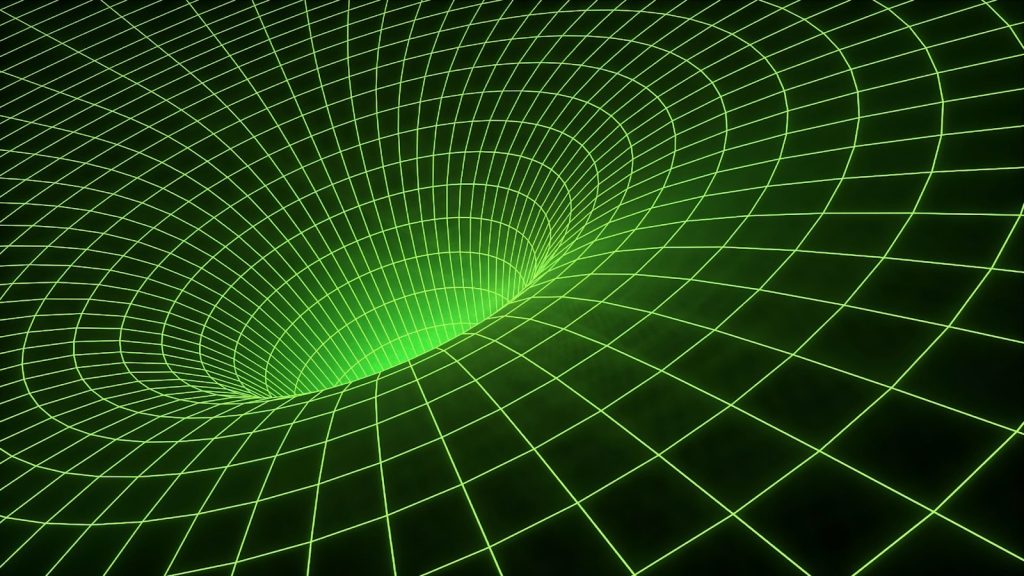
Albert Einstein and Nathan Rosen introduced their famous bridge in 1935 while exploring how gravity might describe particles without singular points. The resulting Einstein–Rosen bridge joined two mathematical regions of spacetime, but it was not a stable passage for travelers. In the standard black-hole interpretation, the connection closes too quickly for a signal to cross from one exterior region to the other. Later popular culture turned the bridge into a portal, while physicists treated it as a clue about spacetime geometry.
Traversable Wormhole Quantum Physics
In 1988, Michael Morris and Kip Thorne asked a sharper question: what conditions would make a wormhole traversable by humans? Their models required a throat without an event horizon and gravitational forces mild enough for a traveler to survive. The equations exposed the main obstacle. Ordinary matter tends to make the throat collapse, so the geometry generally needs stress-energy that violates the usual null energy condition. This hypothetical support is commonly described as exotic matter with negative energy properties.
Negative Energy Exotic Matter Physics
Negative energy is not simply imaginary bookkeeping. Quantum field theory allows limited negative-energy effects in special situations, including carefully arranged vacuum states. However, known quantum effects are tiny and constrained, while a macroscopic wormhole would need the throat to remain stable against disturbances. Reviews of traversable models repeatedly find trade-offs involving exotic matter, instability, horizons, or modified gravity. Showing that an equation has a wormhole solution is therefore different from showing that nature can create and preserve one.
Quantum Entanglement Gravity Simulation
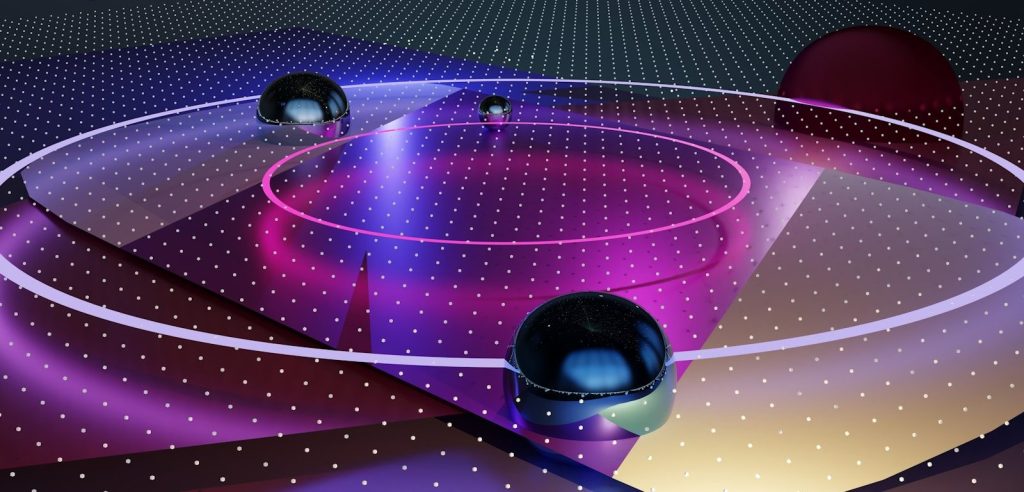
A major theoretical step came from Gao, Jafferis, and Wall in 2017. In a highly idealized anti-de Sitter black-hole model, an interaction between two boundaries produced negative average null energy and made an Einstein–Rosen bridge traversable for a signal. The construction could not violate causality and was closely related to quantum teleportation. It did not provide a blueprint for crossing our universe, but it gave physicists a controlled framework for studying how entanglement, gravity, and information might connect.
Sycamore Quantum Computer Processor
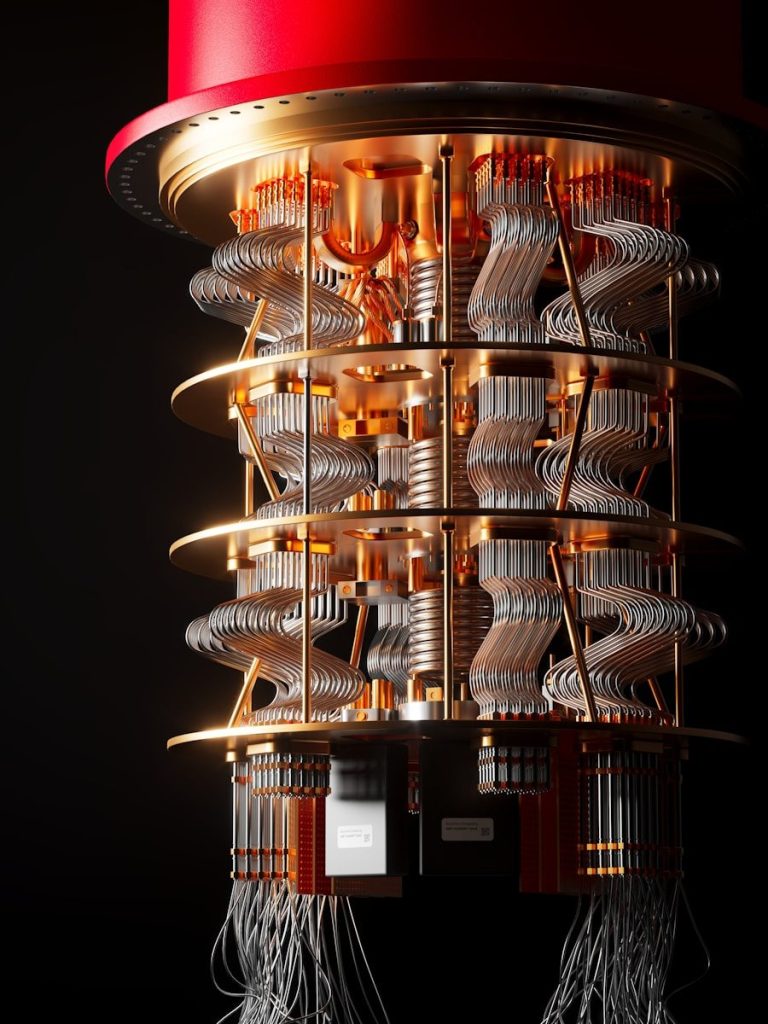
In 2022, researchers implemented a small quantum system on Google’s Sycamore processor that reproduced selected dynamics associated with a traversable-wormhole model. The nine-qubit experiment used a simplified SYK system and a teleportation protocol. No hole opened in physical space, and no object traveled through a gravitational tunnel. The value of the experiment was methodological: it showed that quantum hardware can simulate aspects of theories whose gravitational descriptions would otherwise be extremely difficult to test in a laboratory.
Gravitational Lensing Black Hole Telescope
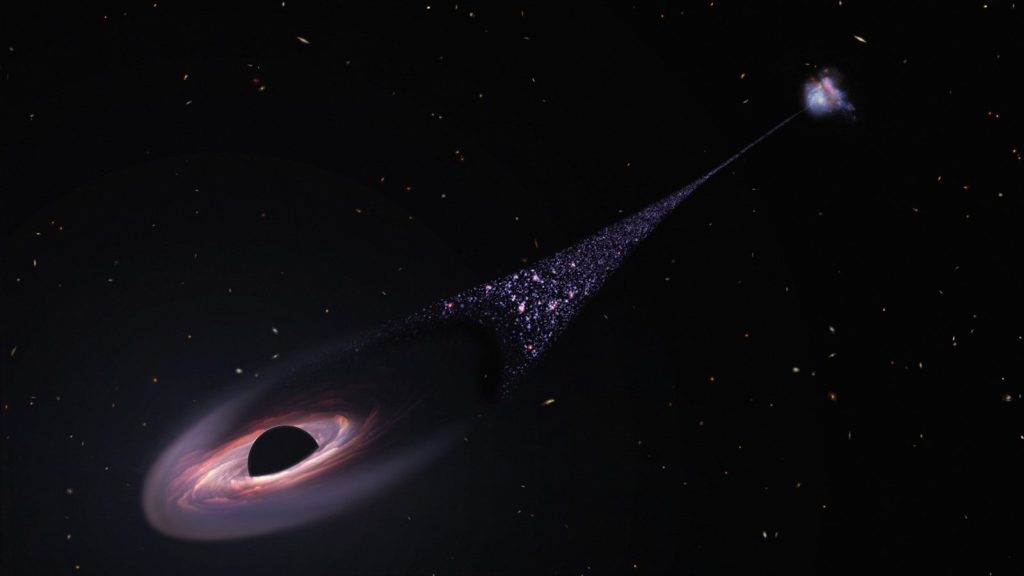
Physicists also study how a wormhole might differ observationally from a black hole. Proposed signatures include unusual gravitational lensing, altered rings of light, or distinctive echoes in gravitational waves. These predictions depend heavily on the chosen model, and ordinary black holes or surrounding matter can mimic some effects. No observation has been accepted as evidence for a wormhole. The search remains useful because it forces researchers to identify measurable differences between exotic spacetime geometries and known astrophysical objects.
Astrophysics Theoretical Gravity Equations
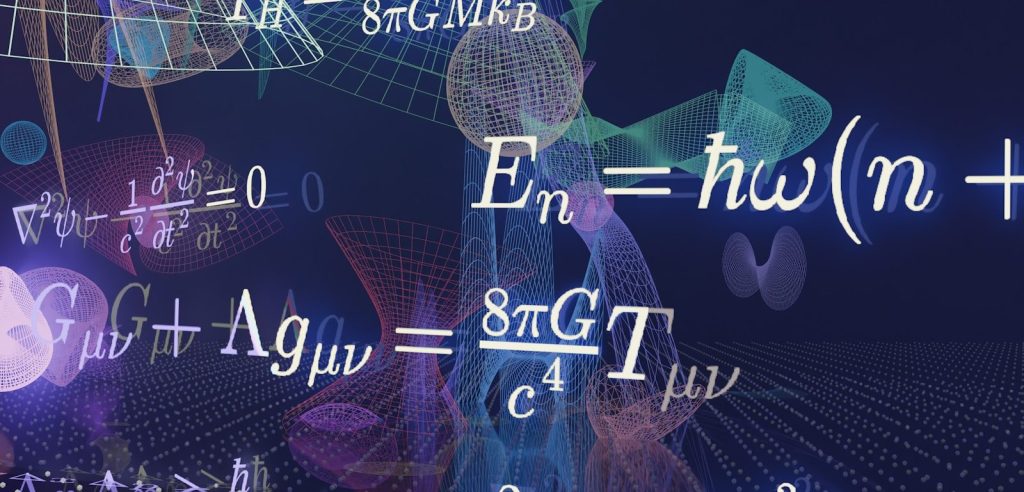
Serious wormhole research has found that the idea is mathematically rich but physically unconfirmed. General relativity permits bridge-like solutions; traversable versions usually demand negative energy, special boundary conditions, or modified gravity. Quantum experiments can simulate related information dynamics without creating spacetime tunnels. As of 2026, no wormhole has been observed, built, or used for travel. The strongest outcome is a deeper understanding of gravity, entanglement, energy conditions, and the limits of current theories worldwide. This article is for informational purposes only.
Featured Image: Shutterstock
Leave a Reply