
No video source, location or snake species accompanied the headline, so its description of the “deadliest snake” and the claim that there was “no escape” cannot be independently verified.
Scientists do know how wild meerkats respond to snakes and other ground predators. Their defense combines vigilance, specialized calls and coordinated mobbing. These behaviors can discourage a predator or help the group assess danger, but they do not guarantee that every meerkat will survive an attack.
A meerkat’s greatest defense is its group

Meerkats are highly social members of the mongoose family. They usually live in groups called mobs, commonly containing around 10 to 15 individuals but sometimes as many as 30. Group living allows them to share vigilance and respond collectively when danger appears. Several animals can watch, call, and approach a threat together, creating a more difficult target than a lone meerkat foraging with its head close to the ground.
Sentinels watch while others search for food

One meerkat often occupies a raised position while other group members forage. This sentinel scans the surrounding area and communicates with the group. In controlled presentations involving a model snake, sentinels were usually the first animals to issue an alarm. The arrangement allows foragers to spend more time digging for insects while still receiving an early warning when a possible aerial or terrestrial predator enters the area.
Alarm calls can communicate different kinds of danger

Meerkats do not rely on one universal warning sound. Research has shown that their alarm system contains calls associated with different predator categories and degrees of urgency. Group members can adjust their response by scanning the sky, moving toward shelter, or focusing on a ground-level threat. This communication is essential because a snake approaching through vegetation requires a different defensive reaction from an eagle descending from above.
Recruitment calls bring other meerkats toward the threat

When an individual discovers a stationary predator, it may produce calls that recruit additional group members. Research has found that the strength of social relationships can influence which meerkats respond. Those arriving animals increase the size of the defensive group and help maintain visual contact with the threat. Recruitment also spreads information, ensuring that individuals who did not initially see the snake become aware of its position.
Meerkats Mob Snakes to Expose and Disrupt the Threat
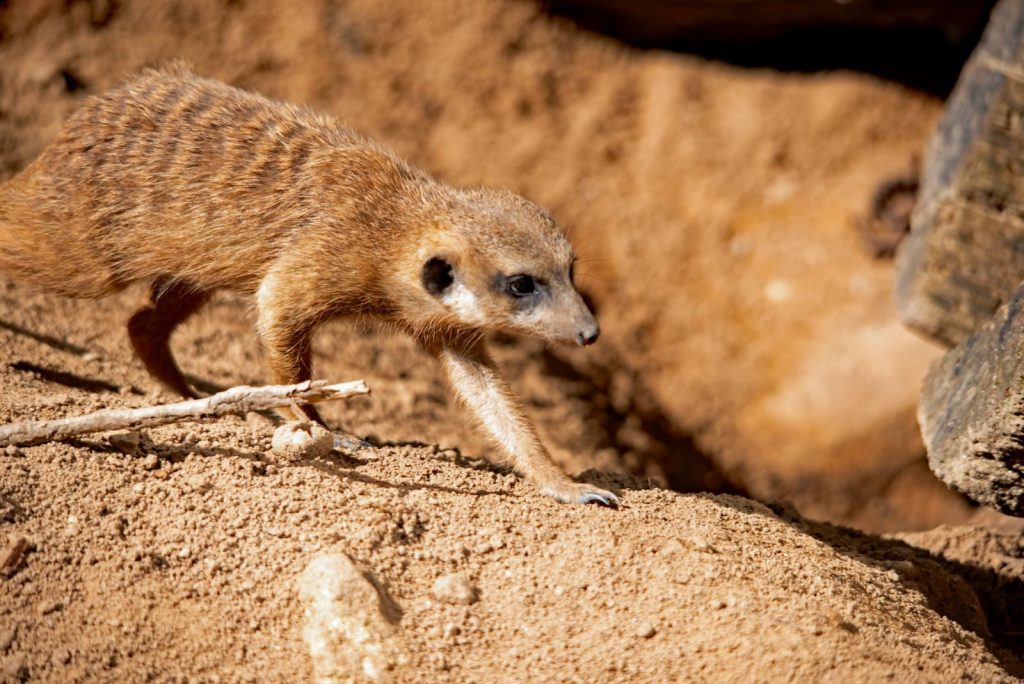
During mobbing, meerkats deliberately approach, vocalize at, and sometimes harass a potential predator. This behavior may force an ambush hunter to abandon its concealed position or make an attack more difficult. Mobbing can reduce immediate and future predation risk, but it also exposes the participating animals to danger. Whether it is useful depends on the predator’s behavior, the number of defenders, and the surrounding environment.
Young meerkats can learn by watching adults
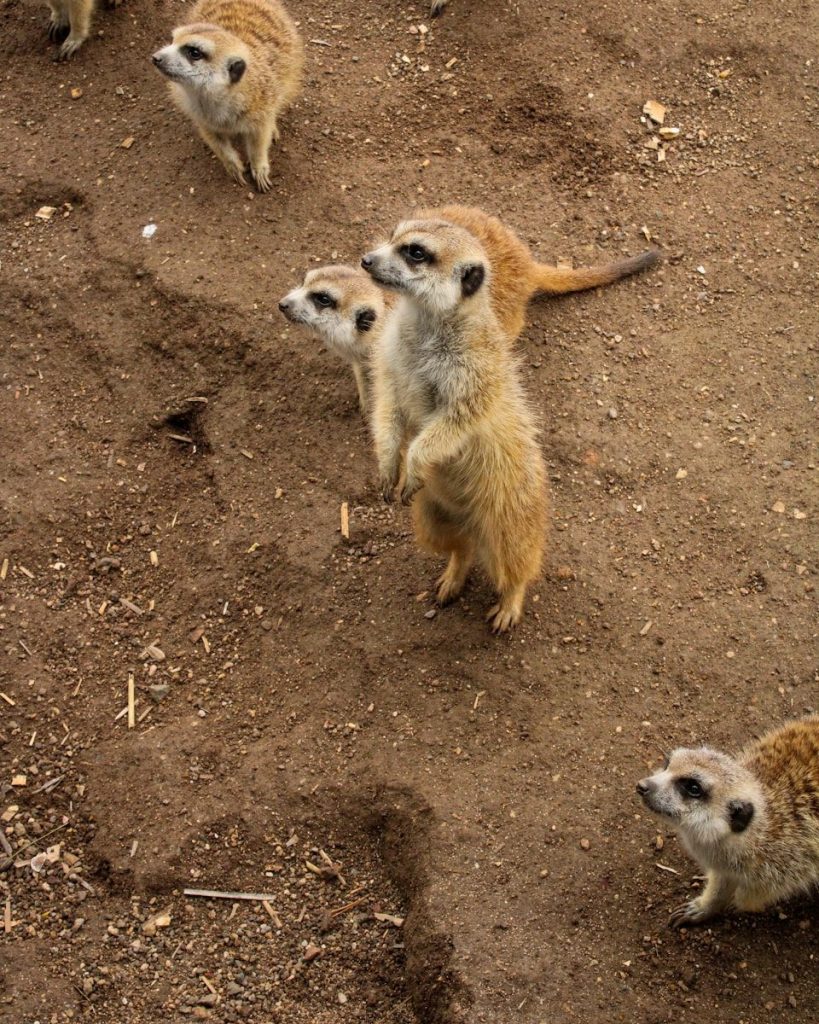
Experimental research found differences between the mobbing behavior of younger and older meerkats. The results suggest that experience helps individuals judge threats and decide how closely to approach. By observing adults, young animals may learn which creatures are dangerous and how the group responds. Mobbing therefore appears to serve two purposes: it may discourage a predator while also allowing the group to collect information and train inexperienced members.
A Snake May Retreat, Defend Itself, or Strike at the Meerkats
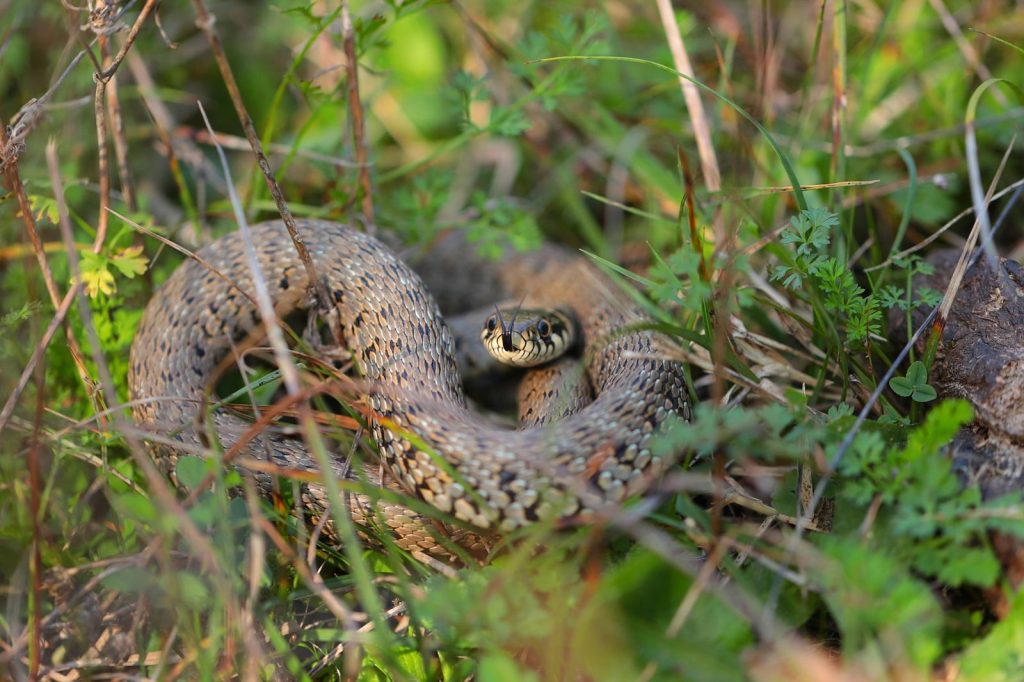
A snake may retreat after being detected and surrounded, remain motionless, defend itself, or strike. The outcome depends on its species, motivation, distance from the group and available escape routes. Research supports the effectiveness of collective vigilance and mobbing, but it does not justify describing every encounter as an unavoidable massacre or an effortless meerkat victory. Their survival strategy works by reducing risk, not by eliminating it.
Featured Image: Photo by Smithsonian on Unsplash
Leave a Reply