
A 2025 arXiv preprint by physicist Robert G. Endres explores whether information theory can help describe the difficulty of forming an early self-sustaining cell. It discusses advanced extraterrestrial intervention as one speculative possibility, but reports no alien artifact, signal, organism, or engineered feature on Earth.
The author explicitly describes directed panspermia as speculative and acknowledges that extraterrestrial terraforming conflicts with scientific preference for explanations requiring fewer unsupported assumptions. The paper does not conclude that aliens altered Earth. A headline saying it “finds” terraforming occurred misrepresents the study’s evidence and stated limitations.
Scientists Still Do Not Know Exactly How Life Began
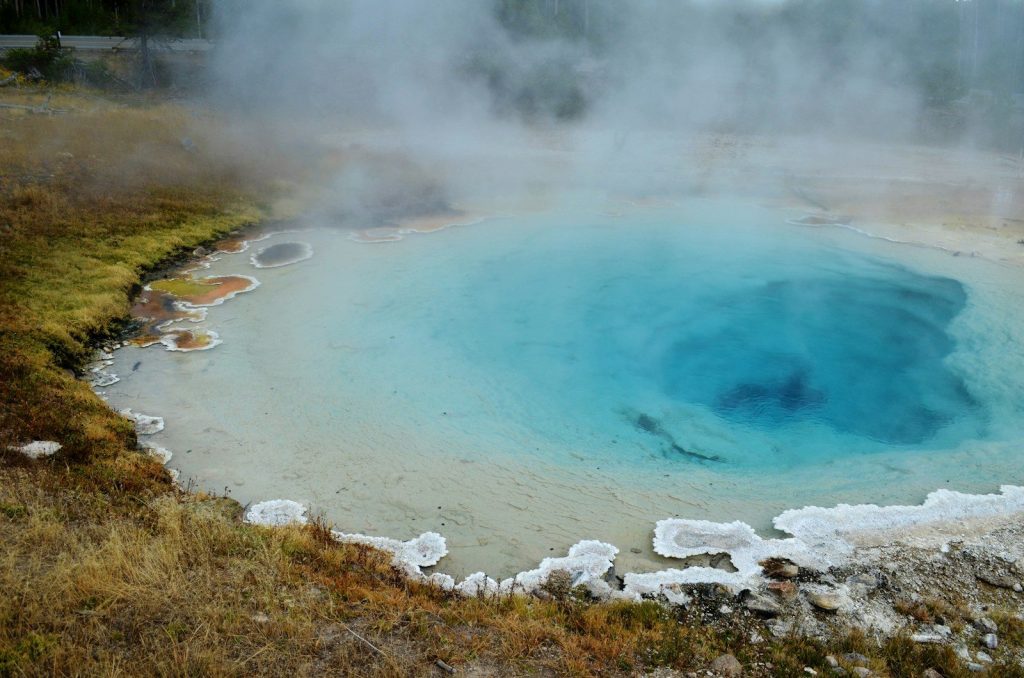
Researchers do not yet have a complete, universally accepted account of how nonliving chemistry produced the first systems capable of metabolism, heredity, and Darwinian evolution. Scientists investigate several environments and chemical pathways, including hydrothermal vents, shallow pools, mineral surfaces, and molecules delivered by meteorites. An unanswered question does not make every proposed explanation equally likely. Scientific hypotheses gain support through testable predictions, reproducible experiments, and physical evidence rather than through possibility alone.
The Preprint Estimates Information Needed for the First Cell

Endres uses ideas from information theory and algorithmic complexity to estimate how difficult it might be to assemble the organized information needed for a protocell before ordinary biological evolution began. The framework treats random molecular assembly as facing large entropic barriers. Such calculations can help clarify assumptions, but their conclusions depend strongly on how probabilities, chemical pathways, environmental conditions, and the definition of a minimally viable cell are represented. The paper describes its approach as conceptual rather than definitive.
Prebiotic Chemistry Uses Natural Reactions, Not Random Assembly Alone

Natural origin-of-life research does not usually assume that a modern cell appeared through one completely random combination of molecules. Chemical reactions follow physical laws, and environments can concentrate materials, supply energy, create repeating cycles, and favor certain products. NASA-supported experiments have shown that hydrothermal-vent conditions can drive organic reactions relevant to prebiotic chemistry. These results do not solve the origin of life, but they demonstrate why simple probability calculations based on unrestricted random assembly may omit important chemical processes.
Panspermia and Terraforming Describe Different Ideas

Panspermia proposes that life or its precursors could travel between worlds through rocks, comets, or dust. Directed panspermia adds the idea that an intelligent civilization intentionally sent biological material. Terraforming normally means deliberately changing a planet’s environment to make it more habitable. Seeding microorganisms and transforming an entire planet are therefore not automatically the same claim. The preprint considers extraterrestrial intervention as a logically possible alternative, but it does not identify who intervened, when it happened, or what was changed.
Meteorites Can Deliver Organic Molecules Without Alien Intervention

Meteorites contain organic molecules formed through non-biological processes. NASA-supported researchers have identified amino-acid precursors, sugars, cyanide-bearing compounds, and other carbon-rich material in meteorites. Such discoveries show that early Earth may have received useful chemical ingredients from space without any intelligent intervention. Organic molecules are not themselves evidence of life, and extraterrestrial chemistry does not imply extraterrestrial engineering. Natural delivery offers a testable mechanism that requires fewer assumptions than a technologically advanced civilization deliberately modifying the young Earth.
Panspermia Moves Life’s Origin Question to Another World

Even evidence that microorganisms reached Earth from another planet would transfer the origin question rather than answer it. Scientists would still need to explain how life began on that earlier world. Directed panspermia would create additional questions about the civilization responsible, its biology, technology, location, and motive. Without independent evidence for those entities, the proposal cannot replace laboratory and geological research into natural chemical evolution. A logically imaginable scenario is not automatically a scientifically supported account of Earth’s history.
Alien Terraforming Claims Require Physical Evidence
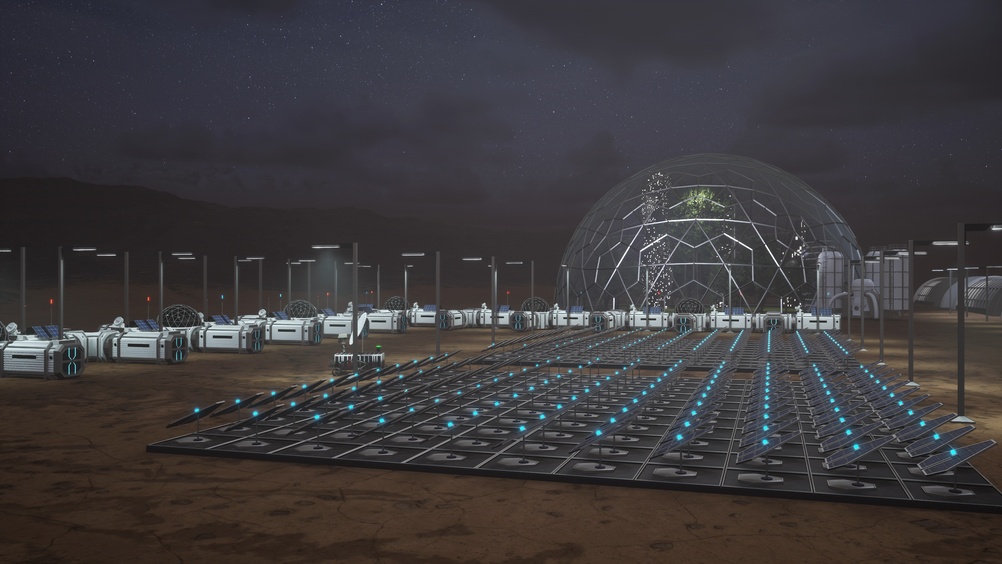
Evidence for deliberate extraterrestrial intervention could include an unmistakably engineered artifact of nonhuman origin, a verifiable artificial signal embedded in biology, or a pattern that could not plausibly arise through natural geology, chemistry, or evolution. No such evidence is presented in the preprint. Its legitimate contribution is to stimulate discussion about information and life’s beginnings. It should not be reported as proof, a finding, or even a probable conclusion that advanced extraterrestrials terraformed Earth.
Featured Image: Photo by Bhavya Pratap Singh on Unsplash
Leave a Reply