
Bird migration can feel like magic. Tiny songbirds cross dark skies, seabirds return to remote islands, and young birds sometimes travel huge distances without an older bird leading the way. Scientists have spent decades studying how they do it, and the answer is not just one hidden “map.”
Birds use a mix of tools. Some read the sun like a moving clock. Some learn star patterns at night. Some sense Earth’s magnetic field, follow coastlines, remember landmarks, smell ocean air, or adjust to wind while flying. Researchers still do not understand every detail, but the big picture is clear: birds combine many clues at once, and that makes their journeys one of nature’s most amazing travel stories.
They read Earth’s magnetism

Some birds can sense Earth’s magnetic field, which helps them keep direction when the sky is cloudy or landmarks are missing. Audubon notes that changing the magnetic field around migratory birds can cause them to orient the wrong way.
Scientists are still studying how this works. One leading idea is that birds may use light-sensitive molecules in their eyes, letting magnetic direction become part of how they sense the world.
They use stars at night

Many songbirds migrate after dark, when the sun is gone and the air may be calmer. Instead of flying blind, they can use stars to help hold their direction.
Cornell’s All About Birds explains that research with indigo buntings showed birds do not simply memorize star maps. They appear to notice how stars rotate around the sky, which helps them find a north-south direction.
They follow the sun

Day-flying birds can use the sun as a compass. This sounds simple, but the sun keeps moving, so birds need more than just brightness to guide them.
Cornell notes that a bird’s sun compass is tied to its internal clock. That means the bird can read the sun’s position along with the time of day, almost like a living navigation app.
They smell the route
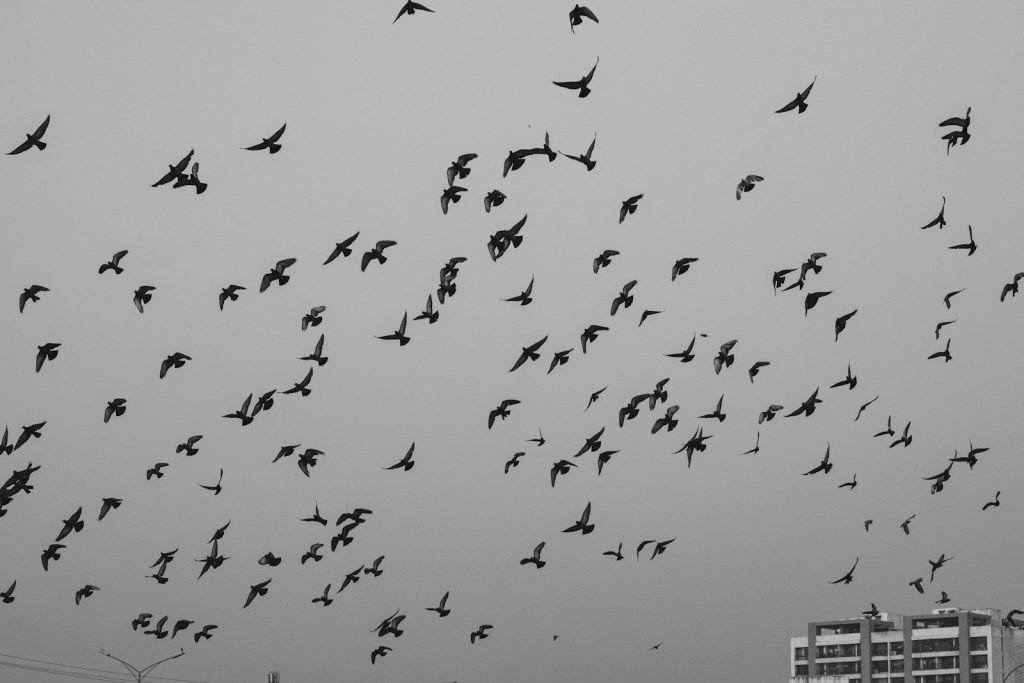
Smell may seem like a strange travel tool, but it can help some birds find their way. This may be especially useful over water, where there are fewer mountains, rivers, or roads to follow.
Live Science reported that when researchers blocked the nasal passages of Scopoli’s shearwaters, the birds could still fly over land but became confused over water. That suggests scent can matter on long sea journeys.
They memorize landmarks

Birds are not only using invisible forces and sky clues. Some also rely on what they can see, especially after they have flown a route before.
Rivers, coastlines, mountain ranges, lakes, and valleys can all become guideposts. BirdNote says birds steer by landmarks along with the sun, stars, and smell, giving them several ways to stay on track.
They sense cloudy sunlight

Even when the sun is hidden, birds may still pick up clues from light. Some species can detect polarized light, which can help reveal where the sun is behind clouds.
That is useful during migration because the weather can change quickly. A bird cannot stop every time the sky turns gray. Using hidden patterns in light provides an additional backup when normal visual cues are weak.
Leave a Reply