The closest documented case to this headline involves American inventor Joseph W. Newman. He claimed to have developed an electromagnetic machine that produced more usable energy than it consumed. His application was not secretly removed for national-security reasons. Public court records show that the U.S. Patent and Trademark Office rejected it, federal scientists tested the machine, and judges reviewed the dispute.
Newman Promised More Energy Than He Put In

Newman’s application was titled “Energy Generation System Having Higher Energy Output Than Input.” He argued that his device could draw additional energy from matter through a proposed mechanism involving what he called gyroscopic energy particles. No accepted scientific evidence established the existence of the mechanism described in his theory.
The Patent Office Saw a Perpetual-Motion Claim

Patent examiners concluded that Newman had not provided sufficient evidence or technical disclosure to demonstrate the claimed result. The Patent Office’s appeals board described the machine as a form of perpetual motion, which would conflict with the first or second law of thermodynamics. Newman disputed that characterisation and continued challenging the rejection through the courts.
Early Demonstrations Produced Conflicting Impressions
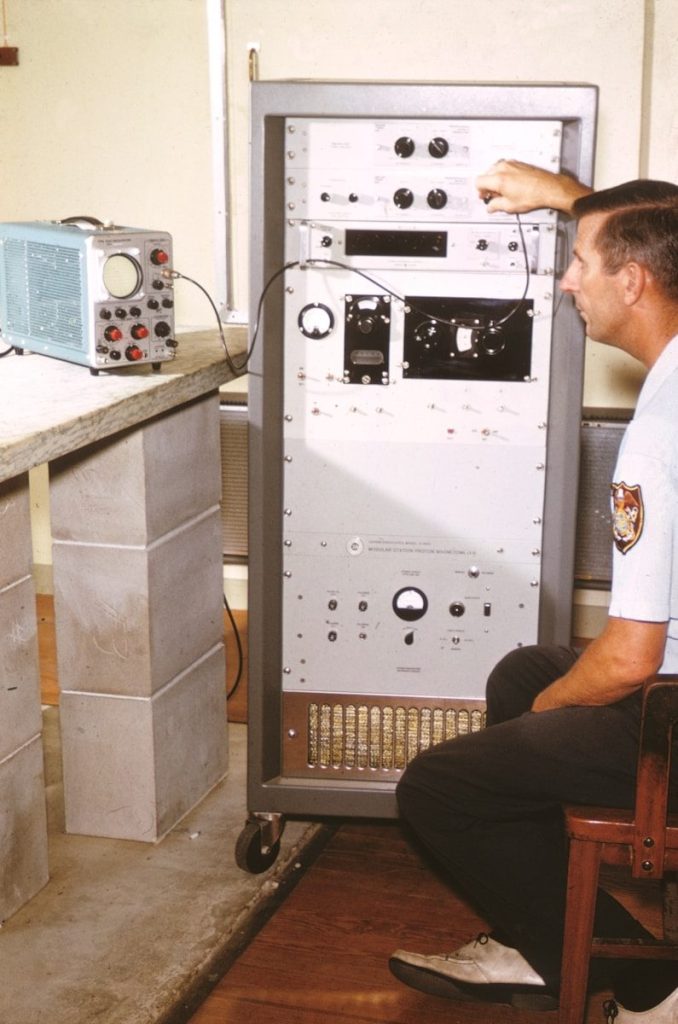
Several supporters reported measurements that appeared to show more electrical output than input. A court-appointed special master was initially persuaded that Newman had demonstrated unusual performance, while also acknowledging that no evidence supported Newman’s underlying scientific theory. These conflicting interpretations led to more controlled testing rather than immediate acceptance of the invention.
Federal Tests Found No Excess Energy

The National Bureau of Standards, now known as NIST, tested a submitted Newman device in 1986. Its report concluded that the machine did not produce more energy than it consumed. The federal appeals record states that measured efficiency ranged from approximately 27% to 77%, meaning the output remained below the external energy supplied to the system.
The Courts Upheld the Rejection

The U.S. Court of Appeals for the Federal Circuit affirmed the decision that Newman’s claimed invention was unpatentable in 1989. The record shows a lengthy technical and legal dispute involving examiners, demonstrations, a special master, and federal testing. It does not show that officials accepted the device and then concealed it because it threatened the energy industry.
The Application Remains Part of the Public Record

An international application bearing the same “higher energy output than input” title remains searchable through the World Intellectual Property Organization. The U.S. litigation, application number, and testing report are also publicly documented. These surviving records directly contradict the idea that every trace of the invention or patent disappeared.
National-Security Patent Secrecy Is Real

The United States can place a patent application under a secrecy order when a defense agency determines that publication could damage national security. Such an order can delay publication and prevent a patent from being issued until the restriction is removed. The USPTO also warns that a secrecy order is not proof that the government considers an invention useful or intends to adopt it.
No Evidence Links Newman to a Secrecy Order

The publicly available Newman case describes rejection, abandonment, laboratory testing and appeals—not a national-security classification. The original headline appears to combine two separate realities: an unsuccessful over-unity patent claim and a genuine law allowing secrecy orders for sensitive inventions. Neither proves that a working unlimited-energy machine was suppressed.
Featured Image: Photo by National Cancer Institute on Unsplash
Leave a Reply