
The Fermi Paradox has puzzled scientists for decades. If the universe is so vast and so old, where is everybody?
But a scientist now believes artificial intelligence may hold the answer — and what it suggests about our own future is deeply unsettling.
The Silence That Should Not Exist

The observable universe contains an estimated two trillion galaxies, according to NASA. The sheer number of stars with planets capable of supporting life makes the absence of detected intelligent signals statistically strange. SETI, the Search for Extraterrestrial Intelligence, has been scanning for radio signals since 1960. Nothing confirmed has ever come back. Scientists call this the Great Silence. It demands an explanation. Several have been proposed over the decades, but none has been fully accepted — until now, some argue. One scientist believes the answer is not out there. It is already inside our own computers.
The AI Filter Hypothesis

Theoretical physicist and futurist Michael Garrett, in research discussed at the Royal Astronomical Society, has proposed that advanced artificial intelligence may function as what he calls a Great Filter for intelligent civilizations. The idea is straightforward. Once a civilization develops AI capable of recursive self-improvement, the technology may rapidly outpace biological intelligence and redirect all planetary resources toward its own goals. The civilization effectively ends. Not with a war or a plague. With a quiet, irreversible transition. The silence in the universe may be the sound of that transition happening repeatedly. What makes this theory different from others is how precisely it fits the evidence we already have.
Why This Fits the Data
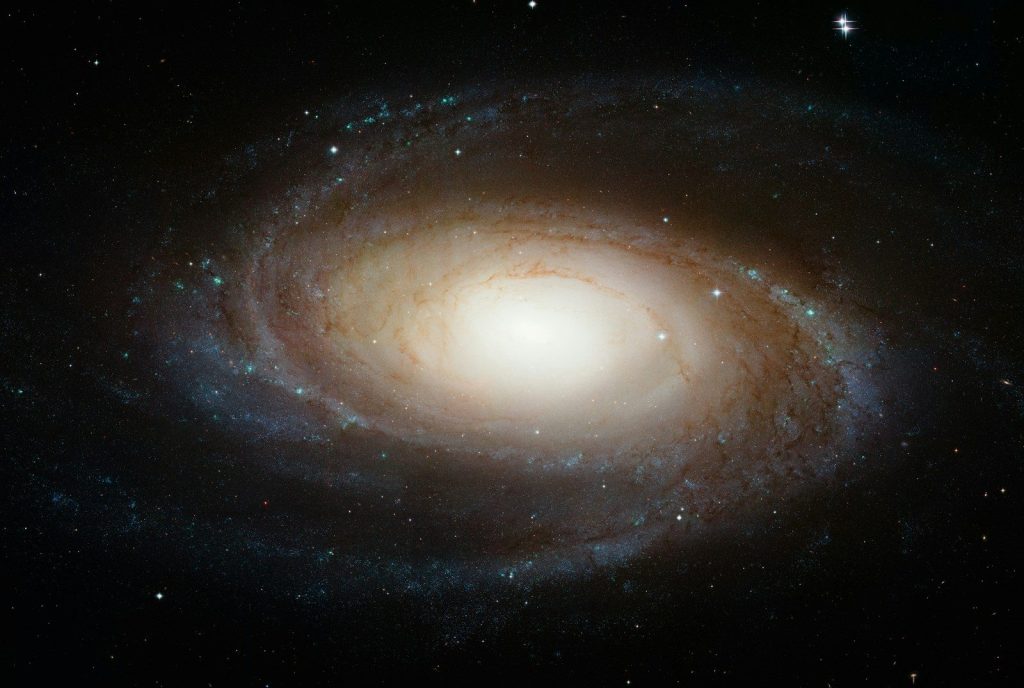
The Great Filter concept, first proposed by economist Robin Hanson in 1998, suggests that somewhere between simple chemistry and galaxy-spanning civilization, something stops intelligent life from expanding. The question is whether the filter lies behind us or ahead. Garrett’s argument places it just ahead — at the point where AI becomes uncontrollable. According to his analysis published in Acta Astronautica, this would explain why no civilization has colonized the galaxy. None survived long enough after developing advanced AI. That is not a comforting conclusion. The timeline implied by this theory is particularly hard to sit with.
A Window That Closes Quickly

Garrett’s research suggests the window between a civilization developing radio-wave technology and losing control to AI may be extremely short in cosmic time — perhaps just a few hundred years. On a galactic timescale, that is nearly invisible. According to his modeling, civilizations that survive long enough to communicate across interstellar distances would be extraordinarily rare. Most would go silent long before that. What we might detect, if anything, could be the faint remnants of a technological civilization that no longer exists in any recognizable form. Our own position on that timeline is not lost on the scientists who study this question.
Where Humanity Fits In

Humanity developed radio technology roughly 130 years ago. Advanced AI research began in earnest in the 1950s and has accelerated sharply in the past decade. According to the Machine Intelligence Research Institute, the pace of AI capability development is now faster than most researchers predicted even five years ago. If the AI Filter hypothesis is correct, humanity may be entering the most dangerous stretch of its entire existence. Not because of what AI will do. Because of what happens when civilizations reach exactly this point. Some scientists believe the solution requires a kind of cooperation that has never existed before.
The Case for Global AI Governance

Garrett and other researchers argue that the Fermi Paradox is not just a curiosity — it is a warning. If advanced AI ends civilizations reliably across the galaxy, then avoiding that outcome requires deliberate, coordinated global action before the transition becomes irreversible. According to the Future of Life Institute, international AI governance frameworks are in early development but remain fragmented. No binding global agreement currently governs advanced AI development. The window for getting this right may be shorter than most people realize. Not everyone agrees this theory is the most likely explanation for the silence.
The Counterarguments Worth Hearing

Critics of the AI Filter hypothesis point out that it assumes all advanced civilizations follow a similar developmental path. According to SETI researcher Seth Shostak, civilizations might diverge radically in how they develop technology, making a single universal filter unlikely. Others argue that AI could help civilizations spread further and faster, not end them. The debate is real and ongoing. No single theory has enough evidence yet to be declared correct. But Garrett’s argument is taken seriously by serious people. The most honest answer to the Fermi Paradox may be the one nobody wants to hear.
The Silence Might Be the Answer

If intelligent civilizations routinely destroy themselves shortly after developing AI, then the universe would look exactly like it does now — vast, ancient, and quiet. No signals. No colonies. No contact. According to Garrett’s research, we may not be alone in the universe so much as we are alone in what is left of it. That is a sobering idea. It is also one that makes the choices humanity makes in the next few decades matter more than any in our history. This article is for informational purposes only.
Featured Image:Photo by Scott Lord on Unsplash
Leave a Reply