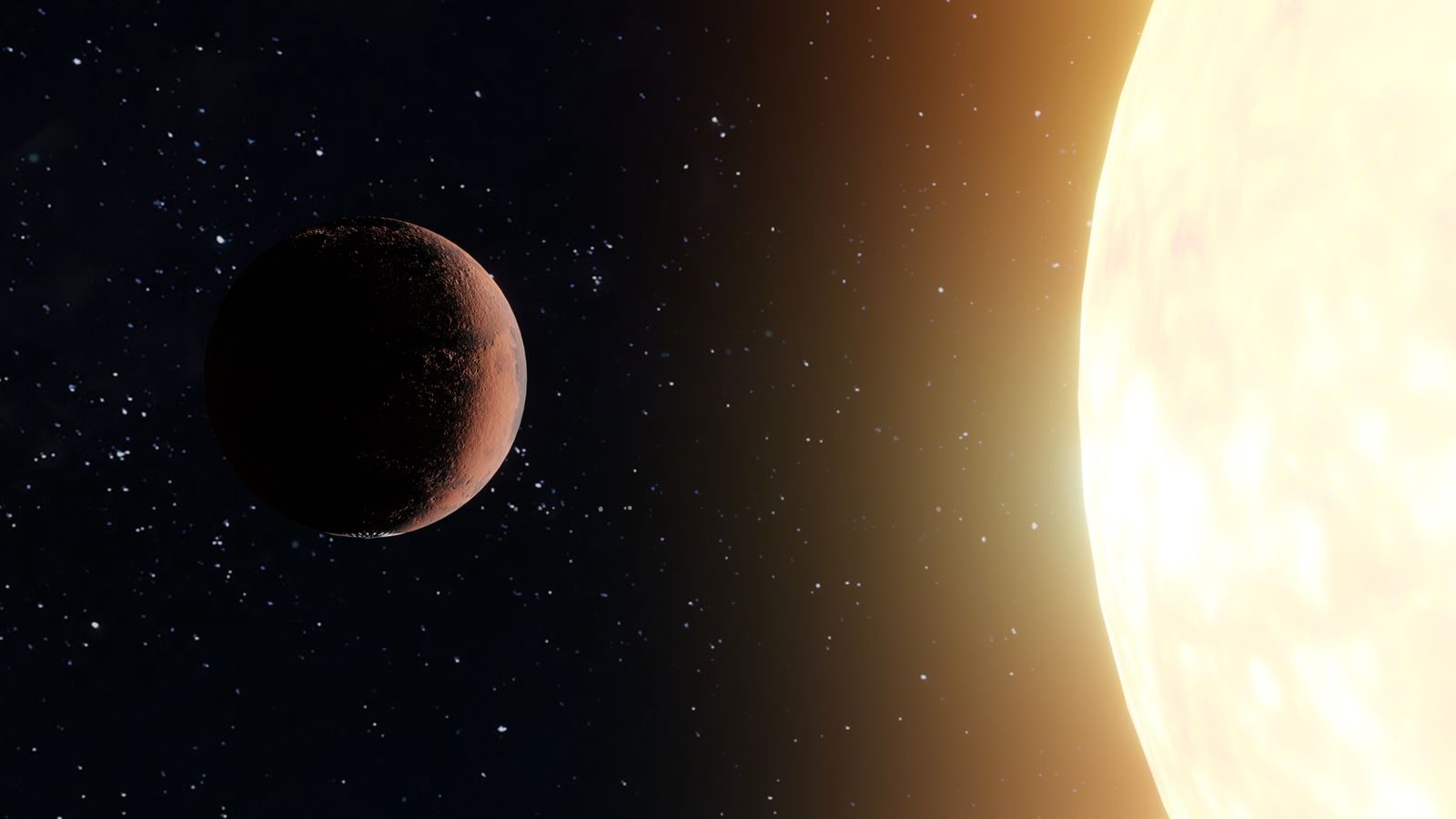
Astronomers have detected helium escaping from LHS 1140 b, a temperate exoplanet about 48 light-years away. The finding provides strong evidence that this large rocky world retains an atmosphere while orbiting within its star’s habitable zone. It is an important first, but it is not evidence that life exists there.
The planet is often called Earth-like because it is rocky and receives moderate stellar energy, yet it differs greatly from Earth. LHS 1140 b is about 1.7 times Earth’s radius and 5.6 times its mass. It circles a cool red dwarf and may be tidally locked, with one side permanently facing its star.
Rocky Exoplanet Habitable Zone Star Orbit
LHS 1140 b was discovered in 2017 as it crossed, or transited, its small host star. Each transit slightly reduces the star’s light, allowing astronomers to estimate the planet’s size and orbital period. Later measurements placed it in the habitable zone, where temperatures might permit liquid water under suitable atmospheric conditions. That phrase describes incoming energy, not actual habitability. A planet can orbit in this zone while remaining airless, frozen, overheated, or chemically hostile to life.
Near Infrared Spectrograph Telescope Array
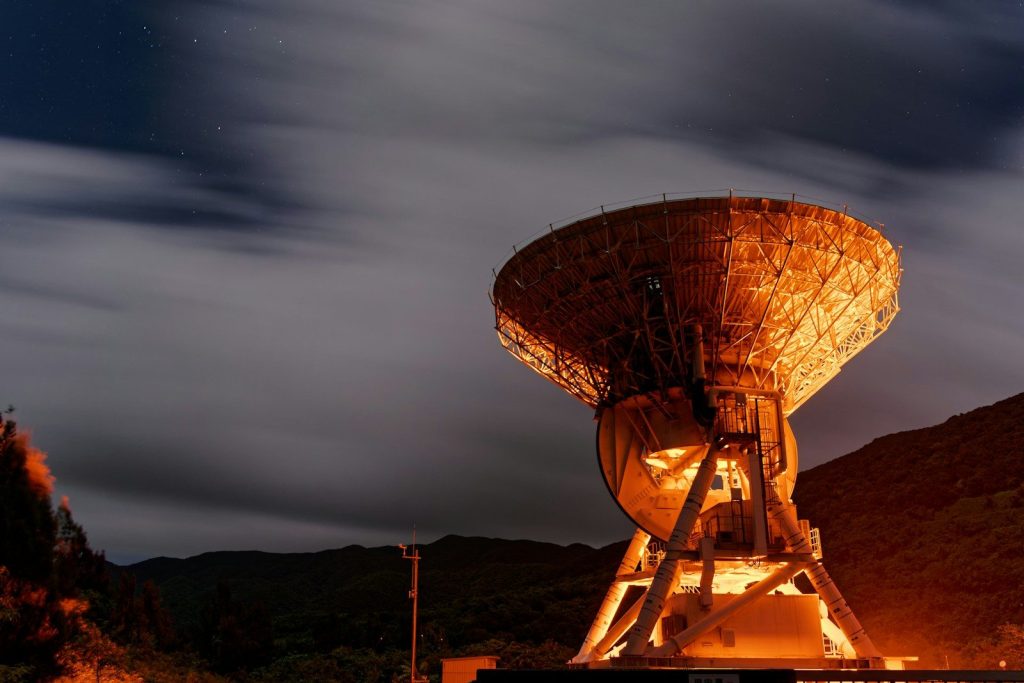
The 2026 study used the WINERED near-infrared spectrograph on the Magellan Clay Telescope in Chile. Researchers observed starlight passing through the planet’s outer atmosphere during transit and searched for absorption at wavelengths associated with excited helium. They detected the signal in 2024 observations. Because helium escapes readily from small planets, finding it above LHS 1140 b indicates a larger atmospheric reservoir below, even though the measurement does not reveal the complete lower-atmosphere composition with high confidence.
Escaping Helium Gas Cloud Telescope Measurement

The helium signal was absent when the team observed the planet again in 2025. The researchers interpret this difference as variable atmospheric escape rather than proof that the first detection was false. Changes in ultraviolet radiation from the host star can alter how much gas reaches detectable altitudes. Repeated observations will be needed to establish the pattern. The variability also shows why a single transit rarely provides a complete picture of an exoplanet’s atmosphere across multiple years.
Exoplanet Atmospheric Gases Chemical Diagram

The team concluded that the upper atmosphere is likely dominated by helium and depleted in hydrogen. Their models suggest that atmospheric escape may separate lighter gases from heavier volatile compounds, leaving substances such as nitrogen, carbon dioxide, or water deeper below. Those lower layers were not directly identified by the helium observation. Claims that oxygen or biological gases were discovered are incorrect. The study measured escaping helium, not a breathable atmosphere or a sign of living organisms.
Ocean World Planet Water Atmosphere

LHS 1140 b has attracted attention because earlier James Webb Space Telescope work ruled out a thick, hydrogen-rich mini-Neptune atmosphere. Its relatively low density may instead fit a water-rich world, possibly with a high-molecular-weight atmosphere. Researchers have reported tentative evidence consistent with nitrogen, but the confidence was not strong enough for confirmation. The new helium result strengthens the case that some atmosphere exists while leaving its surface pressure, temperature, clouds, oceans, and chemistry unresolved with current instruments.
Exoplanet System Two Planets Red Dwarf Star
The system provides a useful comparison because a smaller, hotter neighbor called LHS 1140 c transited shortly after planet b during the 2024 observations. Researchers found no comparable helium signal around planet c. Stronger stellar heating may have removed its atmosphere more efficiently, although non-detection alone cannot establish every detail. Studying two planets around the same star helps astronomers test how size, gravity, radiation, and distance control whether rocky worlds keep or lose their gases.
Space Telescope Scanning Atmosphere Spectrum

LHS 1140 b is now one of the most valuable targets for studying temperate rocky planets around nearby red dwarfs. Future observations must search for molecules in the lower atmosphere and determine whether surface liquid water is physically possible. Even a lifeless result would be scientifically important because it would show how atmospheres survive around active small stars. For now, the discovery confirms an atmospheric clue, not an Earth twin, an inhabited ocean world, or a second home for humanity. This article is for informational purposes only.
Featured Image: Photo by Zelch Csaba on Pexels
Leave a Reply