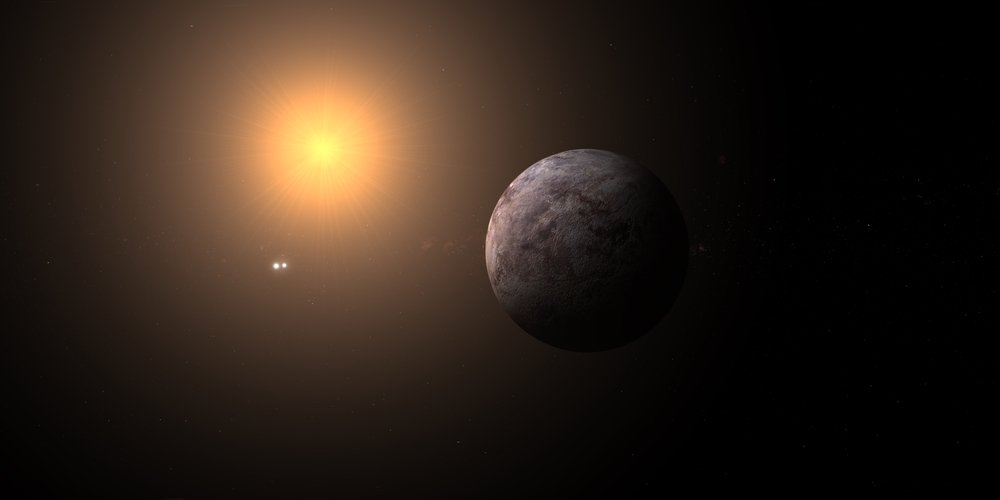
Beta Pictoris d is a newly confirmed giant planet orbiting a young star about 63 light-years from Earth. It is roughly 100 times fainter than the better-known Beta Pictoris b and has been described as the faintest exoplanet directly imaged from the ground. The discovery emerged from both new observations and old data.
Astronomers had noticed weak spots in images for more than a decade, but bright speckles, dust, and another planet made them difficult to trust. Two teams independently identified the object as a gravitationally bound planet. Their work shows how improved instruments and careful archive searches can reveal worlds that were visible all along but overlooked.
Beta Pictoris Star Debris Disk
Beta Pictoris is only about 20 million years old, making it a valuable laboratory for studying how planetary systems form. The star is surrounded by a broad disk of dust and debris and was already known to host two giant planets, Beta Pictoris b and c. Planet d brings the confirmed total to three. The system is now one of the rare cases where astronomers can directly study several young giant planets alongside the material left from their formation.
High Contrast Direct Imaging Coronagraph

Direct imaging is unusually difficult because a star can outshine its planets by millions or billions of times. Instruments must suppress or model the star’s glare while separating a genuine moving world from optical artifacts called speckles. Young giant planets are easier targets because they still radiate heat left from formation. Beta Pictoris d pushed the technique further: after correcting for the system’s distance, it is the intrinsically faintest exoplanet yet directly imaged by a ground-based telescope.
Very Large Telescope Cerro Paranal Chile
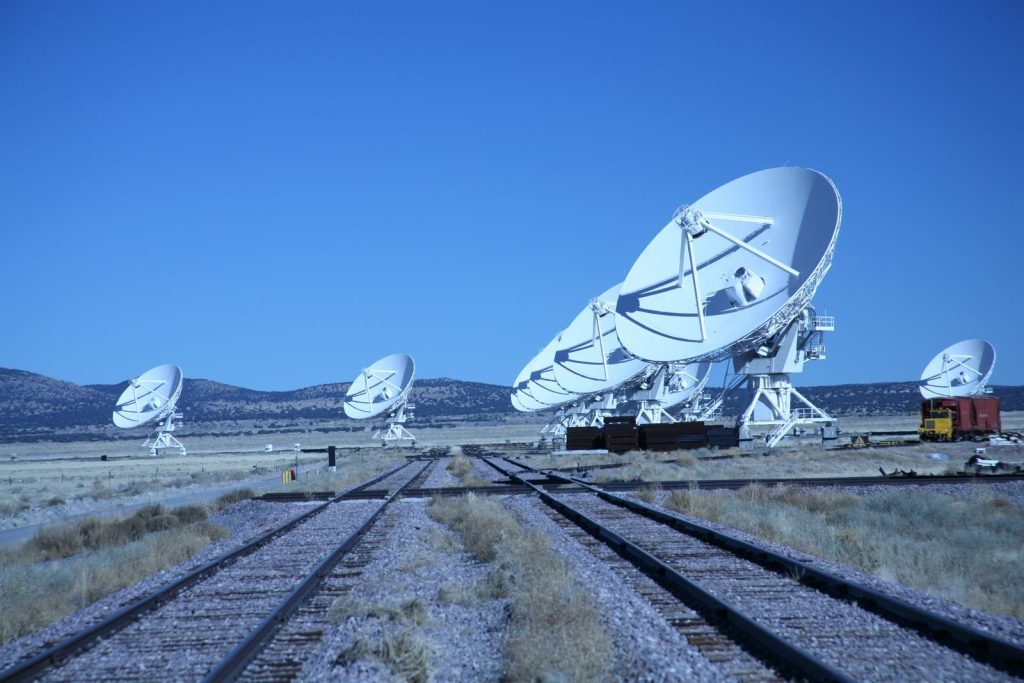
One research team detected the planet with ERIS on the European Southern Observatory’s Very Large Telescope in Chile. The object appeared in non-coronagraphic infrared observations and was then traced through archival images from VLT/SPHERE and the James Webb Space Telescope’s NIRCam. Positions measured across an 11-year baseline showed consistent orbital motion around Beta Pictoris. That long record turned several uncertain points of light into evidence for a single bound companion rather than changing noise.
James Webb Space Telescope Deep Space
A second team found Beta Pictoris d independently using Webb’s NIRSpec integral-field spectrograph. The planet appeared unexpectedly while researchers were studying the better-known Beta Pictoris b and the surrounding disk. Additional Webb observations with NIRSpec and MIRI supported the detection. This route was unusual because spectral information helped separate the planet’s light from nearby dust. The independent analyses strengthened confidence that both teams were seeing the same previously unrecognized world around the young star today.
Giant Gas Planet Orbiting Star

Current models place Beta Pictoris d at about 2.4 times Jupiter’s mass, although the estimate depends on how young planets cool after formation. Its average orbital distance is around 26 astronomical units, farther from its star than Uranus is from the Sun, and its orbit may take about 91 years. The planet’s estimated temperature is roughly 600 kelvins, making it cooler and less massive than the system’s previously known directly imaged giant planets based on present data.
Planetary Dust Ring Disk Dynamics

The planet appears to orbit in nearly the same plane as Beta Pictoris b, c, and the debris disk. Its location is consistent with helping shape the disk’s inner edge, giving astronomers a possible explanation for part of the system’s structure. Initial infrared colors also provide clues about atmospheric chemistry, including possible carbon-dioxide absorption and enhanced heavy elements. Those interpretations depend on models and will require better spectra before the atmosphere can be described with confidence.
Extremely Large Telescope Astronomy Research
Beta Pictoris d matters as much for the method as for the planet itself. It shows that faint companions can hide in heavily studied systems and in data archives spanning many years. Reprocessing observations with better algorithms may uncover additional planets without taking a new image first. Future facilities such as ESO’s Extremely Large Telescope should reach smaller, cooler worlds. The discovery therefore marks a step toward directly imaging planetary systems that more closely resemble the outer regions of our own. This article is for informational purposes only.
Featured Image: Shutterstock
Leave a Reply