Life sounds like it should follow strict rules, but this experiment shows those rules may be more flexible than scientists once thought. Researchers used AI to redesign parts of E. coli, a common lab bacterium, and tested whether its protein-building machinery could still work after removing one familiar amino acid from key ribosome proteins.
The result surprised many people watching the field. The engineered bacteria were not “new life” made from scratch, and they were not completely free of that amino acid.
Still, one altered strain kept growing after major changes to 21 ribosomal proteins. The study points to a big idea: life may be able to work with a smaller set of building blocks than we once believed.
A tiny cell made big news
Life is built from tiny parts, and scientists just tested how flexible those parts can be. A research team used AI to redesign key pieces of E. coli, a common bacterium used in labs.
The goal was bold but simple to understand: see whether important cell machinery could keep working after removing one familiar amino acid, isoleucine, from part of the system.
Why amino acids matter
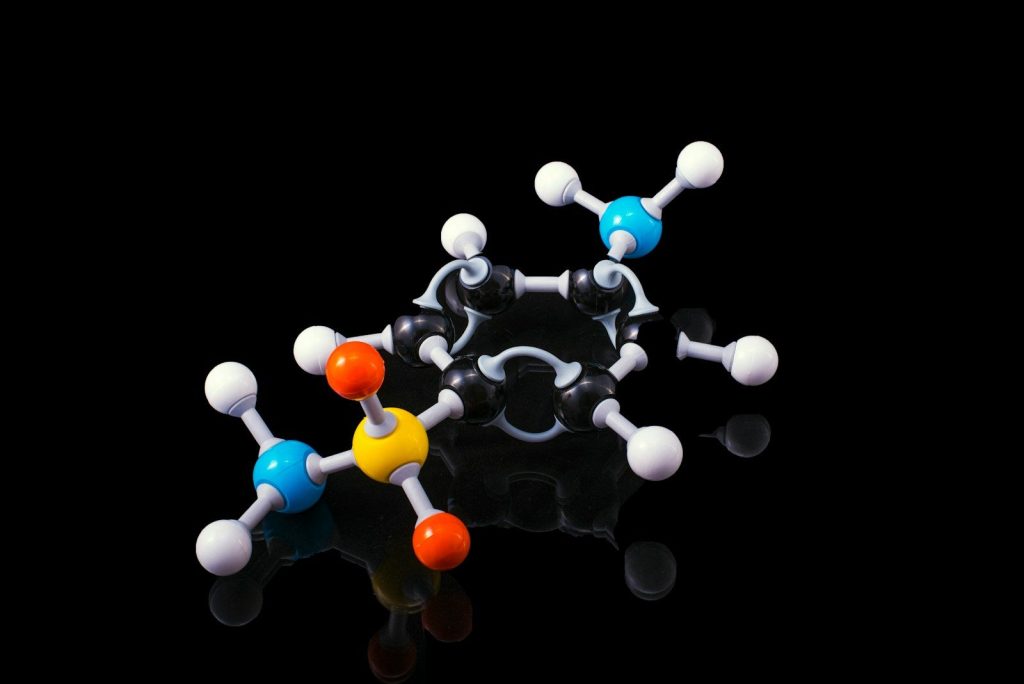
Amino acids are often called the building blocks of proteins. Proteins help cells grow, repair, move materials, and carry out many jobs that keep living things going.
Most known life uses 20 standard amino acids to build proteins. That number has long seemed like a basic rule of biology, which is why this experiment caught so much attention.
The target was isoleucine
The team focused on isoleucine because it has some similarities to other amino acids, including leucine and valine. That made it a possible candidate for replacement in certain proteins.
The researchers did not remove isoleucine from the whole bacteria. Instead, they aimed at the ribosome, the cell’s protein-building machine, where even small changes can be hard to pull off.
The ribosome was the challenge
The ribosome is one of the busiest and most important parts of a cell. It reads genetic instructions and helps assemble proteins piece by piece.
Changing it is not like swapping a battery in a toy. The ribosome has many moving parts, and if the wrong pieces are changed, the cell may grow poorly or stop growing at all.
AI offered new designs
Instead of guessing every change by hand, the researchers used AI protein tools to suggest new sequences. These tools helped predict which changes might still allow the ribosome to work.
Some suggestions were not obvious choices a person might pick first. That is part of what made the work important: AI helped explore more options much faster than traditional trial and error.
Many attempts did not work
The experiment was not a quick win. Many changed bacteria strains struggled, grew slowly, or failed. That showed how difficult it is to rewrite even a small part of life’s instructions.
Still, some versions survived. Out of many test designs, researchers found strains that could handle key ribosome changes without falling apart right away.
One strain kept growing
The final engineered bacteria had 21 ribosomal proteins redesigned without isoleucine. It still grew more slowly than normal E. coli, but it stayed alive and continued reproducing.
Reports noted that the altered strain remained stable for more than 450 generations. That gave scientists a stronger reason to believe cells can handle bigger changes than once expected.
It was not fully rebuilt
The discovery is exciting, but it is important not to overstate it. The bacteria was not completely free of isoleucine across its entire genome.
Most of the organism still relied on the usual 20 amino acids. The breakthrough was that a major part of its protein-making machinery could function after a large set of targeted changes.
It may explain early life
Scientists have long wondered whether early life used a smaller set of amino acids before today’s common system became established. This experiment gives that idea more support.
It does not prove exactly how life began. But it shows that a simpler amino acid “alphabet” may be possible in some biological systems, which could help researchers study life’s earliest stages.
What could come next
This work may one day help scientists design safer, more controlled synthetic organisms for research. Such organisms could be built to depend on special lab conditions and not thrive easily outside them.
For now, the biggest takeaway is curiosity. AI did not magically create life from nothing, but it helped researchers test a deep question about how flexible living systems can be.
Leave a Reply