
For decades, we have been told that modern humans left Africa about 60,000 years ago. Every textbook in every school has taught this same timeline. But a single jawbone found in a cave in Israel has just set that story on fire. New dating technology has proven that this bone is over 180,000 years old. This means that humans were exploring the world more than 100,000 years earlier than we ever suspected.
We aren’t just talking about a small change; we are talking about a total rewrite of our origin story. It means that while our ancestors were supposedly still in Africa, they were actually building communities and traveling through the Middle East. It changes everything we know about how we survived and where we came from. But how did we miss such a huge part of our own history?
The Technology That Sees Through Time

The secret to this discovery is “Uranium-Series Dating.” In the past, we relied on carbon dating, which only works for things younger than 50,000 years. This new method allows us to look back hundreds of thousands of years with perfect precision.
It is like getting a high-definition look at the deep past. When the results came back from the lab, the researchers thought the machine was broken. They ran the test ten times, and the answer was the same every time. The history books were wrong. But why did our ancestors leave Africa so early?
The “Green Corridor” of the Past

We used to think the desert between Africa and the Middle East was an impossible barrier. But the timeline rewrite suggests that the climate used to be very different. Every few thousand years, a “Green Corridor” of grass and lakes would open up across the desert.
Our ancestors were smart enough to wait for these windows to open. They followed the animals and the water into new lands. They were much more adventurous than we gave them credit for. They were the original explorers of Earth. But what happened to these early travelers?
Meeting the “Others” for the First Time
If humans left Africa 180,000 years ago, it means they met the Neanderthals much sooner than we thought. For over 100,000 years, two different types of humans lived side-by-side. They were likely trading tools, sharing food, and maybe even fighting over territory.
It was a world of “multiple humanities.” This discovery makes the ancient world feel much more crowded and exciting. We weren’t alone on this planet for most of our history. But did these early meetings lead to our own DNA changing?
The Tools That Proved the Dates

Right next to the 180,000-year-old bone, archaeologists found “Levallois” stone tools. These are advanced, sharp blades that require a high level of intelligence to make. Before this discovery, we didn’t think humans were making tools this complex that early.
It proves that our brains reached “modern” levels of power much earlier than anyone predicted. We were “us” long before we built the first village. The tools are a silent testament to the genius of our ancestors. But how did they stay alive during the massive climate shifts?
A Hidden Route Through the Middle East

The path out of Africa was not a straight line. The new timeline shows that humans were moving back and forth through the Levant region for thousands of years. They were using the caves as permanent base camps during their long journeys.
This region was a “melting pot” of different human groups and cultures. They were adapting to new environments and learning how to survive in a world that was constantly changing. It proves that the human spirit of exploration is much older than we thought. But what genetic traces did they leave behind?
DNA Clues in the Modern World

Scientists are now re-examining the DNA of modern humans to find traces of these early pioneers. They have found “ghost DNA” that doesn’t match the later 60,000-year-old migration. This suggests that some of these early explorers might have interbred with other groups that eventually disappeared.
It is a genetic puzzle that is still being solved. Every drop of our blood contains a record of these ancient journeys. We are carrying the legacy of people who were forgotten for 180,000 years. But where are the rest of their skeletons hiding?
The Lost Generations of Humanity
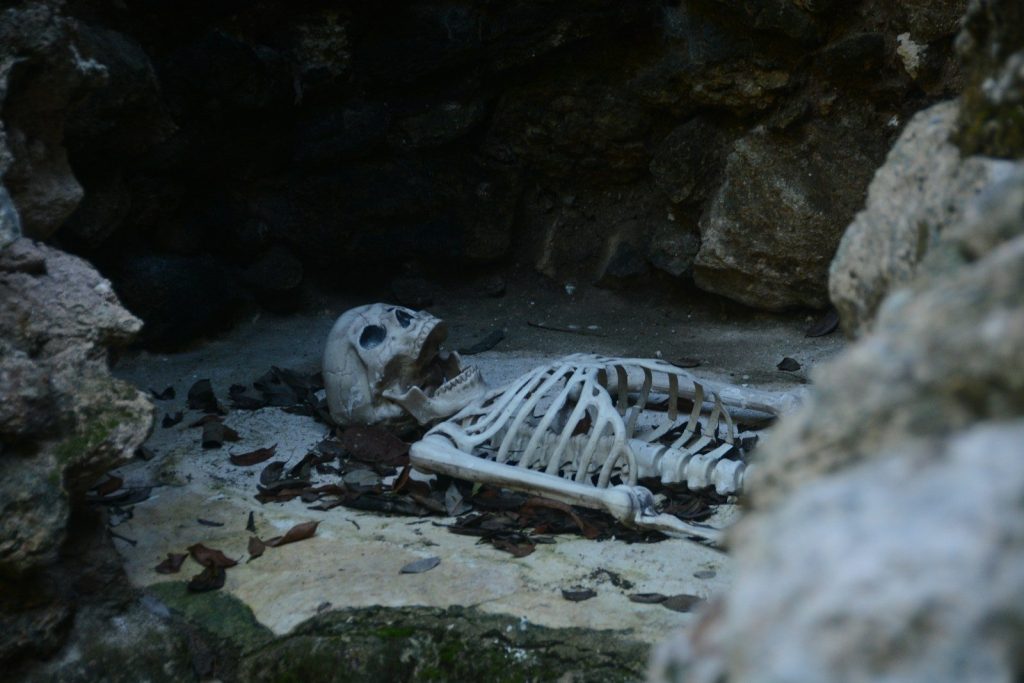
This new timeline reveals that there are “lost generations” of humans that we know nothing about. There is a gap of 100,000 years that is now wide open for discovery. We have to find where they went and what they did.
Every cave in the world is now a potential treasure chest of history. We are in a new “Gold Rush” for our own origins. The more we look, the more we realize how little we truly know. But it is an exciting time to be an inhabitant of Earth.
The Journey Has Just Begun

As we rewrite the timeline, we are learning that the human story is much longer and more complex than we imagined. We are a species that has survived everything the planet has thrown at us.
We are born from fire, ice, and constant movement. The 180,000-year-old jawbone is a reminder that we are just the latest chapter in a very long book. The future is bright because the past is much deeper than we thought. Are you ready for the next discovery?
Featured Image: Photo by dimitrisvetsikas1969 on Pixabay
Leave a Reply