
Most of us believe that time only moves in one forward direction. We assume that a broken glass can never assemble itself back together.
But physicists have successfully reversed time on a microscopic scale. This breakthrough experiment is challenging our most basic laws of the universe.
Bending The Laws Of Physics
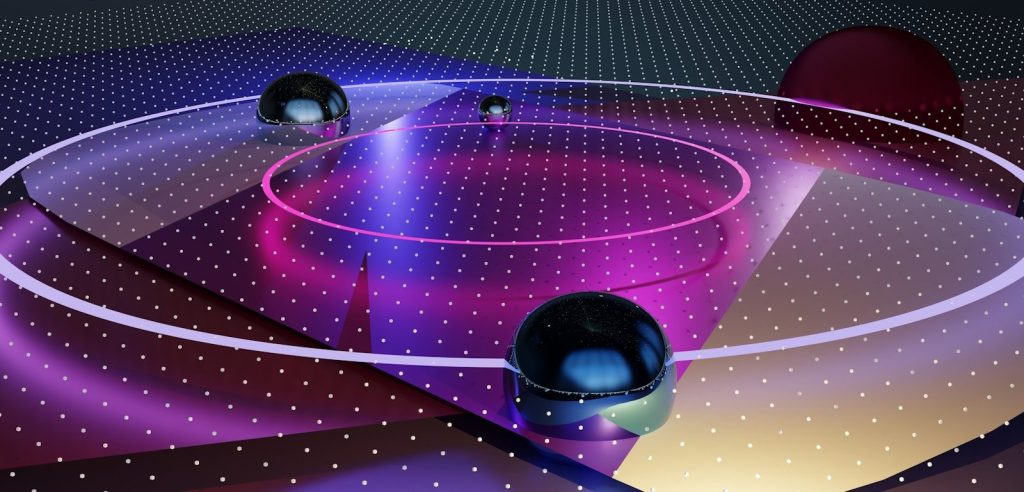
A team of quantum physicists has achieved what was once considered completely impossible. According to a study published in Communications Physics, researchers successfully sent a single subatomic particle backward in time. The process was delicate. By manipulating quantum states, they forced the particle to return to its original starting position. But scaling this project up would require an entirely different level of technology.
The Quantum Computer Lab

The experiment required the use of highly advanced quantum computer processors to control the particles. According to reports from the Moscow Institute of Physics and Technology, scientists used an electron state to simulate the time reversal. It worked flawlessly. The team managed to reverse the natural decay of the system in a fraction of a second. But this laboratory success raised immediate questions about real-world applications.
Erasing Computing Mistakes
This time-bending technology could soon be used to eliminate errors in modern processing. According to software engineering logs, quantum computers often make tiny calculation mistakes due to external interference. The system is fragile. Reversing time on a single qubit could allow computers to self-correct their errors instantly. But the team still had to overcome a massive physical barrier.
The Entropy Problem

Natural laws dictate that the universe always moves from order to chaos. According to thermodynamics studies, reversing time requires a massive injection of external energy to overcome natural decay. The energy was immense. This physical law is why we cannot easily reverse larger objects in our daily lives. But scientists are already looking for ways to bypass this cosmic rule.
Creating Artificial Microstates
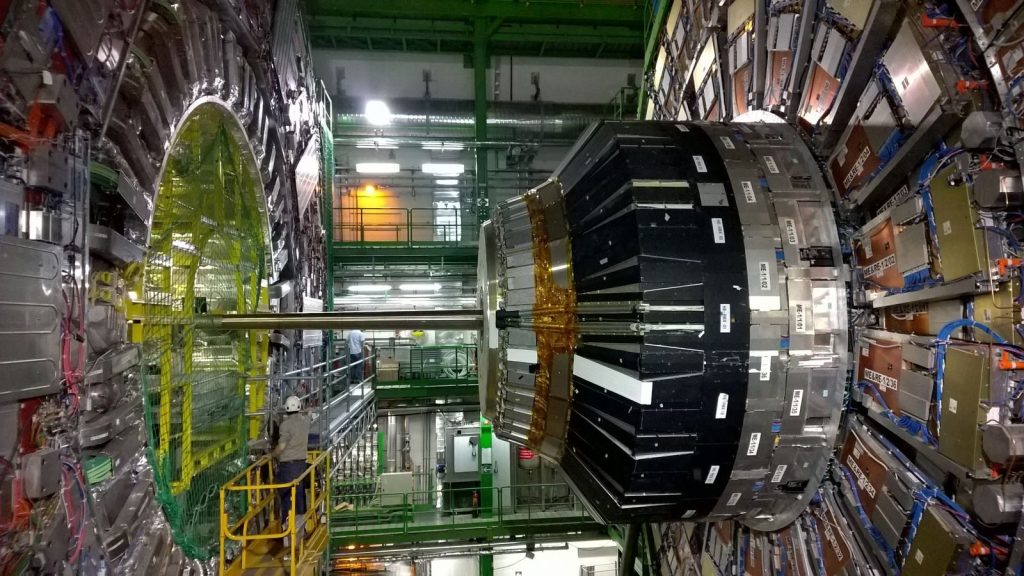
Researchers are designing specialized quantum environments where the laws of thermodynamic decay do not apply. According to theoretical physicists, these microscopic chambers isolate particles from the rest of the universe. They are completely quiet. Inside these zones, the arrow of time behaves in highly unpredictable ways. But this strange phenomenon is opening up a brand new field of science.
Rethinking Cosmic Rules

This breakthrough forces scientists to question whether time is a fundamental reality or a clever illusion. According to a research study from the University of Vienna, the flow of time might simply be a statistical trend rather than a strict physical law. The universe is mysterious. This realization could change how we design everything from computers to space engines. But the ultimate limits of time travel remain clear.
The Future Of Quantum Time

While we will not be traveling to the past anytime soon, quantum physics is redefining what is possible. According to research teams, understanding time reversal will lead to ultra-fast computers and revolutionary biological scanning tools. Progress is happening quickly. This article is for informational purposes only and does not constitute professional scientific advice.
Featured Image: Photo by ACatInABox on Unsplash
Leave a Reply