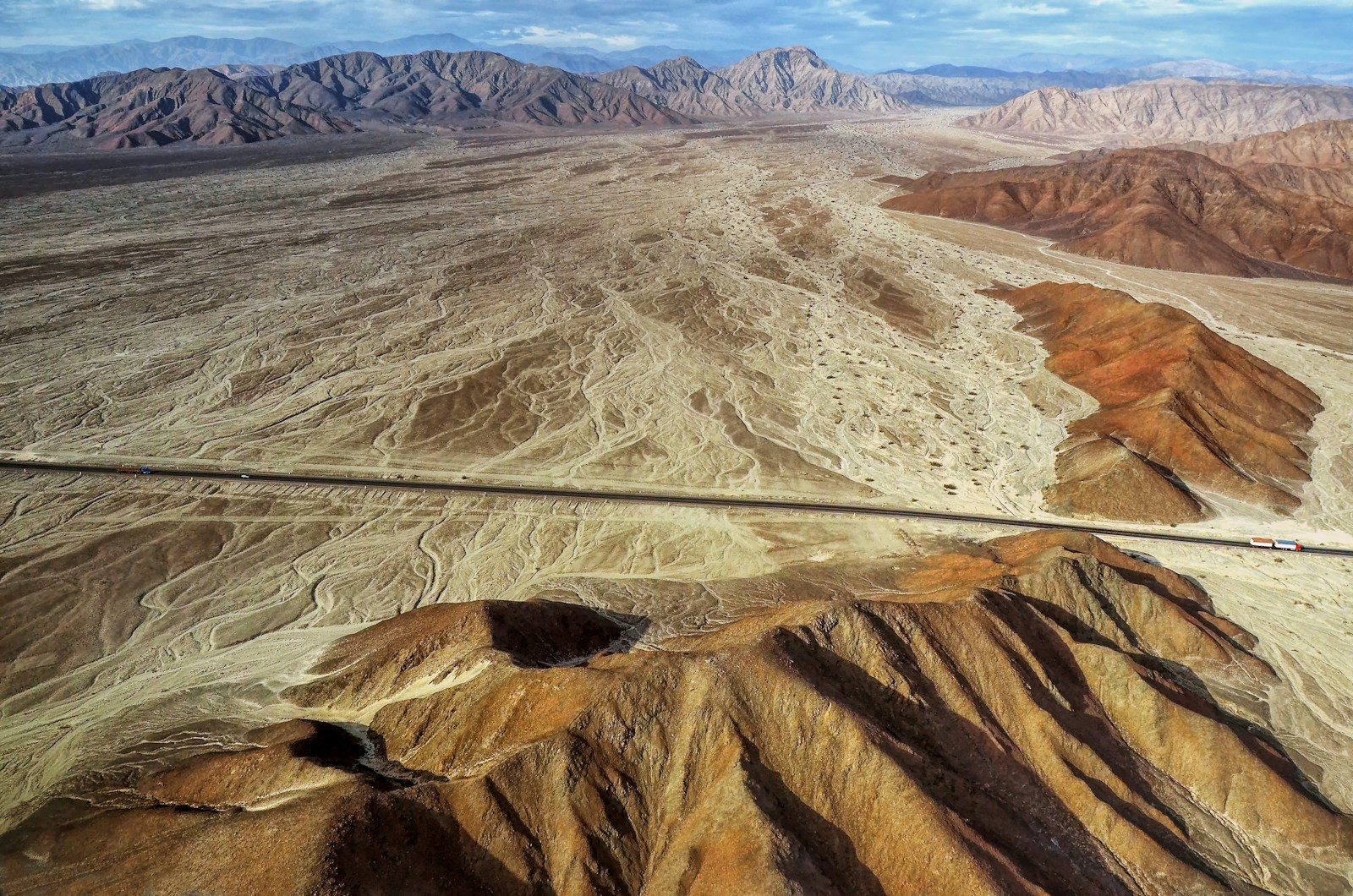
For nearly a century, humans have flown over the Peruvian desert searching for the famous Nazca Lines. These massive ancient geoglyphs are world-famous, but we were only seeing a small fraction of the truth. Scientists just teamed up with advanced AI to scan the landscape, and the results are shocking. In just six months, the AI discovered over 1,000 new figures that human eyes had missed for decades. These aren’t just simple lines; they are complex drawings of strange creatures and human figures.
The Nazca people created these images over 2,000 years ago, but many were too faded or small for traditional archaeology to find. The algorithms use satellite data and “shadow analysis” to spot patterns that are invisible from the ground. This discovery has effectively doubled the number of known ancient artworks in the region. But the real mystery is why the AI found so many “human-like” figures in places where humans were never supposed to be.
AI vs Human Eyes in the Desert
Archaeologists used to spend years walking the desert to find a single new line. The sun and wind have eroded many of these ancient carvings until they are almost gone. However, the new AI doesn’t get tired and doesn’t miss a single pixel. It can scan thousands of square miles in seconds, looking for the specific way the soil was moved. It found figures that are only a few feet wide, hidden among the larger, more famous ones. But what exactly are these new shapes supposed to be?
Strange Humanoids and Mythical Beasts
Among the 1,000 new finds, scientists discovered many “humanoids” that look like they are wearing headdresses or masks. Some figures appear to be holding decapitated heads or tools. Others look like animals that don’t exist in Peru, such as strange birds and long-necked beasts. The AI has categorized these into two groups: those built for “the gods” to see from above and those built for people to see from the ground. But wait until you see the secret paths that connect these drawings to ancient water sources.
The Secret Map to Hidden Water
The new AI analysis suggests that the Nazca Lines weren’t just art; they were a massive communication system. Many of the lines point directly to underground aquifers or river beds. In a desert where it almost never rains, water was more valuable than gold. The geoglyphs acted like giant road signs for travelers. By mapping the new lines, scientists can now see exactly how the Nazca people moved through the desert to survive. But wait, some of these lines appear to be moving over time.
A Ghost in the Machine or a Real Find?
When the AI first delivered the results, some scientists thought it was a mistake. Some of the “new” lines were so faint they looked like natural cracks in the earth. To prove the AI was right, teams had to go into the desert with drones to verify every single find. To their amazement, the AI was 98% accurate. It was seeing 3D depressions in the ground that are only a few centimeters deep. This level of precision is changing archaeology forever. But there is a dark side to these discoveries that is worrying local officials.
The Race Against Modern Destruction
Now that we know there are thousands of lines, we realize how many we have already destroyed. Modern roads, mining, and even tourists have accidentally crushed these ancient treasures. Many of the newly discovered lines are located right next to active construction sites. The AI is now being used to create a “digital shield” to protect these areas from being paved over. We are in a race to map everything before it vanishes. But what happens if the AI finds something that doesn’t fit the history books?
Re-writing the History of Ancient Peru
These 1,000 new lines prove that the Nazca civilization was much larger and more organized than we ever imagined. They weren’t just a small group of artists; they were a massive society that spent centuries carving their identity into the earth. The variety of the drawings suggests that different families or tribes may have “owned” specific parts of the desert. This AI discovery is forcing historians to throw away their old maps and start over. But the most shocking find was a set of lines that look exactly like modern tools.
What the AI Will Find Next
The Peruvian desert is just the beginning. Scientists are now planning to use the same algorithms to scan the Amazon rainforest and the deserts of Egypt. We are on the verge of a “Golden Age” of discovery where no ancient secret can stay hidden. Every pixel of our planet is being watched by machines that can see into the past. While AI looks at the ground, another new technology is about to let you “feel” the digital world like never before.
Featured Image: Photo by JP Desvigne on Unsplash
Leave a Reply