
A dramatic headline claiming scientists expect a global catastrophe in 2026 traces back to a mathematical paper published in 1960. The paper did name Friday, November 13, 2026, but it did not identify an asteroid, war, plague, climate tipping point, or other physical event that would destroy civilization. It was never a verified disaster alert.
Instead, the researchers extended an old population-growth pattern until the equation reached a mathematical singularity, where the modeled population became infinite. That impossible result was a warning about blindly extending trends, not a literal forecast. Modern demographic data show that population growth has slowed sharply and no such event is expected.
Heinz Von Foerster 1960 Science Paper

The original paper was written by cybernetics researcher Heinz von Foerster and colleagues Patricia Mora and Lawrence Amiot. Its provocative title announced “Doomsday” on November 13, 2026, if human population continued growing as it had during the previous two millennia. The wording was intentionally memorable, but the calculation depended on a highly simplified historical trend. It showed where the formula broke down, not where the planet would suddenly become uninhabitable. That distinction is essential whenever the claim resurfaces online as a modern scientific warning.
Hyperbolic Population Growth Mathematical Curve
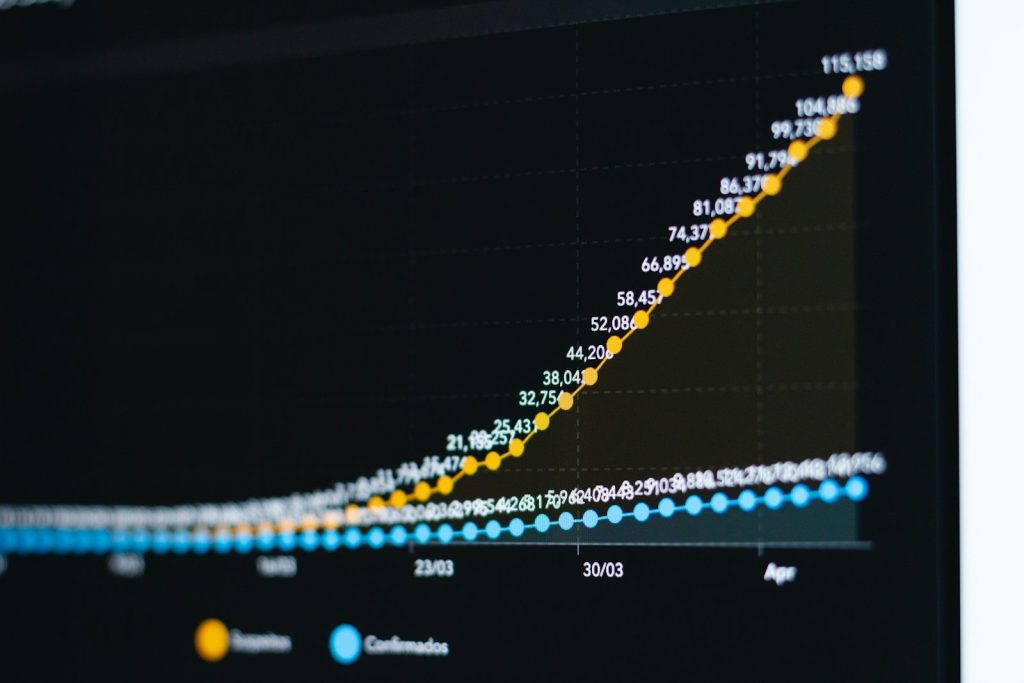
For long periods of history, the population appeared to grow faster as more people produced more knowledge, technology, food, and infrastructure. The researchers represented that feedback with a hyperbolic curve. Unlike an ordinary exponential curve, a hyperbolic model rises toward infinity at a fixed date. In mathematics, that point is called a singularity. In the real world, population cannot become infinite because fertility, mortality, resources, policy, and behavior continually change. The formula therefore described a mathematical limit, not a physically achievable human total.
Declining Global Fertility Rate Demographics
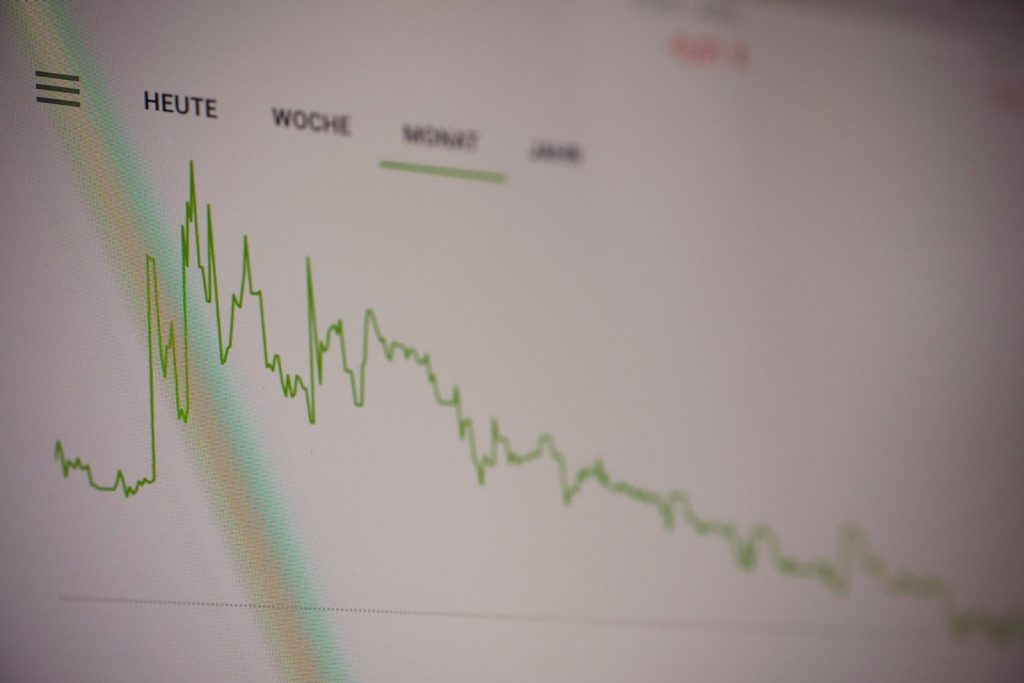
The prediction failed because its central assumption failed. Global fertility has fallen, families have become smaller, and population growth has slowed in many regions. Some countries are already shrinking or aging rapidly. The model treated the old growth pattern as if it would continue unchanged, but demographic transitions altered the curve. That is why the date should be understood as the endpoint of an outdated equation rather than a deadline for humanity. Reality changed faster than the formula could accommodate.
Global Population Projection Chart 2100

Current population projections look nothing like the 1960 curve. The latest widely used global assessment expects the population to rise gradually, peak at about 10.3 billion in the mid-2080s, and then edge downward by 2100. Projections still carry uncertainty, especially across many decades, but none suggest an infinite population in November 2026. The world faces real demographic pressures, yet they unfold unevenly and over much longer timescales. Demographers instead model multiple scenarios based on changing fertility, mortality, and migration.
Urban Population Density Infrastructure Pressure

Rejecting the doomsday date does not mean population questions are unimportant. Rapid growth can strain housing, schools, health systems, water supplies, and food access in some places. Elsewhere, low birth rates and aging populations create labor shortages and rising care needs. Environmental damage also depends heavily on consumption, technology, inequality, and policy, not simply the number of people alive at a particular moment. Solutions therefore differ from region to region and cannot be reduced to one global number.
Friday 13th Doomsday Calendar Concept

The story survives because exact dates feel more convincing than uncertain ranges. A Friday the 13th deadline also makes the equation unusually shareable. Once the original assumptions disappear from retellings, a mathematical curiosity can become a false warning that “scientists predict catastrophe.” Reliable science communication separates a model’s assumptions from its output and explains whether later evidence strengthened, weakened, or completely overturned the prediction. The date is emotionally powerful, but its precision is not evidence that the outcome is reliable.
Mathematical Model Computer Forecasting Graph

Nothing in the original study supports expecting the world to end on November 13, 2026. The lasting lesson is about models, not apocalypse. Equations can reveal patterns and test ideas, but they cannot escape their assumptions. When social behavior changes, projections must change too. The so-called doomsday equation is now best viewed as a striking historical example of why long-range forecasts should never be treated as certain fate. It is a lesson that remains relevant far beyond population science. This article is for informational purposes only.
Featured Image: Photo by Brecht Corbeel on Unsplash
Leave a Reply