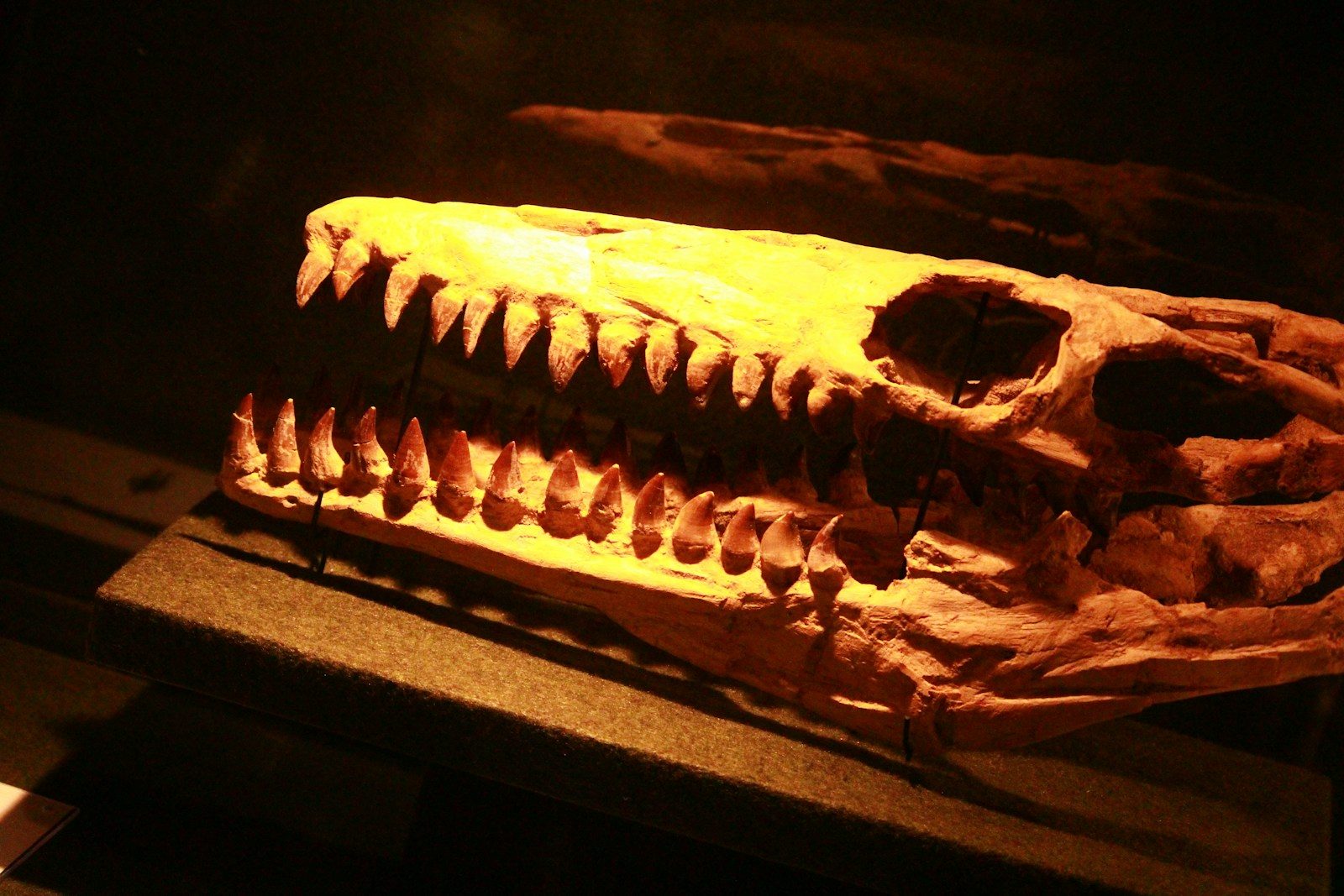
The animal behind this headline is Khinjaria acuta, a newly identified mosasaur species scientifically described in 2024. Its fossils came from phosphate deposits in Morocco and date to the closing part of the Cretaceous Period. Calling it newly unearthed in 2026 would be misleading; the important development was researchers recognizing that the remains represented a previously unknown species.
Scientists Had Only Part of the Animal

Khinjaria is known from a skull and portions of its skeleton rather than a complete fossil. Researchers examined the preserved jaws, teeth, and cranial anatomy to distinguish it from other mosasaurs. Reconstructing an entire marine reptile from incomplete remains requires comparisons with closely related species, so estimates of its appearance and dimensions retain some uncertainty.
It Lived Near the End of the Dinosaur Age
The fossil came from Upper Maastrichtian rocks formed near the end of the Cretaceous, roughly 67 million years ago. At that time, much of what is now Morocco lay beneath a warm Atlantic sea. Khinjaria disappeared alongside non-avian dinosaurs and numerous marine species during the mass extinction approximately 66 million years ago.
It Was Approximately the Length of an Orca
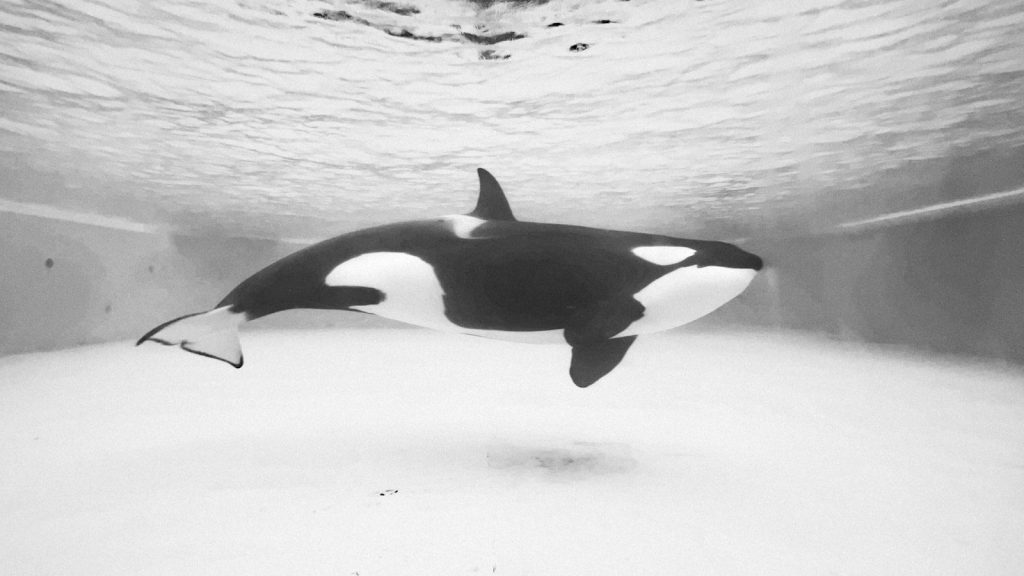
Researchers estimated that Khinjaria measured about seven to eight meters long, placing it in the size range of a modern orca. That made it a substantial predator, although it was not the largest mosasaur ever discovered. Because the fossil is incomplete, the length is an anatomical estimate rather than a direct measurement of a preserved whole skeleton.
Its Teeth Resembled Large Daggers
Khinjaria had enlarged blade-like teeth at the front of its short, powerful jaws. Its skull was unusually elongated toward the rear, while the robust jaw construction suggests that it could generate a forceful bite. Researchers interpret these adaptations as evidence that it seized relatively large prey instead of filtering small organisms or crushing shellfish.
It Was a Marine Lizard, Not a Dinosaur
Mosasaurs are often casually described as sea dinosaurs, but they belonged to a different branch of reptiles. They were giant marine squamates, part of the wider group that includes modern lizards and snakes. Khinjaria lived at the same time as dinosaurs such as Tyrannosaurus and Triceratops, but it was not itself a dinosaur.
Morocco’s Sea Was Crowded With Apex Predators
The Moroccan phosphate deposits have produced an exceptionally diverse collection of mosasaurs. Different species possessed teeth adapted for cutting flesh, crushing shells, spearing fish or attacking larger prey. Researchers argue that this ancient ecosystem supported numerous large predators occupying specialized niches, unlike modern oceans where comparatively few species dominate the highest levels of the food web.
Its Name Describes Its Most Dangerous Feature

The genus name Khinjaria comes from khinjar, an Arabic term for a dagger, while acuta is Latin for sharp. The name refers to its prominent, knife-like teeth. Scientists still cannot identify its complete diet from the available fossils, but its anatomy strongly supports the interpretation of a large predator built to capture substantial prey.
One Fossil Revealed a Lost Ocean
Khinjaria matters because it adds another specialized predator to an already crowded prehistoric ecosystem. Its discovery suggests that late Cretaceous marine food webs could support a diversity of giant hunters rarely seen today. Further specimens will be needed to determine how the species grew, whether its appearance differed between sexes, and exactly which animals it hunted.
Leave a Reply