
Most astrobiologists assume that searching for alien life requires catching active radio signals from thriving cosmic societies. We believe that we must find living civilizations that are actively transmitting messages across the galaxy.
But a fascinating new paper suggests that we are far more likely to find the silent ruins of dead civilizations. These ancient mechanical remnants could be drifting right through our own cosmic neighborhood in the sand.
The Longevity Question

The search for space intelligence is heavily limited by how long a technological society can actually survive. According to calculations based on the Drake equation, the chances of our brief human history overlapping with an active alien civilization are incredibly small. They are tiny. This timing mismatch suggests that most advanced worlds have already vanished from the galaxy. But their physical creations could easily endure for billions of years.
Crumbling Solar Swarms

Advanced civilizations would likely construct giant megastructures like Dyson swarms of mirrors to capture their star’s energy. According to astrophysicist Brian C. Lacki, these massive passive structures are vulnerable to destructive space collisions over millions of years. The impacts are violent. A slow chain reaction of collisions would eventually grind even the largest alien megastructures down into fine metallic dust. But this dust would not stay trapped.
Pushed Into Deep Space

Once these mechanical remnants are ground down to microscopic sizes, they can escape their home systems. According to space physics models, the intense pressure of starlight can push these tiny technograins out into interstellar space. The dust is free. Pushed by solar winds, these microscopic pieces of extinct technology drift across the galaxy for eons. But where these traveling grains eventually settle has taken researchers by surprise.
The Lunar Vault

Inactive celestial bodies without any geological activity can act like perfect historical archives for cosmic debris. According to the Oxford research paper, geologically dead worlds like our moon are ideal places to search for interstellar technograins. The surface is quiet. Because the moon has no wind or water to erode material, it preserves incoming space dust perfectly in its soil. But finding these microscopic relics requires scanning the regolith.
Cosmic Archaeology Tactics
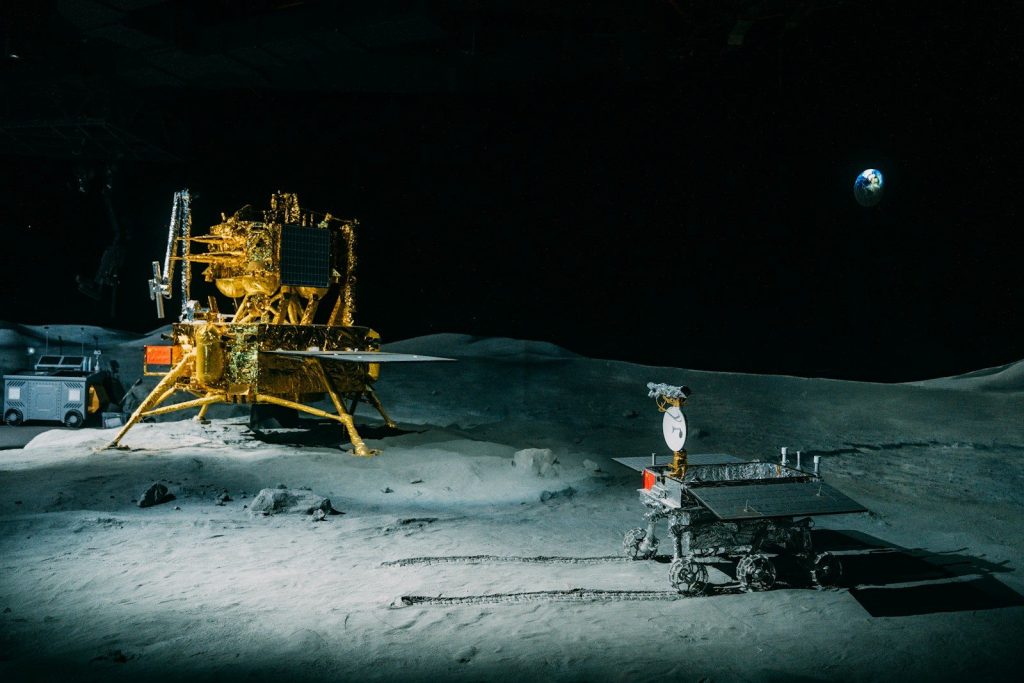
Scanning moon dust could allow space archaeologists to identify the chemical signatures of long-extinct worlds. According to planetary geologists, analyzing the isotopic makeup of lunar regolith could reveal artificial compounds that do not occur naturally. The search is beginning. Finding these microscopic grains would provide definitive proof of ancient alien engineering without needing to travel to distant stars. But some larger technological relics might already be passing by.
Interstellar Drifting Ships
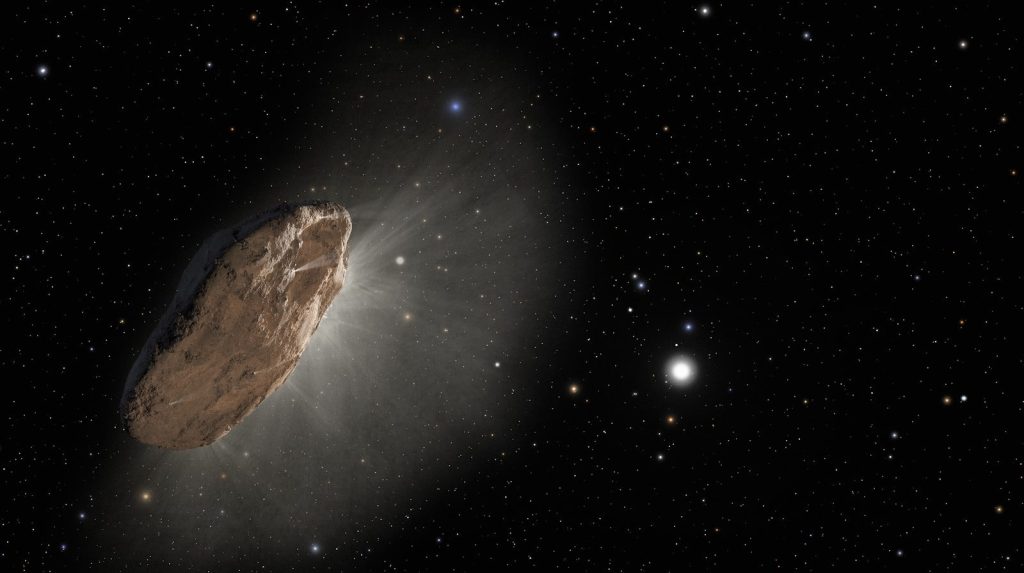
Some larger pieces of defunct equipment might occasionally cruise straight through our local solar neighborhood. According to Harvard astrophysicist Avi Loeb, anomalous interstellar objects like Oumuamua or ATLAS show physical properties that match thin sails or technological artifacts. They are silent. These fast-moving wanderers could represent the ancient robotic scouts of civilizations that died out billions of years ago. But deciphering these silent travelers remains our greatest challenge.
Lessons From Cosmic Death

Searching for extinct civilizations teaches us valuable lessons about our own survival on Earth. According to researchers, studying these silent cosmic graves reminds us of the extreme fragility of high-tech societies. Balance is essential. By understanding the mistakes of past worlds, humanity might finally find a way to avoid a similar fate in the dark. This article is for informational purposes only.
Featured Image: Photo by NASA Hubble Space Telescope on Unsplash
Leave a Reply