
We like to think that modern humans are the smartest people to have ever lived. We have smartphones, rockets, and AI. But when we look back at the ruins of ancient civilizations, we find things that leave our best engineers scratching their heads. Some of these ancient inventions were so advanced that we still cannot figure out how they were made. From “impossible” structures to chemical formulas that have been lost to time, the past is full of high-tech secrets.
The more we study these artifacts, the more we realize that ancient people had a deep understanding of physics and chemistry. In some cases, their versions of certain tools were actually better than what we have today. We are in a race to rediscover these lost secrets before they are forgotten forever. But wait until you see the device found in a shipwreck that was basically a 2,000-year-old computer.
The 2000-Year-Old Computer Found Underwater

In 1901, divers found a strange lump of bronze in a shipwreck near Greece. It turned out to be the Antikythera Mechanism. This device features dozens of intricate gears and was used to predict eclipses and the positions of the planets with perfect accuracy. Nothing this complex was built again for another 1,500 years. Engineers today are still trying to understand how the Greeks made such tiny, precise parts without modern tools. It is a masterpiece of engineering that shouldn’t exist. But what about the secret fire that could burn on water?
Greek Fire and the Secret Weapon of the Byzantines

The Byzantine Empire had a weapon that terrified its enemies. It was called “Greek Fire.” This liquid could be sprayed through tubes and would ignite on contact with air or water. Pouring water on it only made the flames grow stronger. The formula was so top-secret that only a few people knew how to make it. When the empire fell, the recipe vanished. Even today, modern chemists cannot replicate a fire that behaves this way. But wait until you see the ancient concrete that actually gets stronger over time.
Why Roman Concrete Puts Modern Buildings to Shame
Modern concrete is designed to last about 50 to 100 years before it starts to crack. Meanwhile, Roman structures like the Pantheon have been standing for over 2,000 years. Scientists recently discovered the secret: seawater and volcanic ash. When seawater hits the concrete, it creates a chemical reaction that fills in any cracks. Instead of breaking down, the concrete grows stronger every year. We are now trying to use this “ancient” recipe to build more sustainable cities. But how did they move those massive stones in the first place?
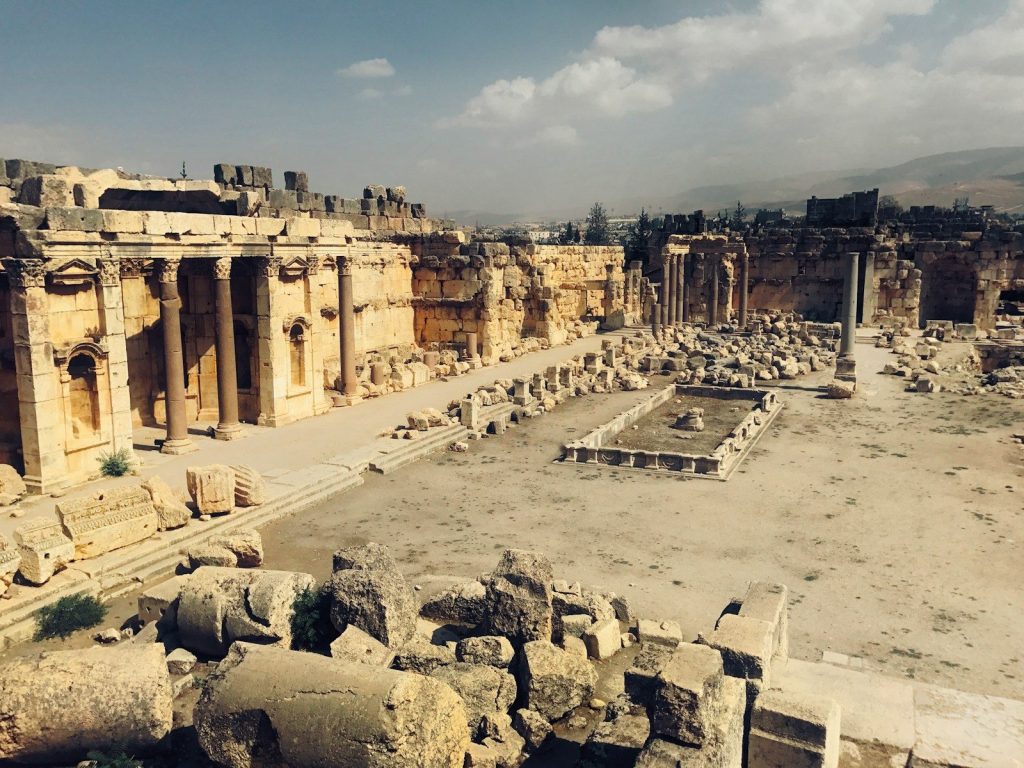
The Mystery of the Impossible Stones at Baalbek

In Lebanon, there is an ancient temple site called Baalbek. The base of the structure contains stones that weigh over 800 tons each. Even with our most powerful modern cranes, moving these stones would be nearly impossible. Yet, ancient builders moved them from a quarry miles away and stacked them with perfect precision. There are no records of the tools or techniques they used. Some believe they used sound or vibrations, but it remains a total mystery. But wait until you see the iron pillar that refuses to rust.
The Delhi Iron Pillar That Defies Chemistry

In the middle of a courtyard in Delhi stands a 23-foot iron pillar that was built 1,600 years ago. Despite being exposed to the wind and rain for centuries, it has almost zero rust. Modern iron would have crumbled long ago. Scientists found that the ancient blacksmiths used a specific type of phosphorus that created a protective layer on the surface. We are still trying to figure out how they mastered this chemical process so long ago. But what about the ancient glass that could bend without breaking?
The Legend of Flexible Glass and the Sacred Emperor

Roman historians write about a man who brought a bowl made of “flexible glass” to Emperor Tiberius. To prove its strength, he threw it on the floor. Instead of shattering, the bowl only dented. The man then used a hammer to beat it back into shape. Instead of rewarding him, the Emperor had him executed because he feared the new material would make gold and silver worthless. The secret of flexible glass died with him. Today, we are only just beginning to make “bendable” screens. As we look at these lost technologies, we realize that some people might just be luckier than others.
The Damascus Steel Blades That Could Cut Through Silk
The crusaders were terrified of “Damascus Steel.” These blades were famous for their incredible strength and their ability to cut through a falling silk scarf. They had a unique “watery” pattern on the surface that looked like flowing liquid. For centuries, no one could replicate the process. We now know the ancient smiths were accidentally creating “carbon nanotubes” in the steel. This is nanotechnology from over 1,000 years ago. While we study their luck in discovery, we wonder if luck is something we can control today.
Leave a Reply